[
00:00:00] Announcer: Secrets and spies presents Espresso Martini with Chris Carr and Matt Fulton.
[
00:00:25] Chris Carr: Hello everybody and welcome to Espresso Martini. Matt, how are you?
[
00:00:30] Matt Fulton: Hey, Chris. You're looking rather, uh, hail and healthy today?
[
00:00:33] Chris: Yes, I, I, I, I feel significantly better than I did this time last week. Oh my goodness. Um, yeah, I, I dunno exactly what it was. I just came down with these horrific kind of flu-like symptoms.
Was it Wednesday or something? Yeah. Um, and, and I just lost all my energy, had cramps all over and just felt horrific. Um, yeah, pretty close
[
00:00:55] Matt: to recording that week. I mean, we had like an outline and everything kind of set to go. We were, we were, yeah.
[
00:00:59] Chris: Yeah, we did. We did. Yeah. And, and obviously, um, this episode, which is coming out now, what is partly what we were gonna do, but things have changed since then.
Yes. Some, so now the stories have changed little bit, you know? Yeah, yeah. Indeed, indeed. So we've got, we've got some interesting stuff coming up, but, uh, how, how are things your side of the pond at the moment? It's good. It's good. Fine. Good. Can't complain. Same old. Yeah. Good. Good, good, good. Well, today we're gonna be looking at Ukraine's Daring Drone attack.
Then we're gonna be looking at the CIA's use of a Star Wars fan site for communications with its assets abroad. And then we're gonna be moving into topics suggested by our listeners, plus a service update at the end, just about, uh, how we plan to move forward up until our summer break. So our first story is about operations Spider Web, which is Ukraine's Daring Attack.
So I'll go into the main details and then I'll come to you, Matt. Yeah. Ukraine has launched one of its most daring drone strikes of the war code name operations Spider Web, which was targeting four Russian air bases deep inside enemy territory. It was carried out by the security service of Ukraine and they used 117 FPV drones, which is first person viewer drones, which is ones where, I guess, uh, it would be controlled by somebody on a pair of goggles normally, wouldn't it?
Sort of being able to see what the drone sees. Yeah. If that makes sense. Yeah. Mm-hmm. So it's, it's not quite like a, um, a reaper drone, which is controlled by a control sensor, typically, but anyway, that's a whole different thing. Um, so the scale of the operation became almost immediately clear with explosions reported across multiple time zones from Amans above the Arctic Circle to Cusk, which is more than 4,000 kilometers from Ukraine.
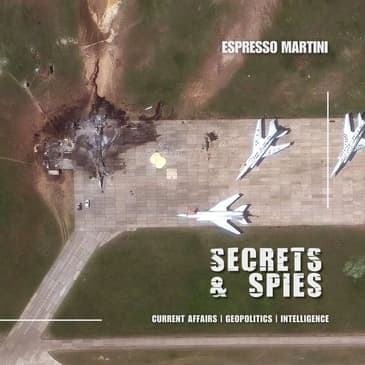
The operation reportedly damaged or destroyed up to 41 aircraft. At least 13 aircraft have independently been confirmed as destroyed, including TU 95 and TU 22 M three bombers. The attack sophistication lies in its method. Ukrainian operatives smuggled drones into Russia, concealed inside prefabricated wooden cabins mounted on civilian trucks.
These mobile launch platforms were driven by unwitting. Russian drivers posing as part of a construction job. Once in position, the cabin roofs were removed remotely and um, the drones were then launched and they attacked nearby air fields and operation that has reportedly been in the planning for 18 months.
And one user on blue sky, uh, when I said Ukraine, inte, had a good day. Seemed to say this took more than a day. And it's like, yeah, I know. It took more than a day as an expression. So there we go. Ces
[
00:03:40] Matt: very, uh, never, never change random people on social media. Yeah. Why don't you consider the entire human condition in your, you know, 260 character post?
[
00:03:50] Chris: Yes. So yeah, you created judges definitely had a good day, but it was 18 months in the planning, as most good days usually are in a bit of planning. Um, so it's also interesting to note that, um, it's been reported that the drones also had AI systems on board, which enabled the drone to complete the missions autonomously if they lost signal from their control sensors.
Satellite imagery has since confirmed the destruction of at least seven TU 95 MS bombers and four TU 22 M threes. Some of the aircraft were reportedly armed of cruise missiles at the time. There are unverified reports of additional damage to an A 50 radar plane and a N 12 transport aircraft. So whilst Russia downplays the scale of the loss and destruction of these long range bombers, which are no longer in production, it is.
A serious strategic blow. The strikes have exposed the vulnerability of deep rear air bases and may force Russia to further disperse its bomber fleet, reducing operational effectiveness. And more broadly, many have commentated that it signals a shift in the nature of modern warfare with asymmetric drone operations proving capable of inflicting significant damage on a global power.
So Matt, what are your thoughts on all this?
[
00:05:07] Matt: Oh boy. Um, yeah, this, this wasn't just a successful, um. Drone strike. This was a strategic gut punch right to the core of Russia's long range, um, air power capabilities. You know, if even half of the, sort of the BDA, the bat that the battle damage, uh, assessments that we've gotten, um, since June 1st are true.
Uh, Ukraine, you know, as you said, may have destroyed, um, or, or damaged more than I think 10% of Russia's, uh, operational, um, TU 95. So the, the NATO reporting names, uh, for that, uh, is bear, uh, bomber fleet. Um, and, you know, the, the, these aren't just any aircraft, as you said. These are cruise missile carriers and nuclear capable, um, delivery platforms.
Uh, um, and most of them can't, can't be replaced. We'll talk more about that, um, in a bit. Uh, so the TU 90 fives, uh, haven't been built since the Soviet Union. Um. The TTU 20 twos, those are backfires. That's the NATO reporting game for those are, uh, cold war relics that were never modernized properly. And the TU one sixties are blackjacks.
Um, those are Russia's most advanced long range bombers. Those are, um. Supersonic bombers. I think they, they, they function similar to RB ones. Um, but yeah,
[
00:06:21] Chris: they do look a bit like the B one. Yeah. Maybe even it's based on some stolen technology from the B one. I don't know.
[
00:06:28] Matt: Maybe, maybe I'm not, I'm not, I'm not sure about that.
Yeah, that's maybe, um, I mean, so they're, they're, uh, uh, in production in theory, but only a handful of them exist. I think it's also worth noting that Ukraine seems to have avoided some of those. I think that would be the most kind of, um, prickly for, for Russia's, uh, uh, the, the air leg, their nuclear triad, if, if a lot of those were, were taken out.
Um, but the, the pace of the production of those are, are glacial. Um, so I mean, yeah, this means that Russia's most flexible leg of its nuclear triad just got a lot weaker. Um, and that weakness is now visible to the entire world. If, if anything, I think also, I don't, I mean there's been a kind of, uh.
Consensus, I guess you could say, forming in a lot of European security circles is that Russia may try an open attack on a NATO member, such as in the Baltics or against Finland or, or, or, or, or Sweden, uh, before the end of the decade. I don't know. I wouldn't know that I would be so bold this acc claim that, that, that this attack has sort of taken that possibility off the table.
But I think it, it's certainly worth asking whether it is set that timeline back, um, considerably. I mean, if you, you, if you lose 30 strategic bombers in a day, you're not gonna, you're, you're not then gonna try to, you know, jump nato, um, in an alleyway, uh, within a couple years of that. Um, so I mean, yeah, this has real consequences for how seriously we take Russia's nuclear threats.
I mean, they, um, the, the ground base ICBMs are untouched the, um. The, the ballistic missile submarines, which has kind of long been the, the crown jewel of the Russian military. Um, those are still intact and I think are certainly the most dangerous ones. Um, but if, if Putin was trying to keep this, uh, this fleet as a symbol of strength and, uh, prestige, this, this attack, um, just shattered that illusion.
[
00:08:30] Chris: Yeah, no, totally. I mean, just going off what you were saying, I mean, so apparently this attack has hit a reported 34% of Russia's strategic missile carriers. Um, and the attack is sort of, uh, estimated to probably cost about 7 billion. Though I suspect that will be a bigger figure if you take into account the cost of having to develop replacements for the lost aircraft because Russia, basically, as they're not building these aircraft that have been lost anymore, they're gonna have to develop an alternative if they want to replace that capability.
[
00:09:00] Matt: Yeah, I don't know. Um. That's a question for more of a, a specialized, um, subject expert on, on, on, on Russian air power and the who's more knowledge about their defense industry. But some of these, you, you can't replace them.
[
00:09:15] Chris: Well, no. Yeah, it's like the, the, the bear. It's just a loss from the fleet. Well, it's like if somebody took out all of America's B 50 twos, which America obviously keeping their best to keep going for at least up to, you know, they'll be a hundred years old by the time they finally retire.
Nobody's rebuilding B 50 twos. There's a limited number in reserve that you could, you know, reactivate or pull parts from. But if somebody damaged a huge amount of them, they're not coming back. Right. But the good thing is America at least, is developing alternatives. Uh, which Russia, at least from an air power point of view, doesn't, it seems to be a bit slower.
I think they've, I get the impression they've put more resources at their submarine fleets than they have at their aircraft over mm-hmm. Over the last few years. Yeah. Or decades.
[
00:09:56] Matt: Yeah. To that, to that point, the last B 52 H, which is the model that's the, the, the variant that's currently flying the last B 52 H rolled off an assembly line in 1962.
Of course the, the Air Force plans to keep flying them until 2050. Um, if so, if one was lost today and a replacement couldn't be taken out of the, the boneyard that's at Davis month in Air Force Base in, um, Arizona. Um, there's just one fewer B 52, um, in the fleet. You know, you don't, you don't, you don't get that back.
Uh, there's a couple other, um, I mean this is also true of the, of the B two, uh, self bomber fleet, um, as well, so. Couple, uh, anecdotes here. So in 2008, um, one B two, the spirit of Kansas, uh, crashed, uh, just after takeoff at Anderson Air Force Base in, in Guam. That was a $1.4 billion loss, uh, for the Air Force in 2021.
Uh, the spirit of Georgia, um, skidded off the runway at Whiteman Air Force Base where the B two fleet is, is based. Um, there's a landing gear malfunction and the left wing kind of dipped into the dirt just off the runway, and it, and it damaged, um, the wing, uh, a year after. So that, yeah, that crash was in 2021, um, a year later that, uh, the spirit of, of Georgia was sent to, um.
Air Force Plant 42 in, in Palmdale, where, um, Lockheed Skunk Works is based. And, um, Northrop and Boeing also have their kind of respective kind of, you know, secret advanced projects, divisions all on opposite ends of the airfield. Um, that was sent to Palmdale, to Northrop's, uh, facility there. And if you go back on Google Earth, you can see it sort of sitting on the ramp there for a while with its, you know, busted wing.
Um, and just, uh, last year the Air Force decided it'd be more cost effective to just divest that aircraft, um, from the fleet. Of course, we went with the B 21 coming into production a bit over the next couple years. It was probably factored, um, into their decision. So, I mean, yeah, it's, it's just underscore this point that those sort of, um.
High value, high priced, uh, uh, strategic assets are not you, you can't just roll them off of the assembly line again, in some, in some cases the assembly line doesn't, doesn't exist.
[
00:12:18] Chris: Mm mm Yeah. Indeed. Indeed. Yeah. Not easily replaceable. And it's interesting to note as well, obviously since the Russia starts its war on Ukraine, they have lost 413 aircraft, and that includes one's lost in operations, spider web.
So, um, yeah, again, need to sort of look into like how many aircraft that they actually have, but it's, they, um, you know, it was estimated just before this attack that they had only 67 strategic bombers in its active inventory. Um, and that's, you know, so that was before the attack. So there's definitely, it's been a big blow and a, and a serious sort of gut punch to, to Putin.
And I think also, like you were mentioning it earlier, um, there's been this, lots of talk about. Russia attacking a NATO member or attacking Europe, uh, before the decades out. And it's becoming a more, I dunno that that conversation's been kind of growing in volume in the last few weeks and we've just had the Strategic Defense review in the UK and it's sort of designed to, to meet some of that.
We'll talk about that maybe a bit more in a minute. Um. And I think what Ukraine have demonstrated by this very move is sort of, uh, well, what they've probably done, as you were saying, is they've pushed, they may well have pushed Russia's timeline back if there was a timeline at all. Yeah. And I think they've probably reminded Europe as well of the strategic importance of Ukraine and how Ukraine are well equipped right now to devastate Russia's forces, which might even stop an open conflict between NATO and Russia.
And it would be very foolish to kind of not support Ukraine at this point.
[
00:13:55] Matt: It's just sort of, to me it just sort of highlights, you know, the, the question of, okay, where do you wanna draw your defensive line? Do you wanna stop them now and, and sort of help the Ukrainians do that, um, in, with, with resources and, and aid that is sort of much cheaper overall than fighting an actual war between, you know, Europe and, and, and, and Russia.
Um, or Yeah. Do you wait for them to make a move on, uh, nva um, in Estonia? You know, do you wait for, uh, Russian cruise missiles to start hitting Gotland?
[
00:14:29] Chris: Yeah. Yeah, indeed. And, and what's cheaper? Yeah. It, it, no, no. I think, you know, many tors have said this for years, you know, giving Ukraine what it needs to, um.
In a sense defeat Russia, militarily. I mean, I think defeats probably a strong word. I dunno if you ever will fully defeat Russia, but I think what you could do is degrade its capability to mount more walls, um, or to make it rethink its position or even just, um, weaken the position of Vladimir Putin to the point where whoever succeeds in won't have the resources necessary to.
To kind of do a sequel to what's been going on in Ukraine, because I think that's the wider fear, is if if Russia's successful in Ukraine, it will spill out into other eastern European former Soviet bloc countries. And, um, and this is the thing that at the moment I think's been lost on the Trump administration, um, whether lost by ignorance or lost by something more sinister, where, you know, some have suggested that Trump's very much, um, in line with Putin and certainly mm-hmm.
A lot of the time his comments don't exactly, uh, move us away from that interpretation a lot of the times, especially with his, um, truth social post about, uh, the drones. And then he talks about a yet another, what I call ineffective phone call with President Putin. And then he signs off in this post saying that, well, Russia are gonna retaliate, retaliate against Ukraine without any word of condemnation or support of solidarity for right Ukraine, which is a US NATO ally.
And this is madness. Um, and it, it, it's frankly, uh, you know, I've been saying this for some time. Trump is definitely not fit for office and, uh, or at least fit to lead the US global order. Um, you know, he's not helping himself with this.
[
00:16:18] Matt: Yeah. Can we talk about that for a minute?
[
00:16:19] Chris: So yeah, please, please go for it.
Good. You're quite vocal on Blue Sky about this the other day as well. Yeah, yesterday as,
[
00:16:25] Matt: as, as we're recording was, um, yeah, Trump posted that he had a call with Putin and um, he said, you know, yeah, Putin said he's gonna have to retaliate and sort of was just like a stenographer for what happened on the phone call.
There was no, like, these are our values and we stand by Ukraine and we support them, and yada, yada yada. Yeah.
[
00:16:43] Chris: Yeah.
[
00:16:44] Matt: It was, it was just, um, you know, yeah, this is what, this is what Putin said and sort of this is what happened, and sort of that's it in a very sort of passive detached kind of way. And that's, that's one thing.
That's kind of how he is, but I don't know. I, I reacted to it. I, I reacted to it yesterday on. Blue sky one. It was sort of like, I don't know why that necessitated getting like six breaking news alerts on my phone and like rapid succession that literally just said, you know, Putin said he's gonna retaliate for the, for the drone strike.
And it's like, well, well, yeah. I don't know. I mean, that's, I think that's sort of a, a given that he would, but. Is retaliation gonna mean that he's gonna bomb targets in Ukraine that he would've bombed anyway? Um, if, if, if this attack hadn't taken place. I mean, what are they, what are they gonna do? Are they gonna bomb more hospitals and, and, and apartment blocks and, you know, schools and stuff in Ukraine, they've been bombed.
Like, I don't know, short of like, some sort of a retaliation that would be, I don't know, targeting like, okay, like the government ministries and stuff, and like the middle of Kyiv, right? Like central Kyiv has remained, um, pretty much unscathed, um, over the course of the war. Like, okay, if they're gonna do that, that would be a kind of a retaliation that I think would, would merit more of like a, a conversation.
Like, okay, like we're stepping it up now. But I mean, it's sort of like, okay, Putin's gonna bond me Ukraine more. That's very much like a dog bites man story at this point. I don't know why. That's like a a, I mean, yeah, they're, they're, they're gonna retaliate, but I think there's something sort of interesting.
In Trump's head in the past couple months, he seems to be pissed at Putin for not sort of taking the quote unquote peace negotiation seriously. Of course, that kind of within that there's an indication of, okay, why would you believe that? Why would you have the expectation that he would take these negotiations seriously when there's nothing that would lead you to that conclusion?
Okay. That's one. There's this sort of the passivity of like, he has no, that Trump has no sort of ability to sort of shape the Russian response here, or to sort of force the Russians to take these negotiations more seriously. It's very sort of, uh, naive. They took a lot of cards
[
00:19:04] Chris: off the table, didn't they?
Vo there's.
[
00:19:08] Matt: So if you go back to, this was like a couple, this was like last month I think, um, Marco Rubio had came out and said, you know, okay, the, like both sides in the war have like two weeks and then we're gonna decide whether or not the US wants to keep negate ne um, engaging in these negotiations.
'cause Marco said, you know, we don't wanna, we're not just gonna keep flying around the world taking meeting after meeting. And I thought, you know, okay, one, what do you think your job as a Secretary of State, if not to just fly around the world taking meeting after meeting? Like, what do you think a Secretary of State does?
Um, two, who is that threat for? I mean, okay, uh, if, if we don't see that Ukraine and Russia are serious about these negotiations, we are going to leave. If that threat is not followed with a, and then therefore we will do X. Whether that's increasing a whole bunch of sanctions or sending them a whole bunch of more, sending Ukraine a whole bunch more like ammunition and material and stuff.
Who is that threat for, who fundamentally stands to benefit if the US just sort of picks up its toys and leaves the playground, it's not a threat to the Russians. Like, okay, good bye. Hmm.
[
00:20:19] Chris: Yeah. Yeah. Yeah. It's, it's just
[
00:20:20] Matt: sort of, it's this strategic naivete that I don't, I don't understand. But, um, you know, just this morning as, as, as we're recording, there was a story in the Kyiv Independent, and of course, I don't know how,
[
00:20:34] Chris: how object, we dunno how objective it is.
Is that what you're saying?
[
00:20:37] Matt: Right. Listeners should, should, should of take this with a grain of salt. But they had a story out that, um. Trump was sort of, kind of quite impressed by this drone strike, um, that he called it, you know, badass. Um, and if a, it should not take stuff like this to sort of earn trump's respect.
Yeah.
[
00:20:59] Chris: But then this, this is not the first time that is like with World War ii, you know, similar kind of thing Britain faced. It had to show that we're, you know, you're a winning, uh, fighting force. Yeah. Like Joseph
[
00:21:10] Matt: Kennedy was writing telegrams back to Washington Yeah. From London saying like, yeah, these guys are screwed.
We shouldn't, we shouldn't stand up for them. Um, I think if, if, if that's what it takes to sort of. Bring Trump to the light, I wanna say. And of course I don't, I don't expect Trump to ever sort of, you know, wear like a Saint Javelin hoodie or anything like that at all. And again, and this is, we should, no one should take him at his word and, you know.
Okay. Um, the sort of whole right wing ecosystem in the US has been marinating in Russian disinformation, um, for, for years. And I think a lot of that was born of sort of. Oppositional defiance disorder to Biden and anything that he did, right? Yeah. Um, yeah. Biden was, or, or
[
00:21:55] Chris: Hillary Clinton and, or Hillary Clinton too.
Right? Biden Obama was associated
[
00:21:58] Matt: with, with the war in Ukraine when it happened and, and sending arms and, and, and aid. Okay. So we have to criticize that and that just sort of crystallizes this view that the Ukrainians are bad, or, or, or suspicious. Trump also has sort of, had, had, has personal animosity to, to zelensky over his first, um, impeachment.
Right. So when I see indications if it's true that Trump is saying, you know, that drone attack was badass or something. Okay. Does that, that sort of help shape his perception of Zelensky? And again, Zelensky shouldn't need stuff like that for Trump to respect him and, and sort of see how serious he is about this, but if that's what it takes.
Okay. You know, any, any port in storm, fine. Well,
[
00:22:46] Chris: yeah, whatever. Yeah. One would hope that there is a, a, you know, one would hope being generous, that Trump is capable of changing his mind and his position and will shift more to a pro Ukraine stance. And that this helps that Brilliant. Um, and, and it is a shame that it takes something like this to achieve that, but yeah.
Okay. This is
[
00:23:05] Matt: the kind of, um mm-hmm. Blow that puts Ukraine in a much stronger bargaining position, you know? Oh, totally, totally. Uh, Trump famously said not that long ago, that, you know, Russia doesn't have any cards, um, right now, and that's clearly not true. I'm sorry that, uh, Trump said. Recently, you know, that Ukraine doesn't have any cards, and that's of course been proven to not be true.
Um, they're demonstrating they can hit high value targets thousands of miles inside Russia, as far out as, as far east as Siberia, as far north as, um, mermansk ahead of the Arctic Circle. Um, uh, not just symbolically, but, but functionally, you know, these bombers are part of the machine that's been leveling cities across Ukraine since 2022.
Yeah. Yeah. So I think, you know, while it might raise questions in the short term about what kind of a retaliation, uh, the Russians are gonna pull, I think in, in, in the long run, this kind of capability could actually help shift the, um. The strategic calculus of how, the degree of seriousness that, that the Russian negotiators bring to the table of, of, of, you know, do they actually wanna, wanna wrap this up?
Um, and it's a, it's a, it's a reminder to Russia that there's no sanctuary. No. No matter how deep you go into your own territory, there's no place that is, that is safe for you. It's also a huge wake up call for us, the US and Europe on force protection for our own aircraft and basis. Yeah. 'cause this be done to us tomorrow.
[
00:24:29] Chris: Oh, totally. Totally. I think at the moment nobody should rest in their laurels. 'cause uh, both the US, US Air Force and the Royal Air Force are both vulnerable to a similar attack. Should somebody launch one, whether that be Russia or someone else. Um, and the, you know, obviously a lot of people have been sort of talking about these sort of concrete, um, enclaves that you park your aircraft in so it's in a ready position so it can come out very quickly.
Air Yeah. 'cause you don't want to. This is the thing like, well, from lesson from World War ii, you know, planes are their most vulnerable when they're on the airfield and when they're sitting waiting. But the problem about, um, airplanes in, in combat, they need to be in a kind of readiness. And so you can't just park them in the hangar.
They kind of have to be somewhere. So you need to build a kind of special protective enclave that allows for operational readiness that can go out quickly. Uh, but at the same time, uh, give a level of protection. But again, he is also showing the, um, you know, I was watching the videos of the attacks and basically, uh, the Russian security services, when they were trying to respond to it, all they could do was fire shotguns and pistols and rifles that the drones with variable
[
00:25:34] Matt: effect, some of, some of them, they were, they were throwing rocks at the drones as they came out of the, as they came out of the trucks.
Yeah,
[
00:25:40] Chris: there's quite a comical video of like, some guy on a roof isn't there, trying to stop them coming out. Yeah, yeah, yeah. And it, it, it, and it, and it kind of shows worryingly, well, at least worryingly maybe for Russia. The, um, the drone defenses are still quite, um, in the dark ages a little bit, if you know what I mean.
Yeah. 'cause it, I'm surprised the drones are not new. This tech, this has been around for a very long time now, and it still feels like everybody's playing catch up to this.
[
00:26:05] Matt: The swarming technology and the tactics are rather new. Um, that stuff that's been developed on the battlefield in
[
00:26:14] Chris: Ukraine. Yeah. The people have been talking about that for years.
I mean, prank, even Glenn Greenwald was fearful about that with his very left wing sort of screeching us about drones about 10 years ago. But yeah, I
[
00:26:25] Matt: think, um, I mean, I think we need to, I think we need to think about bringing back stuff like coastal defense batteries and everything, you know, um, point defense systems for bases.
Far inside the interior of the continental us. Um, you know, to that point, you know, like Trump's Golden Dome system doesn't address any of these, um, issues. And I mean, that's stuff that's designed to knock down, you know, ICBMs and everything. Like, okay, that's important. Sure. That's, that's, that's good. We should, you know, in a perfect world, but we have that.
Yeah. Okay. But I, I don't think. World War III will begin with ballistic missile launches. It's gonna begin with drones, war attacks like this.
[
00:27:09] Chris: Yeah, yeah, yeah. Well I think with World War iii, everybody's gonna try their very best to never fire an I CCB M. And that would be like the last resort. 'cause if you start firing ICBMs, that's pretty much game over for everybody.
So you'll kind of try and push it as far as you can about getting to that point of thing. And it's interesting you bring that up actually, because, um. We've just had this strategic defense review in the UK and a couple of, uh, just a few highlights from it. So 1 billion pounds is gonna be put towards Homeland Air and Missile Defense.
Um, so I think, you know, obviously the, uh, UK government have been watching a lot of things over the last year and seen that we have, um, you know, some weak spots with regards to missile defense and things at the moment. Mm-hmm. And should we get into a shooting war of Russia and, you know, the UK government are now wanting to move us into war fighting readiness.
So, um, you know, they are taking these things very seriously and we've got things like a new hybrid Navy coming, um, and they want to upgrade the typhoons, get more F 30 fives, um, and also a new cyber EM command for defending the UK from daily cyber attacks. 'cause apparently, um, what was it from in 20, uh, 24, there were 89 nationally significant cyber attacks.
So it's, uh, yeah, so it's interesting. Also the report mentioned that, uh, apparently between 2020 and 2024, the Royal Navy performed 374 escorts of Russian vessels and 32 quick reaction intercepts of Russian aircraft. Um, so yeah, we won't be missing any of the, uh, bears that have been destroyed, but no, we've been seeing a while.
A few of those around Scotland. No. So, uh, yeah, so thank you Ukraine for that.
[
00:28:51] Matt: You know, the other, the other part of this that I find sort of interesting is, you know, they were able to, the Ukrainians were able to infiltrate, um, these trucks that carried Yes. You know, all these, all these drones, these little quadcopters, uh, deep into the country, like you said, out to Siberia, up to Mermansk, above the Arctic Circle.
Um, and, and they seemingly did that, um, with, uh, Russian truck drivers who were unaware of what were in of, of what was in. Was in the back. What sort of reminded me when I heard that was remember like you were talking with, um, Florian about this, that how Russia uses like low level sort of one-off agents that are recruited, um, online often without sort of knowing that they're working for the Russians to sort of do, do their bidding.
And of course, you know, that's stuff like, um, I don't know, setting fires to warehouses or trying to instigate, you know, like hate crimes and stuff. But it's, it's interesting to sort of see that arguably that that same kind of tactic, um, uh, used against, um, the Russians and, you know, to that point, if, if the Ukrainians were able to infiltrate these trucks and these drones, of course, yeah.
It took, it took 18 months. Not, not a day. We know that. Um, it, if it, it's okay. It's a very
[
00:30:10] Chris: efficient day. Jack B could have done it in a day.
[
00:30:12] Matt: Yeah, I know. It, it only took like, like two, two hours, two episodes. And he was able to get this done and got clear across the city in between shots. Um, now, but, you know, if, if the Ukrainians were able to do this in a closed society that has been entirely mobilized, you know, the population, the economy to support the war effort in some way, consider what the Russians could do inside the interior of Europe, or what the Chinese could do inside the interior of the continental us, you know, that is a much more open, open society, much easier to move about the country once you're inside.
I mean, I think this is, this is a huge wake up call for us and I really hope there are people at the Pentagon that have been on top of this issue for a while, and I suspect. I suspect there are, I think I, I've always had a hunch for a while that a lot of the stories that you hear about, you know, drone swarms or mysterious objects swarming us bases here and there, some of that is probably intelligence gathering by China.
I mean, there are definitely stories of Chinese nationals being arrested near, um, near US facilities. There's been stories of Chinese linked companies buying up property near us bases such as, uh, Beal Air Force Base in California and Travis Travis Air Force Base are, are, are two that come to mind. That's a concern.
Um, but I think some of those stories just a hunch, um, are us red teaming our own defenses. Yeah, it makes sense with, with, with classified systems. I mean those stories from a couple years ago about aircraft carriers or, or carrier battle groups that got up, upgraded radar systems and all of a sudden they could see all this stuff.
I think. To me, I think that's very telling. So I, I, I think it's a mix of things. Some of it are, um, adversary, uh, adversary, sort of probing our defenses. I think some of it is also us probing our own defenses. So I would hope that there are people in the Pentagon that have been really serious about this stuff, um, for a long time.
But if not, dude, we are, we we gotta get serious about it.
[
00:32:25] Chris: Yeah. Well, let's hope they've survived. Um, some of these doge and anti woke measures that have been kind of going on throughout all of the US services at the moment, big
[
00:32:34] Matt: Balls is gonna, big balls is gonna come over after his lunch break and get to the bottom of that.
[
00:32:39] Chris: Real quick. Can you explain what Big Balls is? Because that's the You one me. You don't know that? No. What is that one?
[
00:32:46] Matt: Oh, I'm about to. Okay. Your life was infinitely better just before this very second. Um, big Balls is the nickname of a, uh, doge staffer in his early twenties who like, like has been like lobotomizing.
All sorts of stuff across the federal government. He's like, big balls is sort of like, the joke is like if you hear like, you know, doge something, doge is doing something really stupid to just like, you know, um, just. Hack and burn their way through the federal bureaucracy. It's um, he was that guy who was like, his, his, he was, uh, he, he worked for like a cybersecurity firm before he joined Doge, but was like fired for, for leaking like insider data and everything.
Like bragged about it online. That's his nickname. Big Balls. Oh,
[
00:33:30] Chris: okay. It does ring a bell, but I must admit I've missed the Big Bulls chatter on online. Lucky you. Probably for the better of my life. Yeah. Lucky you. Um, yeah, I've been enjoying the taco chat taco. Yeah. It's been quite amusing. Yeah. 'cause um, uh, I, I felt like the, um, the libs would been missing one for Trump 'cause uh, you had like, was it, let's go Brandon or something for Biden didn't you?
And various other things. And uh, finally Trump's got one that seems to have stuck. Yeah.
[
00:33:59] Matt: Um, just sort of blue pilled boomers on Facebook really do love their AI generated images of, of Trump in various chicken costumes and stuff, which, you know, okay, I'll take it. I guess traction.
[
00:34:12] Chris: Yeah. I just hope it doesn't kill off the taco industry because it'll put you off your tacos.
Yeah. Let's, uh, let's take a break and we'll be right back with more.
Welcome back everybody. So Matt, you've got a very interesting story about the CIA who've been using Star Wars fan sites, et cetera, for communication. So I'll let you tell us about that.
[
00:34:51] Matt: Yeah, well they were, they were, this is about, this is about 15 years old. Um, but yes, this is a very bizarre and revealing story about, you know, from the, from the digital archives of, of us espionage.
So, 4 0 4 media reported late last month, um, that the CIA once operated a Star Wars, uh, fan website as part of a now defunct covert communications network used to reach informants around the world. The site, which looked like a standard, very early 2010s fan page, complete with Lego ads and Yoda quotes. Um.
Was actually a front, uh, hidden beneath its nostalgic surface was a password triggered messaging system designed to connect CIA officers with undercover sources. So basically like you would go into the search bar and enter in a password of some sort, and it would sort of switch to a covert partition of the site where you could communicate with your, with your CIA handler, uh, remotely.
Um, so the site, uh, along with hundreds of others covering everything from extreme sports to Brazilian music was uncovered by a Brazilian researcher named Cyro Santilli, who pieced together the web of domains using clues from a 2018 Yahoo News investigation and a 2020 Reuters expose titled America's Throwaway Spies.
That reporting had already revealed how Iran and China rolled up CIA informant networks. After discovering these poorly secured websites, one of the major operational flaws, many of these sites were hosted on sequential IP addresses, making the entire system discoverable by anyone paying attention. And it sort of reminds me of, do you remember the stories A couple years ago, I think it was Bellingcat and perhaps the insider also, um, figured out the GRU operatives who are behind the screw ball poisoning like that.
Uh, forget the number that goes with it, the. Assassination squad,
[
00:36:37] Chris: unit 2, 9 1, 5 5. Yeah.
[
00:36:38] Matt: I believe that's it. Yeah. Yeah. Um, that they were able to find them because the serial numbers of the passports they used were all sequential. Sure. Reminded me of that.
[
00:36:46] Chris: Yeah. And also reminded me of, do you remember those fake news sites that were set up to look like real news sites and Oh, yeah.
They were all using the same kind of, um, design and it kind of gave it away, so, yeah. Yeah.
[
00:36:57] Matt: So, you know, while the CIA has stayed silent on this, um, independent cybersecurity experts, say C'S findings align with what's long been suspected, um, that the agency's digital trade craft in the early two thousands failed dramatically costing lives and compromising national assets.
And now with the help of open source tools and the way back machine, anyone can explore the relics of a collapsed, uh, spy network hidden in plain sight mass behind Jedi lightsabers and old game reviews. So I think it's, it's very, um, interesting if you type in the, uh, URL for this, for this, um, for this site.
And Hold on. I'll, I'll, what is the xl? Okay. If you, I think it's, I think it's interesting. It's kind of funny. If you type in the URL for Star Wars web.net, where does it go? Chris?
[
00:37:47] Chris: Do now Star Wars web net, net type that in now. And, uh, nothing seems to be happening other than the f FBI SWAT team in a black helicopter appearing outside my window.
But, uh, no. Oh, here we go. Goes to the CIA website. CIA do gov.
[
00:38:04] Matt: Jesus Christ.
[
00:38:08] Announcer: Well, that's subtle. If you're, God, listen to
[
00:38:10] Matt: this. And you know, not if you're driving, hopefully you're not operating heavy machinery. But if you're, you know, if you're, yeah. If you're able to type in Star Wars web.net and it goes right to, it was very slow.
[
00:38:19] Chris: Yeah. God right to see now
[
00:38:22] Matt: as well. Yeah. Yeah, yeah. Cheeky bastards, but bloody hell.
[
00:38:26] Chris: Yeah. That's Chris. What'd you think about this? Well, yeah, so, um. Yeah, first of all, uh, well I wanna do a quick shout out to a listener of ours in Wales, ed, who messaged me this very story, but we were planning to run it anyway, so, but Ed, thank you for pointing it out to us.
But yeah, so my, my first reaction when you suggest a story was that this is pretty amazing stuff. Creating a forum such as a fan website for Star Wars. Um, you know, initially thought it was quite clever hiding, you know, in plain sight, which is the key to successful intelligent operations. But then when I thought about it more deeply and then, you know, read the article, um, you know, creating your own websites for a task like this is actually dangerous ground.
Um, and as the article points out the mistake, the, um, CIA made was creating, uh, websites using sequential IP addresses and even similar web domain names as well. 'cause if you go into the America's throwaway spies for their Iranian agents, they had a lot of, uh, websites around football. 'cause soccer's really big in, in the Middle East.
And so there are a lot of like websites, like Iranian goals and then, uh, uh, Iranian's top goals and various equivalents of that. Then the other thing as well is that, you know, you were talking about the, um, the, there's a, a. Password bar that you log, you, you know, type in a password and it opens up this sort of chat screen.
If you, if you look at the coding of the website, which isn't difficult, I think you just need to left or right click. Yeah. And you can bring up the coding of a website. You can actually see, apparently, I mean I haven't tried this, but apparently you could see in the coding that there was something hinky about this password box.
Um, and so anybody from a counterintelligence perspective who suspected this website, I'm sure they would, you know, they get their IT people to look at it, the, the coding and see that there's something very funky about this password box. It's not just the regular password box. So that, that as well was very dangerous ground.
Um, and I think actually what, uh, well I'll go into some of alternatives in a minute, but I was having also look at that America's throwaway spies article, which describes how 20 CIA assets in Iran and potentially hundreds around the world between 2009 and 2015 would compromise. 'cause of this online communication tool that the CIA were using via these websites.
Right? And, and so one of the interesting points that came out, that article and I just quoted here, they said that the CIA had never considered the network safe enough for its most prize sources. Top tier informants received, custom made, covert communication tools built from scratch at the agency headquarters, uh, to seamlessly blend into the life of a spy of without drawing attention.
Uh, the mass produced sites like the ones we're talking about here, they said they were for sources who were even not considered fully vetted or had limited, but albeit potentially valuable, uh, access to state secrets. So it's designed for a person who is not viewed as worth the investment of advanced trade craft, apparently.
So that's quite, quite telling in what those websites were kind of used for.
[
00:41:29] Matt: Right. So, yeah, so these websites, as you said, were not designed to withstand scrutiny from state level counterintelligence services. Um, so that's important to point out. And I'm not sort of, you know, like defending the sources who got killed or anything, but you know, that's, um, yeah, they, they, they, they, they weren't designed to withstand that kind of scrutiny, I believe it was.
I think you could sort of consider it as like, um, low level sources, uh, in, I don't know, say like, uh, Al-Qaeda in sort of the, you know, the tribal areas of Pakistan or something. Yeah. You know, hard to get a meeting with a, um, CIA case officer, you know, on the ground. Okay. So you have. These websites that are easy, easier to communicate, or let's say you live in, um, Ramadi, uh, Iraq, um, while it was sort of under, um, Al-Qaeda's control.
Um, and you wanna, you know, report on sort of the comings and goings, the activities of the sort of Al-Qaeda members and stuff that you see going on around you in your neighborhood. This is sort of a platform to do that. Seems to be my understanding of it. Um, the sort of, uh, covert communications or cov com devices that are, I think probably still currently in use are, it would be like for, you know, you said more, more high value, um, sources, uh, would be given like a laptop or a tablet or something.
It's not so much a password really, but it's sort of like a, a sequence of keys and on a tablet. Okay. Also buttons and stuff that you, you very complex sequence that you sort of hit on the keyboard or on the buttons on the tablet or whatever. And that accesses a secure, encrypted partition of the hard drive on the device that then, um, allows you to communicate via.
I mean, if you're given like a relay or something that's just disguised, that's disguised in some sort of like everyday object or whatever.
[
00:43:37] Chris: Well, may I give an example of that? Um, so, you know, Morton Storm and his book Agent Storm, he talks about how, um, the CIA gave him an exact duplicate of his iPhone and he used that from then on.
It had that capability. Yep,
[
00:43:49] Matt: exactly. That's it. Um, yeah, that would, you know, if you were, if you also were given some sort of a, a, a relay that could reach one of, um, CIA's communication satellites or even like a server or something that could, that could communicate back to Langley? It would, it would be something like that.
But that's also, you know, you have to get that, that laptop, that phone, that tablet to your, to your agent. Um, it also, it takes a, it takes a good amount of training for them to be able to do it. I mean, it's not, um, whatever sequence of keys or whatever that you have to hit to access that secure partition.
I mean, it's, it's designed to not be, um, easy to, to, to do. My understanding of it. It it, it's quite a pain in the ass.
[
00:44:32] Chris: Oh yeah. I think this is where I'd be a crap spy because I'd have to write it down.
[
00:44:36] Matt: Yeah. That sort of defeats the point, Chris.
[
00:44:39] Chris: Um, it's like, how do you do it? Let me record a little video of me doing it for my Yeah.
[
00:44:44] Matt: Yes.
[
00:44:46] Chris: That'd be a really good idea. It's a good like slow horses plot line. Yeah. Yeah.
Oh my goodness. Yeah. Well, no, I, so yeah, the agent storm that book, um, he talks a little bit about his phone. He never, I don't recall him going into the detail. You've just got into, so thank you for that. 'cause I, 'cause I, I had questions about like, um, you know, if the device were pulled apart, would it be obvious to somebody who pulls the device apart, whether it would be, uh, should we say being tinkered with by the CIA?
Yeah. Or does it emit weird signals that. Al-Qaeda have likes their wands to detect like di devices transmitting when they shouldn't be. Yeah. They used to like one people down and stuff. Yeah. So, so again, if you have a a a a phone that's like transmitting all sorts of signals, it shouldn't be, that's a dead giveaway to, to people that you've got something as a bit unorthodox should we say from Q Branch
[
00:45:39] Matt: they can get, um, to that point though, you said, you know, there was, um, the, the, um, agent you, you mentioned was giving, you know, like a, a copy of, of his iPhone.
Um, they're specialists at CIA who can get like super exact. So if there's like a scuff mark on, you know, on your, on like the back of the iPhone or there's like a, a crack on the screen or like any kind of, any kind of like weird identifying quirk, you know, that's just very specific to your phone, um, they'll, they'll match that.
[
00:46:13] Chris: On the replacement that they
[
00:46:14] Matt: give you, it'll look exactly the same as what you had.
[
00:46:16] Chris: Yeah. That's a real craft. Um, so no, it's, it, yeah. So I think that, you know, obviously there's a danger in giving people, um, special kits, so it needs to withstand scrutiny, you know? 'cause if you give somebody the latest, I don't know, commun, CIA, covert Communications 1 0 1 device.
If you get caught with that, you're gonna be in a lot of trouble, you know? Yeah. Or a second phone suddenly, like, um, with Walter White and his two mobile phones, that again, why have you now suddenly got two phones That's gonna be suspicious. Yeah. You know? Oh yeah. This is my CIA phone. You know, that's not gonna be a good idea.
Um, when you're meeting up with, uh, you know, bin Laden or something, it's like, well, have you suddenly got two phones, you know? Yep, yep. Yeah, that would go out well. Um, but there are other methods to do covert communication. So, um, a popular method that I know of is where, um, where you share an email account with your asset.
So, um, so you set up an account and you both have the password. So the asset and handler had the password, and then the asset will just write a draft and leave it in that email address, and then the handler will log in and read that draft. And I'm sure you could set up like time protocols, et cetera, or, um.
Other signals to say, to go and check in that email. So, and uh, supposedly if you never send the message it, it's, it's supposed to avoid detection unless the account becomes compromised. So that would be, you know, it's not perfect, but it's, that's a pretty good low level way of communicating people with dangerous places.
Um, then the other one, um, which has been popular terrorists, is actually just to leave a coded message on, um, you know, a popular website, like either in the comments or part of a thread or on a forum. Um, so some way using a third party website is probably a bit better as, um, as the comment, if it's carefully worded, would kind of get lost in the noise on the platform.
Um, and then it won't directly link back to the cia, like, uh, star wars.net just did. Um, and it won't have funky IP addresses to take you back to Langley, Virginia or something like that, or sequential IP addresses.
[
00:48:17] Matt: There is also, um, a method that was popular for a bit, and this was even, I think, used by like terrorist groups and stuff too.
Something called a graphy. Do you know what that is? I know of it, but yeah, tell us about that. So it's, um, it's a, it's, you would basically like hide a, a message of like text or something like deep within, um, like a, a single pixel or whatever. And like an image Yes. Or something. Yeah. Um, I'm not sure how well that would stand up to modern scrutiny.
I mean, that sounds to me like something that like AI could like find in like an instant. Um, but for, for, for a while, you know, again, back at the same time period in the 2010s and stuff, um, when, when these sites were being used, that was, that was definitely, that was definitely used.
[
00:49:01] Chris: Um, it was interesting you mention that.
'cause in the liquid bomb plot, um, there was a internet cafe Walham sto where one of the suspects was watching YouTube videos about cows that apparently when not when those videos were inspected, had secret coded messages within the video itself at a particular timeframe. So yeah. Yeah. That sort of stuff.
[
00:49:21] Matt: There's also still, um. The number stations, you know? Yeah, the short wave broadcast. Yeah. That, uh, you need a one time pad to, to to, to decrypt it. And if you don't, it's mathematically, it's supposed to be theoretically un un unbreakable if the cipher you use to encode it is truly random. Um, and that's, uh, and I know you had to have a reason to be listening to a shortwave radio broadcast, but, you
[
00:49:47] Chris: know, well, no, they're pretty, they're pretty damn good.
I mean, they're still being used now. I mean, I'm assuming that's what all the, uh, when you look at any embassy around the world, you see a whole load of antennas. And I, I, my suspicion is that a half those antennas are for picking up local broadcasts from your assets locally.
[
00:50:04] Matt: Yeah. So that's, well, no. So that's like, um.
Uh, Snowden worked in this, but that's like, uh, there's the special collection service, which is sort of like a, a joint, um, unit between shared between the NSA and CIA. Mm-hmm. So on like the top floor of the US Embassy in Moscow, um, there's a, uh, a specialist up there special who, um, listened to, um, you, okay.
Okay. Yeah. So like, uh, that was, uh, the, uh, top of the US Embassy in Moscow, or the embassy in Berlin that was, um, uh, revealed during some of the Snowden leaks and stuff that we're listening to. Um, it would be like a, you'd be listening to like police radios and stuff. Really kind of like local CIT gathering, um, within, within someone someone's capital.
I mean, there's a whole bunch of far more advanced stuff that special collection service does, but that's, that's an example of, of, of what those antennas on top of the embassy are being used for. Um, as far as like the number stations, I mean, there was one that was coming from, um. Cole Pepper, Virginia.
There's a CIA communications facility there. Uh, the Lincolnshire poacher was famously at six, uh, site that was being broadcast from, um, the British based territory in Cyprus.
[
00:51:16] Chris: This is something I want to do a future episode about. I've been wanting to do on number stations for years. Cool. Just trying to find the right person.
Um, but if you get really nerdy, there are quite a few YouTube channels where they, um, go into, you know, they play broadcast, they go into what frequency they're on. If you have a shortwave radio. So my, my dad had this shortwave radio that I still have that if you, um, put the wired and tenor on it and then type in the frequencies for no number stations, you could pick 'em up.
And I used to love, uh, freaking friends out with doing this. It was one of my little party tricks of like, okay, it's come out to 6 45. We might better get this particular number station on a minute. And, and, and. You would get it on. Um, and it was quite creepy to be honest, but it was kind of cool. Um, so no, you could definitely do it.
It doesn't require an awful lot of high tech stuff to do. It, it's so many short wave rated, the one I have, it's just like a travel radio. Um, pretty low tech stuff. But, uh, no, it's pretty cool. One other thing that kind of popped into my head after reading his article, I mind went back to a book called The Spy Moscow Station.
Um, and the reason I went back to that, 'cause in that book, the CIA had to, um. Reluctantly asked for help, um, reluctantly had to ask the NSA for help to find a bug deep within the American Embassy in Moscow. And one thing that kind of came through in that book was that the, um, NSA did not rate the CIA's technical skills and that there was a resentment within the CCIA towards the NSA and, um, culturally there was a concern that each agency was stepping on the toes of each other.
And it would be interesting to know, at least with regards to these historic websites now, um, if the, uh, if these were developed in-house at the CIA or whether there was some joint operation with the NSA or not. 'cause I feel like there's a lot of silly things like this IP address thing that. My mind feels like the NSA probably would've figured that out.
Um, and, and whether it is a reflection of old school, CIA kind of ineptitude of technology, I could be wrong, but it is just, it popped into my head that there was that contentious relationship that's reported in that book. Um, and about their kind of concerns, um, each way. So, yeah,
[
00:53:21] Matt: I, um, would like to know who was the tech at Langley, who was the Star Wars nerd who had.
The idea of, Hey, why don't I run a Star Wars fan website as part of my
[
00:53:36] Chris: job maintaining this site? Yeah, it's quite funny. Well, they had to do quite a few, 'cause they had like soccer sites, they had all sorts of stuff. So they must have had like teams and this is the pre AI days where you could probably knock out a website like this in a few minutes.
Now. Yeah, in those days it literally would require, it's probably what the interns would, this is what CIA interns were doing over their summer, was building these websites. Quite, quite possibly. I mean, all joking aside, obviously it is sad that quite, you know, well it, it's, it's um, sad and sort of worrying that quite a few agents may well have been compromised over this, even if they were low level.
Like one of the ones in particular in the article from Reuters, um, the, which is titled America's Throwaway Spies. I mean he ended up, uh, getting a 10 year sentence. I think he got off lightly actually 'cause he could have, well have, um, been executed if he had been, uh, you know, uh, if he probably shared something more kind of, um.
Compromising than he did. So, uh, it's a very interesting article. America's Throwaway Spies. You kind of get a sense of the real kind of human cost behind, behind this thing, really. Yeah. But, um, really fascinating.
[
00:54:41] Matt: We'll link to, um, the article from 4 0 4 Media about the Star Wars website of course, but also, uh, the Yahoo News in the Reuters pieces that are from a couple years ago.
They really go into much more detail about these systems and how they worked and sort of how they were, how they were exposed and, and the consequences of those exposures.
[
00:54:57] Chris: Yeah, definitely. Right. Well, thank you for that. Well, let's take a break and be back with more.
Welcome back everybody. So we've got a, a listener question, which, uh, one that, uh, came to you, Matt, actually wasn't it? Via, I think it was yours, uh, blue Sky account. So do you wanna talk to us a little bit about that?
[
00:55:29] Matt: Yeah, this is from, this is from Steven in Florida, so, uh, thank you for, um, sending this to me.
So yeah, this was a, uh, story that was making the rounds late last month. Um, so a highly secretive US Air Force aircraft known by the call sign RAT 55. Uh, and RAT stands for Radar Airborne Test Bed. Uh, recently made an extremely rare public appearance, officially designated the N NT 43 A. This heavily modified Boeing 7 37 is a flying radar test bed, used to measure the radar signatures of America's stealth aircraft in flight.
Um, it normally lives at Detachment three Air Force Test Center, commonly known as Area 51, and operates deep within the restricted airspace of the Nevada test and training range. But late last month, it was spotted refueling in Amarillo, Texas after a cross country trip that included a stop at, uh, Northwest Arkansas National Airport.
Um, why Arkansas? So the Air Force isn't saying naturally, um, but Aviation Watchers suspect a possible link to King Aerospace, the company with facilities there that specializes in heavy maintenance and modifications for military aircraft. Uh, rat 55 plays a critical, if largely invisible role in developing and maintaining the US stealth arsenal from the B two Spirit to the next Gen B 21 bomber and beyond.
It uses a massive, he uses massive radar arrays in the front and back of the aircraft, um, uh, to take detailed radar, cross section or RCS measurements from multiple angles, uh, capabilities. No ground-based system can fully replicate, and despite being based on an aging Boeing 7 37 airframe, that remains indispensable.
To testing, cutting edge, low observable platforms, including highly classified drones and manned aircraft we may not know about for years, if ever, uh, this jaunt across public airspace under the call sign, stormy 29 was a rare break from rat 50 five's usual cloak and dagger routine, and a reminder that in an era of renewed great power competition, America's stealth tech isn't just advancing, it's being continuously measured, tweaked, and validated in the skies.
Even if the plane doing the measuring is decades old and nearly impossible to replace. Chris, what'd you think about this?
[
00:57:44] Chris: Yeah, I thought, um, well first of all, I think it's quite a cool plane. Uh, fascinating capability and I think the, I guess beauties in the eye of the beholder because this aircraft was described in the article as Grotesquely modified.
Uh, and I personally have a soft spot for odd looking planes. I mean, like one of my favorite planes is the aero space line super guppy. And I actually saw one in person many years ago when I went to the, uh, the museum next to the boneyard and I, uh, Pima Airspace Museum have a super guppy there and it was very cool.
Mm-hmm. Um, I just sort of have this thing for kind of cartoonish looking planes and the super guppy definitely does look that as does the, uh, rat 55. It does have a bit of a weirdness to it. Um, and as you're saying, those two radars of, uh, taking fine measurements of radar signatures for stealth aircraft.
So you can see why it spends a lot of time at Air 51 and it's probably working in close development with the F 47 and the B 21. Um, so yeah, very interesting plane and, um. You know, thank you, uh, for Stephen in Florida for bringing this, uh, to our attention. But Matt, what are your thoughts? It's good. Know this is kind of your era 50 one's, kind of your area.
Yeah.
[
00:58:45] Matt: Anything having to do with the real sort of goings on and, and history of, of Groomed Lake, um, as frequent listeners know is extremely my shit. So I was very happy to get a chance to, to, to talk about this. Um, so Route 55, the, the prime contractor for, of course, it's based on a Boeing 7 37. Um, the Prime contractor, uh, is Denmark Technical Services, and that was a company founded by Dennis over Holster, who's a former engineer in radar specialist at Skunkworks who helped develop the F1 17.
Um, as you said, you know, it's sort of, um, you can see it once in a while if you check like Flight Radar and stuff, uh, early in the morning you'll see it, uh, sort of flying donuts over Death Valley. So it, it. We suspect it lives at hangar 18 at Groom Lake. Um, so it'll take off and you, you can see the track going back in the exact direction of Area 51, but it'll go out over Death Valley in California, um, usually with a B two.
Um, and, uh, it'll do, um, imaging of the aircraft from like the front, from the back. And basically it's, um, so there's a, uh, the, um. The 72nd test and evaluation Squadron has, I believe it's an operating location at Groom Lake that handles, um, B two survivability stuff. So basically it's like, uh, the plane will get extremely advanced, uh, imaging, radar imaging from all angles of the B two.
And, um, if, if the RCS is is zero, you know, if, if rat 55 can't see a B two, nothing on earth, um, can, can see a B two, um, um, in the air, I've been told by someone who, short of being like someone who actually has a security clearance and, and, and worked at Groom Lake, this is sort of like the person who who would know, um, that RAF 55 is operated by the special projects, uh, flight test squadron, which is kind of the.
Probably one of the main units that works at Area 51 and they fly, um, classified technology demonstrators and prototypes and stuff. Um, one of them, the squadron commander back in the nineties flew Boeing Spur of prey. Mm-hmm. Uh, uh, stealth aircraft, uh, that was a technology demonstrator. Um, and, uh, and they, they, they also do stuff like this on, on survivability of stealth aircraft.
They've worked with like the avionics on the F 22 and all kinds of really, um, advanced stuff. So yeah, it's, it's very rare that you see this aircraft, um, outside of. Restricted airspace around Groom Lake or over over Death Valley. But it's definitely, there's also, there's, there's pictures of it flying around with the B two over Death Valley, um, online.
Yeah. But pictures like this, like really up close on a runway, on a civilian, on a civilian airport, very rare that you ever, ever see it.
[
01:01:47] Chris: And it's amazing in a way that, um, it was allowed to be filmed. But I guess that's a testament in some respects to at the moment, America's still being a reasonably open society.
But that could change.
[
01:01:59] Matt: Yeah. It's, um, I don't know. I mean, I think the, the protection of. The aircraft itself is not classified. The, the, the details of the, the radar systems and sort of the, the tech on board are certainly classified. The aircraft itself isn't, but I mean, one sort of like golden rule of, of classified projects and stuff, it's the government's job to protect it, right?
Yeah. So if, if they fly this thing out to northwest Arkansas on a, you know, civilian airport, I mean, it's gonna be. It's gonna be photographed. And that's one of those things like, if you don't want, uh, if, if you don't want your cool stuff seen, it's your job not to leave it in a place where it can be seen by the public.
[
01:02:43] Chris: Yeah. I, I remember when I was in New Zealand, I saw a Poseidon, um, at the airport and got all very excited about it, but it was an annoying angle where I couldn't quite photograph it very well. But, uh, yeah, it was quite cool to see that. So, yeah, I mean, AV geeks are. Always, uh, have, um, I think it's called a schema, where you've got a little subconscious, like, uh, eye looking out for stuff that's familiar to you, and then suddenly you see it like, oh my God, it's that.
Yeah. You know, just out of no way you suddenly see it. Um,
[
01:03:11] Matt: oh, to that, to that point, you know. Uh, 1, 1, 1, 1 last point on this. So that point you mentioned sort of like schemers on, on Flight radar, um, they were able to, uh, notice that over the weekend, so on, on Sunday, uh, Pete Hegseth, the Secretary of Defense and, um, Dan Kane, the, um, the Chairman of the Joint Chiefs, they were flying back from a defense summit in Singapore.
And, um, their aircraft, uh, landed at Nellis Air Force Base in Vegas, uh, where it parked on a ramp right beside two of the, uh, Beachcraft King Air, um, yeah. Shuttles that are operated by, uh, area 51. Um, and it's, it's seems to be based on flight data, uh, that they spent about two hours at Area 51, um, on Sunday, probably four.
Occam's Razor would say it's probably they got up close and personal with an F 47. Um, I mean it could be, there's other stuff at, at Groom Lake, but I'm thinking like, okay, what is the most sort of like high profile, um, important thing that's like close to sort of coming operational or going into sort of next level of like testing and mm-hmm.
And development and everything that a Secretary of Defense and a chairman and joint chiefs would go out to see in person. I think it's probably in F 47, Lloyd Austin also supposedly didn't get nearly as much press attention at the time. Lloyd Austin, um, shortly after he became secretary, uh, made a quick trip out to Groom Lake, um, in 2021.
Probably also to, I mean the n ga program was much earlier on in, in development. I think the first prototypes, um. Were flown probably about a year beforehand, but uh, he also, he went out there to, to see it also. But yeah, my, my, my guess is he was there to, to see an F 47, so lucky him. Maybe, we'll maybe we'll hear about it on a, on a signal chat someday.
[
01:04:59] Chris: Yeah. Or we might even see a video. I can kind of picture it my head as you're describing this. I can hear this sort of like, it'd be like those reality TV shows have a slow motion shot of EF coming off the plane. This sort of rock music behind him, you know, he is got a big fat cigar or something and then there he is at area 51.
[
01:05:15] Matt: I'm sure. I know. He thought it was very cool. Very cool. I'm sure. Yeah. He wants to tell all his old buddies about it.
[
01:05:22] Chris: Yeah. Yeah, indeed. I think if I were in his position, I'd be gonna era 51. So I
[
01:05:27] Matt: would think it's cool too, to be fair. Yeah. But
[
01:05:30] Chris: yeah. Yeah.
[
01:05:31] Matt: There we go.
[
01:05:33] Chris: There we go. The perks of, uh, being in the, uh, US government.
So there we go. Well, um, I, I, we're gonna wrap things up in a moment. So I just wanna give a quick service update about, um, how we're planning to go forward through, um, to our summer break. So, uh, you know, we've been just sort of Chas reviewing things, you and I, and um, and we've decided going forward until our summer break, we're gonna be doing espresso martinis on the first and third Saturdays of the month.
Then subsequent Saturdays will be filled with interviews. So our aim is to keep Saturdays as our primary release day going forward, to release an episode once a week, which will either be an espresso martini or an interview. However, if there's an interview that's semi-urgent due its relationship with current affairs.
'cause we do like to kind of, um, chat with people about what's going on in the world as it's happening. Those episodes could come out earlier than the Saturday. So our plan, though, is always to have a, a new episode once a week going forward. Um, but we're gonna take a step back from doing two episodes a week just because we don't quite have the, uh, resources to maintain that at the moment.
Um, hopefully that might change in the future, but right now it's tough. It is.
[
01:06:46] Matt: I mean there's, yeah, the coup couple months through, through the spring, we're putting out nine episodes a month and that's, I mean, we, we enjoy it. It's, it's, it's, it's fun to do, but you know, when the team is. Literally just you and I.
It's, it's hard to keep that tempo indefinitely. It, it, it's, it's, it's taxing. It's,
[
01:07:02] Chris: yeah. And I, you know, I dunno, we've said this before, but, you know, literally secrets and spies is you and me. We don't have anybody else. Um, you know, I know there's some people who've said in the comments, you should talk, talk to your audio team about this or, so Yeah.
The producer. So I wish we had an audio team. Yeah. Um, you know, the audio team is speaking now as, is the, uh, social media, editing, producing, and so on. Researchers. Yeah. Yeah. Yeah. And I think, you know, I, I think part of my illness last week was. Exhaustion. 'cause um, you know, I, I, not only do I run this podcast, but then I run a few others for clients and one other personal podcast, uh, which is all about this TV show called Homicide Life on the Street that I really enjoyed.
Um, and we're on our second season of that at the moment. And I think just something broken me last week where I suddenly was like, my body was like, can't take this anymore. So, um, I think just for my benefit and everybody's benefit, it's probably best to just take a little bit of step back, but continue on with, I think weekly is, is, um, is fine for us.
I think that works really well. And, and, and I've really, you know, I've really enjoyed our, our content this year so far. And it's been, you know, despite sometimes, um. The editing feeling a little bit like a slog sometimes. It's still a very rewarding podcast to be on. We get to chat some very interesting people and, um, and I hope, you know, it gives everybody a interesting insight on the world.
So, uh, you know, we plan to continue this one other thing as well. Um, talk about the future. So obviously we're coming slowly towards the end of, um, season nine. So obviously, you know, we've got our summer break coming up. We are intending to put episodes out over our summer break, but we won't be doing any espresso martinis over August.
But, um, when we start season 10 in September, so season 10, man, you know, as we're coming up to a very significant number here, we're kind of outlast, uh, a lot of TV shows that I've watched over the years, you know, um, yeah. 10, 10 seasons of this is amazing. I had no idea. It kind of get to, to this point with, um, the show such humble beginnings of me and a few lapel mikes to people's houses.
Um, so, you know, we want to do a, a survey to check in with you listening now to see what your thoughts have been about season nine, what we've done so far, and what you'd like to hear in season 10. Um, that would be valuable feedback for us. 'cause we are always, I like to do a. A temperature check every so often, uh, because I know when we started doing more espresso martinis at the beginning of the year, a couple of people reached out with concern that suddenly we weren't doing the interviews anymore.
Which, you know, obviously we are doing interviews as well. But, uh, you know, the early day of January we were trying to kind of, um, get ourselves into a rhythm. Uh, and so, uh, we were a bit espresso martini heavy for a bit. So it just wanna take a temperature check, check what everybody feels about the show, and, uh, and, and you know, how we can kind of continue to provide a show that interests and engages with you.
And, um, that's our goal really, is to make an interesting show. And hopefully one that's very informative, um, and, you know, keeps its finger on the pulse of things kind of going on. Um, so yeah. So thank you very much everybody for listening today and for all your support over this season so far, and for us getting into season 10 soon.
Very exciting. So, uh, thank you Matt. Is there anything else you was to add or are you happy there?
[
01:10:18] Matt: No, uh, second that, yeah. Um, we will, uh, put that survey together and we're. You and I are still talking about sort of what is gonna go in there, but yeah, we'll, we'll get that in a couple months.
[
01:10:28] Chris: Yeah. Probably be the end of this month.
Yeah. Yeah. 'cause I'm, I'm actually on a, I'm on a film next week, um, so I'm, I'm away in sunny Folkston next week on a movie. I'm being on a film set for a while, so I'm looking forward to that. So, um, I, at the beginning of the week, it will not be very podcast focused, but, um, uh, yeah, so we'll probably be doing that survey at the end of this month or the beginning of July.
So, but we'll, we'll let you know when, um, that survey will be available for you to participate in. So, uh, yeah. Thank you very much everybody for listening today and uh, I will, well we will catch you on the next episode, so take care for now and have a great weekend. Bye.
[
01:11:21] Announcer: Thanks for listening. This is Secrets and spies.