[
00:00:00] Announcer: Due to the themes of this podcast, listener discretion is advised. Lock your doors. Close the blinds. Change your passwords. This is Secrets and Spies.
Secrets and Spies is a podcast that dives into the world of espionage, terrorism, geopolitics, and intrigue. This podcast is produced and hosted by Chris Carr.
[
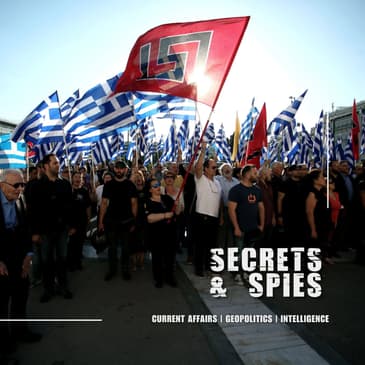
00:00:37] Chris Carr: On today's podcast, I'm joined by author and journalist Patrick Strickland, who wrote the book, You Can Kill Each Other After I Leave, which is all about the rise and fall of the Golden Dawn in Greece.
I hope you find this episode interesting. Thank you for watching. Thank you for listening. Take care.
[
00:00:53] Announcer: The opinions expressed by guests on secrets and spies do not necessarily represent those of the producers and sponsors of this podcast.
[
00:01:17] Chris: Patrick, welcome to the podcast. It's great to have you on. Hey, thanks for having me on. I'm really grateful for the chance to talk. Yeah, no, it's great to have you here. So, just to begin, can you just tell us a little bit about yourself and how your experiencing, uh, your experiences reporting in like conflict zones has shaped your approach to reporting in Greece?
[
00:01:34] Patrick Strickland: So, I started, uh, reporting in 2011. And at that time I was living in Israel, in the Palestinian territory and, uh, pretty much for about four solid years. And, um, you know, as a reporter there, one of the biggest things you'll have to report on pretty frequently is displacement. Um, whether or not it's during an act of conflict, whether or not it has to do with land grabs, settlement, expansion, home demolitions, whatever.
So I had already, um. The idea of, uh, borders and defacto borders on my, on my mind all the time. And when I left there, I, uh, I went to to Lebanon for about a year, and then I joined Al Jazeera in Doha. But 2015 was when, uh, the number of refugees really. Re really skyrocketed, um, nearly a million people across the Greece.
That was the year I started coming here. I didn't live here yet at that time, but, um, you could say that effectively. I, I, I pretty much just followed the, the refugees when they started coming here. That's how I ended up here. Yeah.
[
00:02:45] Chris: You've got this new book, uh, called You Can Kill each Other After I Leave, and I was wondering if you could talk to us a little bit about why you wrote that book, how you went about researching it, and also what's the story behind the title?
There's three questions there.
[
00:03:00] Patrick: Sure. Yeah. I would love to. So. A lot of the reporting and research in this book goes back actually to 2015. Um, I was gathering as much as I could 'cause I just had this sense that, that this pivotal moment in history was happening. You know, with, with what became known as the refugee crisis.
It wasn't that long after that that I started having editors, um, when I was freelancing and when I was working as a correspondent. Tell me that there wasn't much of an appetite for refugee stories anymore and that readers were really fatigued with refugee reporting and that people were just kind of generally tired of, of that story.
And I thought, well, um, if anyone's tired of it, surely it's the people living it. Yeah. I just kind of doubled down on, on doing it at that time, and I followed it through. I wouldn't say, I would say that it wasn't until about 2018 that I kind of understood that I was also writing a book. And, um, yeah, I mean, it, I, I kept reporting in this book all the way up until pretty much the end of 2024.
Um, so almost, almost 10 years. And, um. My sense was my, somewhere deep in my gut, I felt that it was really important to. Know this whole story. I had reported in the Middle East for years. I had reported on the reasons why people left their, their homes, their countries, why they got displaced. I had reported then on the Dangerous Journey in 2015 and after that they took to get here.
But, um, I thought that all of that was one story along with, um. The violence that they could face and the, the hate speech and, uh, the, the, the conspiracy theories and the incessant incitement, um, that refugees and migrants and other displaced people faced in, in Europe. This book is about Greece. It could have been about a hundred other countries, you know, um, but the way things are going, uh, and, and the discourse is so similar when it comes to migration and borders.
The title of the book comes from an incident in 2018, March, 2018, when, uh, a little known neo-Nazi group that had some. Overlap only later. Found out with Golden Dawn, but wasn't in and of itself, you know, golden Dawn interacting with its approval. Um, firebombed, the Afghan Community Center here in downtown Athens, and then they called a newspaper.
They took credit for it and they basically said, we wanna drive all the Muslims from, from Greece. Uh, a few days later I had been, you know, in contact with the folks who worked there for a while by that point, long before it happened because I was, you know, I mean, they worked with Afghan people who maybe don't speak Greek and they're newly arrived and they need to.
To navigate Greek bureaucracy and the migration ministry and the asylum process. Well, all that stuff was destroyed. Asylum documents were destroyed that weren't digitized yet. Um, you know, people's case files, uh, files they had from their home country, which were very important to that process. All sorts of stuff on top of their equipment, their furniture.
They had a little protest a few days later outside. Uh, to basically say we're here and, you know, we deserve to live, uh, without the fear of having somebody burn down. Our, our office and a group of men kind of gagra gathered across the street and they started yelling and it was just, um, it was just the kind of stuff you expect from people who would be offended that refugees were holding a small demonstration.
We are not Muslim. We're not gonna become Muslim. They should go back to their country. All, all sorts of stuff like that. And it got really heated for a moment and one of, uh, the young refugees who was there turned to a police officer. There was just one police officer there, and he said, basically. Can you tell those guys to leave us alone like that?
We're getting a little scared. And the police officer looked at him and said, uh, basically you can kill each other after I leave for all I care, but just wait. Wait until I'm gone. Wow. Wow, wow.
[
00:07:34] Chris: Yeah. Heck of a story that Well, um, can you talk to us a bit about what Golden Dawn is? 'cause there may be some audience members who are not overly familiar with them.
[
00:07:44] Patrick: Golden Dawn is, uh, was a neo-Nazi party. Uh, it didn't start out as a party, it started out as a group or an association in the 1980s. Um, it, uh, it registered as a party in 1993, I believe, uh, right after basically a huge, uh, uptake in nationalist sentiment over greece's dispute with its northern neighbor over the name Macedonia.
Um. Golden Dawn pretty much loitered on the fringes of the Greek, uh, political scene until Greece's economic crisis hit. So really around 2010, I believe that's the first year they got somebody in the Athens City Council. And then 2012 was the first year they made into parliament. Um, and they did so with about seven.
Percent of the vote, which is not small for a party that has a swastikas symbol and you know, had spent years publishing in its journal, um, you know, kind of glorifications of Rudolph Hess and, and Adolf Hitler and. And so on.
[
00:08:53] Chris: Yeah. You would've hoped it would've been a, a warning for some people, but Well, yeah, yeah, indeed.
So what factors allowed Golden Dawn to rise in the aftermath of Greece's economic crisis?
[
00:09:06] Patrick: Greece's economic crisis was very crushing. I've read some, um, scholars describe it as on par, like, you know. Like for Greece's size, it's, it's, it's on par worse than the Great Depression was in the United States.
Wow.
[
00:09:19] Chris: Yeah.
[
00:09:19] Patrick: Unemployment skyrocketed, uh, wages plummeted. Um, you know, uh, suicide went up significantly. The rate of suicide. Um, so there was a, a great sense of desperation here. And I think what. A party, and it doesn't have to be, I mean, not just Golden Dawn, this is any far right party that comes along during a time of economic unease and gives you a simple explanation.
It's the foreigners, it's the migrants, it's the refugees. It, if they weren't here. We could, this country would be fine, our economy would improve. So on a left wing, uh, explanation for Greece's economic crisis or any economic crisis as well, it's not an easy one to understand necessarily. It's certainly not as easy as I.
The, the very false and racist, uh, but very simple one that a party like Golden Dawn offers, you know? And I think that that's, that's part of the appeal. Mm. And, sorry, forgive me. How popular did Golden Dawn sort of become at its sort of height? Pretty much their. The, the num, the percentage of people voting for them kind of stayed around this, around the same overall.
But in 2015, they did become the third largest, uh, party in the Parliament. Mm mm So, um, pretty significant. And, um, of course they had a presence also in the European Parliament. So, yeah, pretty
[
00:10:46] Chris: shocking. And um, you mentioned in your book about how they sort of combine street violence with parliamentary legitimacy.
So can you talk to us a little bit about how they went about that and why that was effective
[
00:10:56] Patrick: in the early 1990s? In the mid nineties, there's a, an American neo-Nazi named William Luther Pierce, uh, the third, and he. He was a very influential, uh, uh, person in the white nationalist movement in the United States in the early 1990s.
He would talk sometimes about the difference between the boots and the suits in the far right movement. Golden Dawn, uh, tried to, and for a moment. Succeeded in, in being both the boots in the suits, um, the violence that they were involved in goes all the way back to the early nineties during those Macedonia protests in the late nineties, a very brutal attack on left-wing students.
And then from 2009, 2010 to 2013. Really a wave of, of what Greek people themselves call rims against migrants and sometimes leftists as well in, in Athens and other cities around the country. Um, but getting into the Parliament gave them access to par parliamentary funds. It gave them access to a, to a platform.
Like none other. And it made them a sort of sensation in the media as well. Um, not just the Greek media, but also the foreign media. For instance, Elias Casre, who was a spokesperson and a parliamentarian, he's now in prison, um, had, uh, there was a piece in Vice many years ago, a big piece about him that described him as the Nazi playboy of Greece.
Um, you know, so, uh, they were able to do that in. Before the 2012 elections. There's a great documentary about it called The Cleaners, where one of the candidates for Golden Dawn said, uh, the, the, the filmmaker asked him after the elections what happens. And he said, after the elections, the knives come out.
And of course, I. The knives did continue to come out after the elections.
[
00:12:53] Chris: Yeah. How effective was that sort of strategy for them? Because obviously you getting parliamentary access, et cetera, is pretty serious stuff and it kind of creates an environment of intimidation with sort of almost sort of state backing, if you know what I mean.
[
00:13:07] Patrick: Right. The, the same guy that I just mentioned, Cadis, um, for instance, uh, he used his parliamentary. Platform to read from the elders of the, the protocols of the elders of Zion, the anti-Semitic, uh, hoax text. Um, so that was a pretty significant thing. It wasn't long until other parties began to boycott them At some point, also, their parliamentary funds were withheld.
Um, but that was because of the violence in January. 2013. Two guys who it was later found out were Golden Dawn supporters followed a young Pakistani man home, uh, on his way to work, uh, like four or five in the morning at a vegetable market and stabbed and killed him. His name was Shah Luman. He was 27 and nothing really happened, but I think that those two were arrested, but it wasn't made part of an issue of, of the party itself.
It wasn't until nine months later when. Uh, golden Dawn member and, um, I believe a former staffer in their cafeteria, uh, at their offices stabbed and killed Pablo Feas, who was a Greek anti-fascist rapper. So after that, they weren't, um, booted from Parliament, but they were, I. You know, that set in, set in motion, the events that led to them being put on trial, which didn't start until 2015, but even as they were already accused of all this, um, all sorts of crimes, violence, weapons, uh, hate speech, I mean, uh, operating criminal organization, um, you know, they were able to retain their, their spot as the third largest.
Party in the Parliament in 2015.
[
00:14:46] Chris: Yeah. What was the sort of strategy of using violence by Golden Dawn? Why were they sort of using that tactic?
[
00:14:52] Patrick: Well, on the one hand, they are fanatical in their neoism, so violence is, is key to that. On the other hand, um, one of the things that they were trying to do is they were coupling the violence.
I mean, it wasn't just. Speedings and stabbings and stuff, although that stuff happened a lot. Yeah. Uh, but they coupled it alongside with, um, let's say holding a blood drive for ethnic Greeks only holding a soup kitchen for ethnic Greeks only. So I think what they were, what, you know, what lies at the core of that strategy is to basically, um.
Try to curry favor among voters and to make those people feel like they're petted against refugees and migrants and, and anybody who's, you know, not born, not born here, or an ethnic Greek. Yeah.
[
00:15:42] Chris: Did that strategy also then, um, was it also designed to sort of intimidate anti-fascists as well?
[
00:15:49] Patrick: No doubt. In 1990.
Two and three. Whenever the Macedonia protests, the, the protests over the name happened. I mean, that's who they attacked. They attack leftist. So one of the guys I spoke to in the book was part of a small Trotsky trots group back then, and they were just handed out newspapers and then, you know, all come along a group of, uh, golden Dawn.
Guys and, and, and, um, really just mob attack him. And he got his teeth knocked out and he got a bad cut on his leg that got infected, 1998. They almost killed students, uh, left wing students who they ran into by accident on the street. Um, so a big part of it was, uh, was. To intimidate left leftists and anti-fascists, but there was always pushback from leftists and anti-fascists as well.
Yeah, and
[
00:16:39] Chris: were golden dawns of consciously drawing on any historical strategic models like the strategy of tension seen in the Cold War.
[
00:16:46] Patrick: Golden Dawn, drew from. All sorts of sources, uh, all over. I mean, they, they fostered relationships with far right groups all over, all over Europe and North America. They even tried to have, uh, you know, golden Dawn chapters in countries where there was a large Greek, uh, diaspora.
So, uh, a big part of. You know, these relationships was also learning from one another, uh, through the nineties. Like I, like I I mentioned this guy, William Luther Pierce, neo-Nazi from the United States, uh, golden Dah, was doing a lot of translating of American white nationalist and neo-Nazi literature. Um, for instance, William Luther Pierce wrote this incredibly racist, uh, novel.
Under a pen name called The Turner Diaries. Yeah, very famous. Yeah. Turner Diaries has been an inspiration for all sorts of fascist violence, including the Oklahoma City bombing in, uh, 1995. Um, Maha Kos, who was the chief of Golden Dawn, wrote a very, um. Somehow even worse, plagiarism and Greek version of the Turner Diaries.
So really they were imitating for a long time. Uh, but then once they were able to, you know, get their foot in Parliament, they also became, um, you know, a model for others. Uh, so they, they, they followed other blueprints and they also provided one. So that it was, it was, it was an important shift, you know?
And then on top of that, there were also, I mean, Mahalo LICOs had been, uh, a part of, if not a, I mean a part of, or a supporter of, uh, the 4th of August party, which was basically a pro junta dictatorship party. Um. Founded by a man named pls, who was a hardcore n Nazi and Holocaust denni, um, when he was a teenager.
So, I mean, these were people that also admired the military dictatorship that Greece had. Um. Because it exiled an imprisoned, communist, and socialist and mass.
[
00:18:57] Chris: Yeah. Was there any evidence of Golden Dawn trying to infiltrate or co-opt state institutions like the police or judiciary?
[
00:19:04] Patrick: There is a lot of evidence of healthy relationships between.
The police and Golden Dawn. There was a period when, uh, and many people, um, have told me refugees and migrants who were living through it at that time, um, when if they got attacked by, um, fascists, say somewhere in downtown Athens. Um, those people. Their, their assailants would've already been in contact with the police.
So they, they knew not to go file a report. If you file a report, you end up in a, in a jail cell. If you file a report, you might end up in the deportation process. Um, during Golden Dawn's trial and, and based on a lot of reporting by really great Greek reporters over the years, there was many times it was reported that people who called the police, let's say about a noise complaint, they, they had.
Pakistani neighbors, for instance, they call the police and say, Hey, these guys who live next to us are making, making a racket. Um, I wanna sleep, whatever. Can you talk to them? And then police officers would say, oh, they're foreigners. I. Call the Golden Dawn office first. There'll be much quicker than we can.
So, yeah. Um, even in the wake of thesis' murder, PHE the rapper, after his murdered, um, there were, there were text messages that were later entered into the trial between Riot Police and Golden Dawn members. So they knew where the anti-fascist protests were and where they were moving. Um, so yeah, there was a lot of collusion.
Yeah. God boring.
[
00:20:38] Chris: And, um, you, you mentioned obviously the, uh, golden Dawn taking influences from the us um, and other places. Can you talk to us about any sort of international links that Golden Dawn
[
00:20:48] Patrick: actually had with far right movements? Well, yeah, I mean, I mean, they hosted people who came here, the Nordic Resistance Movement.
Um. Uh, Casa Pound from Italy, uh, all sorts of folks. They also visited, uh, these groups in other countries as well. Um, I mean, that's, that's something that's actually continued since they're imprison and I mean, there's been neo-Nazi protests, uh, in the last couple years where Italians and, and others from across Europe, Germans have come here and joined, uh, to protest for Golden Dawn members who got killed.
10 years ago, uh, 12 years ago. So, um, you know, those relationships have always been very strong. Uh, they've always had, uh, close ties with, um. A lot of far right movements in Orthodox countries, um, like Russia, like Serbia, um, some Greek volunteers who it's been reported that they were linked to Golden Dawn fought alongside Sir Militias in Bosnia, for instance.
Um. And there was, you know, really close ties between, between, um, Serbian Nationalist leaders and, um, not just Golden Dawn, uh, also the Greek Orthodox Church. Yeah. You know, I mean there were, there was a lot of talk about, uh, the Orthodox solidarity now with, with Russia as well. It's, it's similar. I mean, golden Dawn folks have.
Had visited, uh, Russia over the years many times, and they drew a lot of inspiration. Now, I wouldn't say that it was like the material support that you would see in the past with like Lipin and France or some other far right parties in other countries, but there was, uh, a close sense of solidarity over the Orthodox, uh, issue, but also over the welding of that to ultra authoritarian and far right.
Uh, nationalism, you know? Yeah,
[
00:22:49] Chris: it's interesting. So, um. What role did Russian ideology Alexander Dugan play in shaping and supporting their worldview?
[
00:22:57] Patrick: Well, I'm sure that that varies from person to person, though there is a lot of praise for Dugan and Golden Dawn newspaper publications over the years. Um, they talk about him here and there.
Um, you know, he's been a large influence on a lot of, uh, far right parties, obviously around, uh, Europe, but also even in the United States, um, here in Greece. I mean, uh. I would say that Golden Dawn took a great deal of inspiration from him and also borrowed some sort of ideological, uh, concepts as well.
You know, um, a lot of it was manifested in anti-Americanism, what they called anti-Zionism, which really was just. Antisemitism intense antisemitism and anti-Jewish conspiracy theories, like the great replacement theory and, and all this. So a lot of that stuff, you know, had its roots and ideologies put forth by people like Dugan.
[
00:23:56] Chris: And has there been any, um. Material or ideological support from the Russian state itself, or was it more of a soft power alignment?
[
00:24:05] Patrick: It's more of a soft power alignment to my knowledge. Um, you know, so, uh. As far as I know, I don't think anybody's accusing them of, you know, having been like a Russian front party or anything like that, or like a, you know, like fully propped up or something.
Um, but you know, they were very homegrown because, you know, for a country that had, um, a very brutal civil war in which nationalists were pitted against communists, and then an even more brutal dictatorship under the rule of far right. Uh, colonels, military folks. Um, you know, there is that, that kernel of, of hard line nationalism that.
Give root to this sort of neoism.
[
00:24:51] Chris: Yeah. And have Golden Dawns received any sort of financial backing from American groups or anything like that?
[
00:24:58] Patrick: Financial backing? It would be, I, I, it would be hard to say, you know, I don't, not that I know of. Um, now there were Americans who came here a lot, not just.
William Luther Pierce, but also later, uh, Andrew England came here and he wrote a lot about Golden Dawn. Um, he was the founder of The Daily Stormer, which was a really hardcore neo-Nazi website. I heard it's going under, but I don't know yet. Um, and he had lived here for a little while and, um, you know, bill it.
Built relationships with some of the folks in Golden Dawn. He had posted photos where he was at Golden Dawn rallies. Um, and um, you know, later his publication was very big and kind of giving marching orders to the people who rallied in Charlottesville and August, 2017 for the big neo-Nazi and white nationalist rally that ended up deadly.
And then Matthew Heinbach, who. At the time, led a neo-Nazi party in the United States called the Traditionalist Workers Party. Um, was coming to Greece quite a bit. He was so enamored with Golden Dawn, in fact, that he publicly, uh, discussed his conversion to, to orthodox Christianity. Um, so he was, um, here.
Many times, I, I, I wish I could put a number on it, but I can't. But there were photos of, of him in their, their office, in their parliamentary office. And then not long after that, all that stuff kind of, uh, became a big issue of criticism against Golden Dawn when Charlottesville happened. And of course, Heather Hyer was murdered in the US and, um, Matthew Heba appears on tv.
Uh, being asked, you know, um, are there groups that you're sort of emulating their strategy? And he says, we are primarily modeling our tactics off European na, what he called European nationalists. And he said the Nordic Resistance Movement and Golden Dawn. So, so there was always, uh, this kind of relationship of mutual support, um, beyond that.
Not to my knowledge. Mm. Let's take a break and be right back with more.
[
00:27:33] Chris: Have you seen Golden Dawn sort of model replicated elsewhere, such as the US or uk? And what does that tell us about sort of global far right organizing today?
[
00:27:42] Patrick: I actually think that, so just a little bit of, you know, background is that their trial lasted five years and the party was banned in October, 2020.
Now it's still under appeal, but most of, you know, several of their leading cadre, including the, the founder Makos, are in prison now. Um, you know, uh, however, it's what happened after that that I find to be the most resonant thing now, and I. The most resonant trend. Now, the most common overlap in different countries, and what it is, is that, uh, comparably, mainstream right-wing parties have adopted a large part of the rhetoric that parties like Golden Dawn once used, uh, about borders and migration, and they've totally mainstreamed it.
Um, they dropped the swastikas and all this, but um, you know, now you have the Greek Prime Minister call has referred to migration as an invasion. Many times Donald Trump calls it invasion. Um, I'm from Texas. I've seen the way that, that that kind of rhetoric can move and. Back in 2018, we had a mass shooting in El Paso, uh, at a, at a Walmart where a neo-Nazi targeted, um, Latino shoppers, you know, and killed dozens of people.
And he had this manifesto that said that it was an invasion. He was trying to stop the invasion. Our governor at the time condemned it. Two years later, our governor's using the same language. I. That's what's happened in my view, is that, uh, a lot of what used to be confined to the far right just made, its made its way into, you know.
Comparably, uh, mainstream right wing parties.
[
00:29:37] Chris: Yeah. Yeah. Is that the term, the sort of the changing the Overton window where suddenly what was extreme sort of becoming normalized? Yeah,
[
00:29:44] Patrick: exactly.
[
00:29:45] Chris: Yeah.
[
00:29:46] Patrick: I mean, I think about that a lot. You know, I mean, that. In the, with the United States, it's, it's gone from what used to be confined to, you know, sort of the most obscured neo-Nazi rags, um, to, you know, the White House, uh, Stephen Miller, Donald Trump.
Um, and you know, Greece Greece's government is interesting because. Uh, the party is sort of a big 10 party new democracy. Um, outwardly it's presents itself as center right, and it knows how to speak the language of Brussels, but it, like I said, it is a big tent party and there are elements and people within this party who have, you know, overtly fascist backgrounds.
And, um, when it comes to migration, they still. Have those views. The migration minister now is a man named MACIs Floridi, who appears a lot in this book and, uh, was once the head of a, uh, a national ultranationalist party called the Hellenic Front, and, uh, got a reputation in the 1980s for chasing socialist students with an and later bringing pen degrees many times.
So. Um, yeah, I mean that's, that's the part that's really worrisome because it seems to be taking place everywhere.
[
00:31:02] Chris: Yeah. Yeah. And this, you mentioned something about the center right there. I find it really interesting 'cause they, these right wing groups like Golden Dawn, et cetera, sort of seem to know how to speak to.
Peop voters, should we say, or people who are on the center, right? And this, and then there seems to be a blind spot for those center right voters about, um, the kind of fascist tendencies of these groups. And is there, I, I'm not quite sure what the question is here, but is uh, is there a way. Center, right?
People could be more vigilant about this if, if that is a question, but
[
00:31:33] Patrick: you know, it's not the center right. Folks that I would look to, to uh, provide a convincing answer myself. But one thing that is really, um, I. Bound to fail is the way that people left of sinner have tried to chase. Chase, right? Word. Um, every right wing party when it comes to migration, they wanna speak the same language as, uh, PE people on the right.
And we're seeing that in the UK right now. Yeah, I've read a little bit about that. And of course in the United States it's the same thing. You know, they talk about, they, they, they end up sort of aping and parroting the same kind of talking points when it comes to migration instead of taking a bold stand against it because whatever it is.
That's gonna stop the, the, you know, the fascist drift. Um, I guarantee it won't be compromising on someone's human rights. I guarantee it won't be throwing an immigrant under the bus or a displaced person who's leaving war, you know? Um. That's the way I see it at least. So, yeah.
[
00:32:39] Chris: Yeah. I mean, well, you, yeah.
Let's talk a little bit about the sort of refugee crisis. I mean, how has that amplified sort of right wing narratives in Greece,
[
00:32:47] Patrick: your research, 2015, there was, you know, more than 900,000 people who crossed through Greece at that time. Uh, most like I met people all along the way. Um. And I was, I was really lucky 'cause I had already learned, um, I speak Arabic and I had already learned Arabic and so that just gave me access to like a lot more people along the way.
I could speak to people that a lot of reporters weren't able to, you know, because they were kind of start talking to who could, uh, speak English, um, at that time. Everybody told me that they were moving on somewhere else. Nobody was trying to stay in Greece. Mm. Um, Germany, Sweden, Austria, you know, wherever.
France sometimes. And usually what it was, was either that they knew somebody who was already in that country, or they had relatives that were already in that country. People always frame it like, especially in the, in the news, it's always kind of framed as solely economic, and that's definitely part of it.
But um, a lot of it was just like, oh, I have four cousins in Sweden. I wanna go to Sweden. You know, and who can blame you for that? You know? So, uh, when the borders were. Effectively shut across the Balkans in 2016. It really, it warehoused a lot of people in Greece and on these islands where there had been a lot of solidarity in 2015 that started to wither because now you have these camps that are growing By the day, I mean the Moya Camp on Lebos got like well over 20,000 people at some point, you know, in a village of like a few thousand.
You know, it was a, a doom, uh, policy to confine people to camps. Um, and it also really fed into this right wing anti-migrant, uh, talking points and, and discourse. You know, and I wanna be clear that it was never just golden Dawn. There were always many I. Far, far right groups and, and there are now three, three new ones in the Parliament.
Um, but Golden Dawn at the time was, you know, the first one to go in the parliament and they were the most organized and, and violent. So, um, so when people were stuck here by closed borders across Europe, um, that really, I think. Uh, facilitated. 'cause Golden Dawn was long violent before that. Long involvement probably peaked before 2015, you know, but I would say that that really, uh, fueled this process of that radical right language on migration in the border, um, moving into a comparably, you know.
Uh, right, right wing, mainstream space. Mm.
[
00:35:26] Chris: And did you, have you come across sort of examples of disinformation or propaganda targeting sort of humanitarian groups or migrant communities to sort of exaggerate things?
[
00:35:37] Patrick: Have I come across it? Yeah. I like, I feel like I spend my days wading through it. You know, it's like I have a machete and I'm just like hacking my way through it.
Um, yeah, I mean, even right now, you know, there's the last few years in Greece there's been a, a constant, um, uh, trend of the state authorities going after humanitarians and they're always being sort of, um, cast as spies and, um, you know, Turkish spies and so on, you know, as if a bunch of, you know, young.
Human rights activists from wherever, like on, on Erdogan's payroll or something. But, uh, that's the way it's often portrayed. And, you know, and one of the big pieces of disinformation too is that, um, you know, beyond the, the great replacement there, which has become so mainstream, uh, here and everywhere else it seems, um, was that, um.
You know, this is really part of a Turkish plot against Greece. You know, Turkey turns on and turns off the tap of when there's a flow of refugees, which is, you know, I mean, it certainly has control over how much it polices, its, its borders and people leaving. But, um, that was a way I think to sort of.
Paint in the eyes of normal folks who may have, uh, concerns over Turkey, uh, to paint in their eyes, kind of all migrants as just pawns of, of Turkey and not people who, you know, have a right to. Search for safety and, and seek out asylum, you know?
[
00:37:10] Chris: Mm, yeah. Yeah. Because obviously there's historical tensions between Turkey and Greece, so, um, yeah, I can see why sort of, uh, yeah, there might be, uh, disinformation sort of trying to exaggerate that.
Do you, is that, is that, uh, disinformation then sort of. Created by Golden Dawn, their supporters, or far right groups, or is there, you know, 'cause we talked a lot about, in the past, in this podcast about sort Russian disinformation, it sort of looks at crisis points in a culture and then tries to exaggerate them to kind of cause tension.
Have you seen any either evidence of state backed, um, disinformation efforts or is it purely just sort of far right groups doing this? Or is it a bit of both?
[
00:37:53] Patrick: Well, the, the rhetoric is always, it's always the same. I mean, um. You know, it overlaps in different ways and sometimes it, it. Sometimes when it enters the realm of officialdom, you know, it loses, it loses some of the, some of the more inflammatory, uh, vocabulary.
But, you know, it's quite the same in my view. Um, golden Dawn, uh, often wrote in its newspapers about, um. You know, find one instance of a crime committed by, let's say a Pakistani foreign worker and then, you know, try to turn into an issue of like the country being overrun by migrant criminals or something like that.
Of course, that's not unique to Greece, and of course, I. That has been, uh, something that has been a problem for the state too, because the, the government now, you know, since, especially since COVID, since 2020, the government has talked about migration. It wants to solely talk about smuggling gangs. Yeah.
Smuggling networks, you know, and not the reasons that they exist. You know that what really empowered these smuggling networks was the, the more strict and hardcore militarized border enforcement and patrols, you know, uh, because what you did was you took away, uh, routes that people could have maybe made on their own.
And you push them into the arms of criminal criminal groups, you know? Mm. So, um, it's the same in the United States whenever, um, what's known as deterrence, uh, was put into practice and I. That being the idea that we're gonna make our presence so big on the border in certain spots where people cross that nobody will cross there.
Um, it doesn't stop them actually from crossing. It just pushes them into more dangerous and deadlier routes. Like in the desert and in, in the United States, it's the desert here, of course, it's the ag and c Yeah. And the last few years you've had boats try to go from Turkey around Greece. Uh, on more than one occasion, which is.
Horrific. These are not safe vessels. No,
[
00:40:05] Chris: no, no. And, and I mean, yeah, we see, we don't see it enough actually. But I mean, the human toll has been unbelievable. And, um, am I right that there's even been penalties for humanitarian groups to try and actually help the refugees who are in, in the water? Is it now.
Excuse me. Is it now like a, um, illegal to help, uh, people who are in trouble in the water?
[
00:40:28] Patrick: Yeah, that's a really great question. Uh, a couple years ago I was on an island called s, which I, I reported from a lot in the book. And I was talking to a lawyer who was representing, uh, he worked with refugees and, uh, also, um, some humanitarians.
And I said, I said, okay. Under the law, if I'm standing on the shore and there's somebody drowning 30 feet out and they're, they just came on a boat from Turkey, can I go out there and help 'em? And he said that same thing. He said, that's a really good question. He said, he said, legally, yes, but according to the way the application of the law.
I can't guarantee that you wouldn't be, you wouldn't be then prosecuted for something and charged with something, so, mm. Um, and it's not just helping people too, it's the people on the boats themselves. So, um, if a smuggler jumps ship. Halfway, another little speedboat comes and picks him up because he didn't wanna get arrested.
Once he comes into Greek waters, whoever grabs that steering wheel of the, of the refugee boat, um, is at risk of being charged as the smuggler. As transport as the transporter. And that's happened time and again here, these people are being put on trial and a lot of times convicted. Geez. Yeah. Yeah. So that's not
[
00:41:48] Chris: really helping matters at all, is it?
[
00:41:50] Patrick: So, yeah, and I mean, to answer your question there, it's like if you're on a boat and you're a, you're a hoping to apply for asylum, you're, you know, whatever, but you're not a smuggler, um, and the smuggler or the captain jumps off, then legally, really the only thing you can do is nothing. Wait, and maybe somebody comes, maybe not, but you can't grab that, you know, the hull because then you could be charged as, uh, the, the person transporting everyone.
And is this, do you think, contributing to some of the problems now? Definitely, definitely. You know, here's the thing. In the last, in the last five years. Um, since the, the lockdowns started, you know, I would say that um, the use of pushbacks became, uh, routine pushbacks being illegal or extra judicial expulsions of people now, um, that's skyrocketed and that's made it so much more dangerous for people, you know, imagine that.
A boat gets pushed back from Greek waters back into international water. So, hey, we're not, you know, uh, responsible for this, you know, like that. But sometimes those boats sink, sometimes the Turkish Coast Guard doesn't come. The same thing's been happening on the land border with Turkey for the last five years as well.
I've met people. Who have crossed 17, 18, 19 times before they were allowed to actually apply for asylum. So imagine that you cross and you get captured, you get detained, you get beat up, stripped. A lot of times they're stripped, threatened, whatever. Um, a lot of times they're also taken like their, their, their stuff is confiscated.
Their phone, their money, you know, their documents, whatever. And then. That happens to you. And then they, they're forced to walk back across to Turkey. Now that happens to you 17, 18 times before you get to apply for asylum, which of course you have the, the right to do from from the very beginning, it's uh, it's really grim.
And because of the nature of the this enforcement, it's out of sight a lot of times. We don't know for sure. You know, every detail of what happened in June, 2023 when the boat from Libya sank and near Pilos in Greece and like 600 people died, you know? But I know that I spoke to a lot of people who had survived.
I mean, a few. And, um, you know, what they said was, uh, they believe that the Greek Coast Guard was trying to tow them out of, out of Greek waters.
[
00:44:32] Chris: Mm. Well, let's take a break and be right back with more.
I was wondering if you could talk to us about the Golden Dawn trial and what it's meant for Greece and why it's mattered internationally.
[
00:44:58] Patrick: Well, the trial went from 2015 to 2020, um, and. It was initially 69 defendants when 'em died throughout the process. So it ended up being 68 defendants that included like the entirety of Golden Dawns parliamentary group.
Mm. Um, that included the founder Kos. And um, you can think of it as sort of like what we would call in the United States, like a Ricoh case, um, in the sense that. What brought all these defendants together was the umbrella charge of operating a criminal organization, which, um, you know, then after that, um, different people face different crimes hate speech, or in the case of, of the man who stabbed and killed public fe murder.
You know, so, um, that's how that trial panned out and it went on for, you know, five years. It was, it was very slow moving. There was a point even when the prosecutor, the state prosecutor, wanted to drop the charges of criminal organization because she, I, I, well, I don't even wanna say why. I don't know why.
Um, of course, in the end they were convicted and, um, and now many of them are in prison. It was a big deal because, you know. Here's a party that. At one point consciously modeled itself off, you know, the German variety of nazim and, you know, wore little swastika armbands and, and did uh, uh, Hitler salutes and all sorts of stuff.
Um, and they had caused so much damage and violence, you know, to people. And I think general sense of fear and intimidation for. Greeks whose, who either did themselves live under a military dictatorship or their parents or grandparents did, you know, because it was only 1974 when that collapsed. That's in living memory.
So I think for that, it was, it was wildly significant in that sense. Um, it was a a, a big moment. Uh, historically it was important, um, for, um, you know, Greek democracy, uh, in general. Um, and, and it also maybe sets a bit of a precedent for other countries that may at some point, you know, face a similar.
Similar wave of neo-Nazi, uh, violence and also, you know, support at that level. Yeah.
[
00:47:28] Chris: What lessons do you think countries like the UK and US can take from this experience with the trial of the Golden Dawn and what's happened since?
[
00:47:35] Patrick: Well, actually I think what, what ought to be taken from the trial of Golden Dawn is not what it.
What it did do, but what it failed to do. And that is that I think a lot of people were content, especially the government after the, the guilty conviction or the criminal organization designation, uh, to say, okay, we've, I mean, it's not a problem anymore. We're done. Fascism stunned. We got rid of it, you know, and to take credit from that and, uh, and then to, you know, sort of, um, boast and celebrate it, uh, on the back of it.
But, you know, three new far right parties entered the parliament. Like I said, they don't have swastikas. One of 'em is called Greek Solution, which is a very telling name, I think. Mm. Another's called Ni ni, which means victory, and the other one's called Spartas, the Spartans. Uh, also very telling and um, you know, the Spartans themselves had direct ties to former Golden Dawn folks, including ca, who's the former spokesperson who's in prison, you know, so my point.
Uh, is that what I would want other countries to learn for in other, uh, societies or whatever, to learn from this experience is that yes, it is important to hold them accountable, but, um, that, that legal, like a trial in and of itself will not get rid of the problem of fascism. Um, and I think that that requires building a culture of anti-fascism, uh, from the ground up.
Uh, and it can't just be, it can't just be a trial.
[
00:49:17] Chris: Mm mm.
[
00:49:18] Patrick: Random
[
00:49:19] Chris: question. Do you think there's been a, a failure in education with regards to fascism? Maybe should we say, talk about the UK and US in particular? Because there seems to be a lot of people these days who don't seem to understand what fascism is unless, uh, a fasc is wearing a, a, a Nazi uniform.
Um, and I, and I'm just trying to work out why. So fascism just seems to be on the rise and cutting through so easily these days, and there aren't enough people sort of taking lessons from World War ii, which we talk about often in our cultures, and not connecting the dots, if you know what I mean.
[
00:49:51] Patrick: Yeah. I do think there's a crisis of education on this.
I mean, you know, I can tell you that I, I didn't, you know, I grew up in Texas. I didn't. I didn't learn about fascism in any sense, beyond, uh, maybe talking about World War ii, like you said, and that would be hard events, you know, in a history or social studies class. I didn't learn anything about that. You know?
Um, I think that one of the most upsetting and disappointing parts of this current global fascist moment is that so few people. You can recognize that their own rights are on the line with the things that they're cheering, for instance, you know, uh, when it comes to asylum, you know, that doesn't exist just for, you know, people from Syria or Afghanistan or whatever that exists for everyone.
Maybe one day you or me will have to walk across the border because, you know, for whatever reason a war, uh, you know, maybe we're being politically persecuted, whatever, you know, and. If we've allowed, um, you know, these ultra hard right figures in governments now to basically denigrate and, and defang the entire concept of asylum, then we won't have that.
Right. You know? Um. Yeah, I mean, you know, and I think that, that they're actually quite honest about it themselves. Trump, Trump, for instance, if you take the case of deporting people to El Salvador, um, you know, at first he said, we're only gonna deport these terrible criminals. I mean, people who did the worst stuff.
And then quickly it became also, oh wait, uh, we're not just gonna send criminals to El Salvador. We're also gonna. Um, you know, Roundup students who protested against the war in Gaza because their speech, uh, puts our foreign policy in danger as if speech can put a foreign policy in danger. If your, if your speech, I mean, if your, if your foreign policy, um, is imperiled because of someone's speech, then you're, you have enough problems already.
Yeah. Um, but then, you know, not long later, Trump said, well. Also, we might send some homegrowns there as well, you know, meaning US citizens, whatever. Uh, the, the people on the far right and fascists and white nationalists tell you what they wanna do to immigrants. Refugees, uh, you know, a hundred years ago, 90 years ago, when they told you what they wanted to do to Jews, they were also, you know, giving you the implicit warning of what they will do to you if you don't fall in line with their vision of society every time.
[
00:52:41] Chris: Yeah. And not enough people seem to take that warning seriously, I've noticed. No, no. Yeah. There's a lot of excuses for it and things. Well, um, Patrick, we are coming close to the hour, so, um, is there anything else you would like to add that we haven't covered that you feel is important to you?
[
00:52:58] Patrick: The thing that I think is really important to point out is just that, you know, last year migration to Greece, uh, people crossing the ag and it went up significantly again, the last few years it has been going up significantly.
Um, so people think that this. What was called the European refugee Crisis for so long, they think it's long over, but it's, it's not, I mean, there's, there are still people taking boats from Turkey and, um, Libya and elsewhere, you know, and I just think it's really important to know that that's still going on, and to know that the lack of attention, um, means that it can get much more dangerous.
People are dying out of sight a lot of times. Um, and, uh, and to keep that in mind and then to look, you know, if you look at Greece during the period of 2015 and you're asking yourself, what can I do? You know, one thing to think about is to just, uh, look at the way that people hear. On the left tried to build a culture of Antifa, fa, fascism and solidarity, you know, and it doesn't mean replicate it, it doesn't mean do all the same stuff because there was a lot of brawling on that side as well.
But, um, you know, it does mean that in spirit there was. A large number of people here who are willing to put their body on the line in one way or another, um, on behalf of people who ended up here, you know, by virtue of war or economic collapse or whatever. Mm mm And are
[
00:54:37] Chris: there any, um, are there any lessons for policy makers from your research and work, um, that you, you know, would like to impart?
Is there anything that they could be doing better about handling? The refugee crisis, et cetera, and, and the messaging around it.
[
00:54:52] Patrick: Yeah. For Europe, a large and, and here, I mean, there is so much proof over the years, so much evidence that this, uh, strategy of deterrence doesn't work. It doesn't act, like I said, since 2020, Greece has been trying to push people into more dangerous, uh, routes.
Effective defacto and also militarizing. Its, its border enforcement by by a lot and it, the number of people for the last few years has continually gone up the number of people who reach here. So why keep doing that? It's a lot of money. And it makes it more dangerous and people are more likely to be injured or die or disappear, and they're being pushed into, like I mentioned, you know, smuggling, uh, networks.
So why keep it up if every year, uh, you can see that the number of people coming still. It still rises, you know, is it just to inflict pain because, you know, that's not good. So, um, you know, my, my, my thoughts are that policymakers should really consider legal pathways and safe pathways for people who may need to apply for asylum, um, or cross borders.
You know, because they're gonna cross one way or another. It's either gonna be a dangerous way or the legal way. Yeah. Thank you for that. Well, Patrick, where can listeners learn about more about you and your work? Well, um, listeners could, uh, pick up a copy of, you can kill each other after I leave, uh, my book, which has been out now for a little over a month.
Um, but I also work as the managing editor of a online magazine called Ink Stick Media. Um, we cover, you know, the, the weapons industry, um, war displacement, all sorts of stuff we're based in the us But, um, you know, I'm, I'm remote here in Greece and, um. We're a nonprofit media outlet and, uh, you know, one of the few, one of the only, if not the only, um, outlets that has as one of its primary focuses the defense industry and takes no money from it.
'cause so many of these publications actually do take money from it. So, um, ink stick media.com. That's
[
00:57:16] Chris: where I'm at. Thank you for your time on the show today. It's been great to have you on and hope we can have you back in the future
[
00:57:22] Patrick: anytime. I appreciate it.
[
00:57:58] Announcer: Thanks for listening. This is Secrets and Spies.