
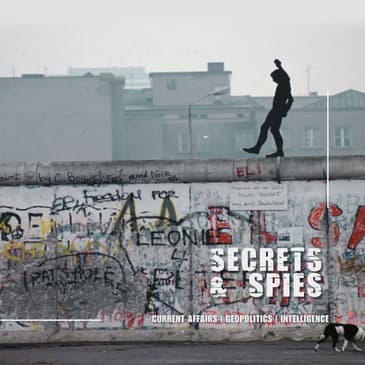
In today’s episode, former Special Forces Detachment A operator James Stejskal shares his extraordinary insights into Berlin's role as the epicenter of Cold War espionage. From his personal experiences in the city to the strategic importance of intelligence operations, James explains how Berlin became the world's most notorious spy hub. Whether you're a history buff or an espionage enthusiast, this conversation unveils the secrets behind Berlin's legendary status in covert warfare.
Subscribe and share to stay ahead in the world of intelligence, global issues, and current affairs.
More on Cold War Berlin
Spy's Guide to Berlin: James Stejskal's book exploring Berlin’s Cold War espionage history
Markus Wolf Biography: On Amazon for deeper insights into Germany's top spy
Teufelsberg NSA Listening Station: Historical overview of one of Berlin’s key signals intelligence sites
Berlin Wall Museum: Experience the history of the Berlin Wall firsthand
Stasi Museum Berlin: Dive into the secret world of East Germany’s secret police
Checkpoint Charlie Museum: Discover stories of espionage and escape in Cold War Berlin
Learn more about James on his webiste: https://jamesstejskal.wordpress.com
Follow James on X/Twitter: https://x.com/jamesstejskal
Support Secrets and Spies
Become a “Friend of the Podcast” on Patreon for £3/$4: https://www.patreon.com/SecretsAndSpies
Buy merchandise from our shop: https://www.redbubble.com/shop/ap/60934996
Buy us a coffee: https://buymeacoffee.com/secretsandspies
Subscribe to our YouTube page: https://www.youtube.com/channel/UCDVB23lrHr3KFeXq4VU36dg
For more information about the podcast, check out our website: https://secretsandspiespodcast.com
Connect with us on social media
Bluesky: https://bsky.app/profile/secretsandspies.bsky.social
Instagram: https://instagram.com/secretsandspies
Facebook: https://facebook.com/secretsandspies
Spoutible: https://spoutible.com/SecretsAndSpies
Follow Chris and Matt on Bluesky:
https://bsky.app/profile/chriscarrfilm.bsky.social
https://bsky.app/profile/mattfulton.net
Secrets and Spies is produced by F & P LTD.
Music by Andrew R. Bird
Secrets and Spies sits at the intersection of intelligence, covert action, real-world espionage, and broader geopolitics in a way that is digestible but serious. Hosted by filmmaker Chris Carr and writer Matt Fulton, each episode examines the very topics that real intelligence officers and analysts consider on a daily basis through the lens of global events and geopolitics, featuring expert insights from former spies, authors, and journalists.
Hosted by Simplecast, an AdsWizz company. See pcm.adswizz.com for information about our collection and use of personal data for advertising.
[00:00:01] Due to the themes of this podcast, listener discretion is advised. Lock your doors, close the blinds, change your passwords. This is Secrets and Spies.
[00:00:26] Secrets and Spies is a podcast that dives into the world of espionage, terrorism, geopolitics, and intrigue. This podcast is produced and hosted by Chris Carr. On today's podcast, I'm joined by former CIA officer and Green Beret James Stejskal. During the 1970s and 80s, James was stationed in Berlin, and today he talks about some of those experiences and his excellent book, Berlin, A Spy's Guide to its Cold War History.
[00:00:53] Just a quick heads up, James is under the weather during this recording, and we had a few connection issues. So unfortunately, the audio quality is not the best it could be. So apologies for that. Apart from that, I hope you enjoyed this episode. Thank you for watching. Thank you for listening. Take care. The opinions expressed by guests on Secrets and Spies do not necessarily represent those of the producers and sponsors of this podcast.
[00:01:32] James, welcome to Secrets and Spies. It's wonderful to have you on. Thank you very much. Could you just give us a very brief overview about what your book is about? My book, A Spy's Guide to Berlin, actually, Berlin, A Spy's Guide. It's my view of the Cold War history of the city from the end of the war until 1990.
[00:01:59] Not only what I experienced, but what the city experienced in this wonderful town that was the focal point of so much for power conflict and confrontation. It was a quiet war that was far on the streets of the city, inside the bars, inside the restaurants, and on the wall.
[00:02:29] So it's a memory of the important places that figured in that war, in that Cold War, and why it remains important. Fantastic. And it is a great book with some brilliant photos. And I like the way you sort of ordered it as well. It's sort of both a kind of how-to spy as well as the history of the actual city as well. So it's really, really well done.
[00:02:54] Well, that's an interesting point because a lot of techniques and ideas for intelligence tradecraft in the parlance started there. And you can see that kind of vocabulary reflected probably mostly in Le Carre's book. But it's definitely an interesting place.
[00:03:21] Being able to go back and see approximately what Foucaire depicted in the spot you came in to the Cold War. So it was an interesting place and it remains. Before we kind of go into talking about Berlin in details, I wonder if you could talk to us a little bit about your connection to Berlin. Well, actually my connection to Berlin is the only reason why I wrote the book.
[00:03:49] I trained in the Army, I should say, as a paratrooper and then with Special Forces. I joined Special Forces. I was serving in the United States. Although we were doing field exercises in Europe and other places, I got an offer because of my background and my language ability to serve in Berlin.
[00:04:15] That was fairly, I mean, the second part of my career, I guess. So I spent on two different occasions about years in the city as a member of Special Forces unit. It was a classified unit at the time.
[00:04:35] And it really set my goals and my interests for the rest of my life of working in civilian clothes, working in intelligence-related and special operations type missions.
[00:04:54] And it suddenly struck me several years ago that Berlin is not my favorite city to visit as a tourist, but it's a city that's got a lot of personality. And I think I'd put it, if I can remember this correctly, it's a city that you can leave, but it never quite leaves you. And that's the kind of impression the city made on me.
[00:05:22] When I first got there, a gold war, very crises going around the world, but it seemed like Berlin was one of the focal points for the difficulties of political and national difficulties that were going on around the world. So it was a very impressive city. And like I said, again, I've gotten stuck to her. Fantastic.
[00:05:52] Fantastic. Just before we kind of go into Berlin's history. So thank you for telling us a little bit about your connection to Berlin. And you were there late 70s to the early 80s, which must have been a fascinating time. And you saw, were you there when the Berlin Wall came down? Well, actually I was there from 77 to 81. Okay. And then again from 84 to 89. And I actually left just before the wall went down and I was with another unit.
[00:06:21] When the wall came down, interestingly, I got a telephone call from a friend of mine who served in Berlin with me. And he said, turn on CNN. This is the 9th of November, 1989. I turned it on and there it is, you know, telecast from the Berlin Wall, all the people, the bananas, everything.
[00:06:45] The next day I booked a flight of Ban-Am and I was in the city on the 10th, 11th of November. And went straight to the wall and spent about the next three weeks, I think, in Berlin with friends and everything.
[00:07:02] So it was quite a scene, quite chaotic and just sort of culmination of everything that we had business. Yeah. That's changed now. And what was it like, because you were describing in your book about how Berlin's a bit like, you know, because you're kind of on the front line of the Cold War, but then you could go off and get a schnitzel in a bar somewhere and be almost oblivious to it.
[00:07:31] What was that sort of duality like whilst you were there? Yeah. Well, you described it well. It was weird. On one hand, you could see the difference between the two cities, between West Berlin and East Berlin. On one hand, it was very threatening.
[00:07:50] And on the other hand, it was kind of exhilarating to know that you were there with a very special purpose, although it might have been suicidal, to fight the war if it would come up. But I think the Germans sometimes called it Hexenkessel, which is Colburn, because you were isolated and stuck inside the small city.
[00:08:19] You could not travel easily. You could fly out. You could drive out special procedures and everything else. And some people felt like it was too oppressive. It was like being in a zoo. Yeah. We kind of disparagingly or jokingly probably called it the world, potentially the world's largest POW camp if the war had come along.
[00:08:45] It was, it's very hard to describe, but it was just sort of a unique feeling of being in a city, having a special purpose and then being surrounded by about a million Soviet war pack, wars of act soldiers. So, it was, I just, like I said, I love being stationed there and that's why I served there twice. So, yeah, fantastic. Fantastic.
[00:09:10] So obviously there are many cities that claim the title city of spies, but why do you feel Berlin deserves it more than other cities like Vienna or Washington, D.C.? Well, Vienna was right after the war, pretty much on par with Berlin. It had, it had the same arrangement for power or split between the Soviet Union.
[00:09:37] And then what I now call the L as France, Britain and the United States. So it was similar. And you can see that in some of the movies, like the third man. But then Vienna eventually got returned to the Austrians, self-governance. Berlin never did. And there are other cities that had, had a lot of spite that he's going on.
[00:10:07] Now, London to some extent, Washington also. So, and then going east, places like Hong Kong. And I mean, you can look at Saigon. But those were all more regionally oriented and on a much less, much smaller scale than in Berlin. Berlin was a special status city. I mean, the control of four different countries.
[00:10:37] The Germans had no real power there. So it was sort of like a, a kind of a free for all. Um, it was like having a rugby match with four teams and no rules. Yeah. Yeah. Berlin obviously was important for espionage and is it, was it important because of the espionage or was it, um, or did it become inevitable that it would become a hot, hot spot of espionage because of it sort of, uh, Berlin, you know, the sort of post-war status.
[00:11:07] Uh, the old chicken in the egg. Yeah. Yeah. Um, I mean, it was the capital of, uh, Germany prior to World War II. And it became again, uh, 1992. Um, and Bob, Bob took over as the capital after the war, obviously. But Berlin was the focal point. I think because of the occupation, um, it was a place where the Germans, obviously they
[00:11:37] had a city government that they had some influence on what was happening in the West. Um, but it was really a place where people could come and see. They could come in and meet from other countries easily. And it became, uh, very important for espionage. Uh, prior to World War II, obviously the British and French, um, spent a lot of time in, and trying to find out, to bind the secrets of the Germans.
[00:12:07] Um, but after World War II, it was the allies and Soviet Union working against each other because that's where they could meet on the street, probably easier than any other country in the world. And it, it made, made Berlin a spike. Hmm. And obviously having so many, um, you know, different occupying powers in one place, it could have made, it must've made it feel a bit like a pressure cooker.
[00:12:35] Um, from an intelligence perspective, why do you feel that was sort of such an explosive arrangement? Um, and the British are less so for us, we called it the outpost of Crete.
[00:12:59] Um, it was a symbol of democracy in, in Europe and it was forward based, obviously inside East Germany. Um, the East Germans, the communists and the Russians saw it as a thorn in their side. As long as the American British and French there were there that undermined their authority in the country. And it made it.
[00:13:26] So they wanted nothing more than kick the allies out. And that was one of the first crisis in the city. Um, so there was that, that antagonism between the four powers over the status of the city. But then it was expanded to all the other confrontations that were going on, on the route. And Berlin again, uh, was the place where these like don't kick. Yeah. Yeah.
[00:13:55] Can you talk to us a bit about sort of the, the kind of the history of the division of Berlin and kind of how, um, should we say the Russians presented the, the East side of Berlin to the city residents? Because obviously they were kind of, um, they didn't have any, you know, they were kind of cut off from the rest of the world in some respects with this sort of division. As you stated, uh, Germany was divided after the war amongst the four victorious powers,
[00:14:25] France, England, or the UK and the United States, and then Russia on the East. Berlin, because it was the former capital, uh, it was determined that that would not become the capital for a while. And it was also split. But initially the Russians did not want to give a part of Berlin to the French.
[00:14:50] So when the maps were made up, the British occupation sector was actually reduced in order to give France an opportunity to, to share, share in that occupation. Uh, I think you can attribute that Charles de Gaulle. Charles de Gaulle was very insistent on occupying Germans.
[00:15:14] So the allies, the three allies, France, U.S. and Britain, presented that, uh, presented Berlin as a center of democracy in Europe in the East. While the Russians and the East Germans countered that and they presented it as a center for their progressive society, essentially.
[00:15:39] So all through, uh, a history of Berlin, you've got, you've got, uh, the West celebrating democracy and freedom, and on the other side, the Russians, not so much democracy, there was one, but they were presented, presenting Berlin as an example of what communists can do. Um, all through their, uh, all through the Russian occupation and through the existence
[00:16:08] of East Germany, they were touting superiority of, of their methods over arms and by troops. Yeah. And why did they choose to sort of build the Berlin Wall to physically divide the city? Oh, that's, that's a somewhat longer story. Um, 1945, the city was divided, occupied shortly thereafter.
[00:16:32] The city itself from West Berlin was isolated from East Germany, uh, but not from East Berlin. Um, so that the city was essentially open. Yes, there was a, a marker, uh, a line that showed the division between East Berlin and West Berlin, but as far as people, there was no restrictions. There were no restrictions.
[00:16:58] So, uh, once it became apparent that the communism was not doing everything that it was supposed to in the East, a lot of people started to vote with their feet and left East Germany, left East Berlin and came into West, West Berlin. They could not come into West Germany because there was another guard up there between East and West Germany, but they could come to West Berlin.
[00:17:26] And then West Berlin, they could travel wherever they wanted by arrow or by train. So there was nothing that they could do. The problem was that the East Germany was losing all the better people. And they were streaming into, uh, in the West Berlin, hundreds of thousands a year. And the East Germans saw that as a threat. Uh, they were, their economy was going to collapse and it would have had they not stopped.
[00:17:52] So their only solution, once they figured out that the city was not going to be, um, the allies were not going to leave them, the only solution they could come up with was the anti-fascist protection barrier to keep, to keep those evil Westerners out of East Berlin. Well, in reality, it was to get the East Berlin from escaping to freedom. Yeah. Wow. And from your time sort of serving there, did you ever get an opportunity to sort of get
[00:18:21] an idea of the East German perspective in the sort of seventies and eighties about the, the wall and East Germany and communism? Yeah. From the few opportunities I had to talk to East Berliners that would talk with me. I mean, if you've talked to an official, obviously it was always better than yours, but on the other side, it was, I think more than anything, resignation, uh, that they had to endure this.
[00:18:50] Uh, they did not speak openly about going to the West, but they hoped that someday the wall would be taken down and they could reunify Germany and have a better one. Um, there was not a lot of over discussion of revolt or rebellion because there was not talk
[00:19:14] of rebellion or revolt because the East German and the Russian security services were pervasive in their internal security. So they could not risk. Yeah. Yeah. Yeah. Cause, uh, East Germany had an awful lot of sort of domestic, um, spies buying on each other. I can't remember what the statistic was now, but it was an awful lot of people were spying on their neighbors. Um, it was crazy.
[00:19:38] Well, the ratio of official security officers, the East German, uh, ministry for state security, which is that guy right there. Um, was about one officer for every nine. So it was, I forget the exact numbers, something like 280,000 employees.
[00:20:01] And then they had networks of what they called unofficial mid-part lenders, unofficial common workers, essentially. And, uh, there were hundreds of thousands of those. So you, you might have your children informing on you or your next door neighbor or your aunt or uncle or whatever. Um, and the people knew that. And so they just clammed up. Hmm. Wow. No, it must've been a, yeah, it must've been a very unpleasant, uh, experience for the
[00:20:31] East Germans. A lot of things. So they had a system called their sets of which was essentially destroying the life of a person. If the East Germans of the Russia, especially the East Germans, if they found out somebody was talking bad about the regime or for any reason, they had, they had a methodology to destroy the person's life to make sure they would never go. They would not go to college.
[00:21:01] Their children would not go to college. Um, their friends would not talk to them. They'd start rumors and then you went, oh, and even have them fired so that they would have to work meaningful labor. And it would destroy a person's life. And quite, quite often it would destroy their sanity. Hmm. Moving back to kind of the intelligence side of things.
[00:21:25] Um, so what role did the CIA's Berlin operation base play, um, in Berlin compared to, you know, other CIA stations across Europe? The main CIA office in a country, which is normally in the capital, is called the station. And any other bases or any other offices that are set up in the country or sometimes in an adjacent
[00:21:50] country that doesn't have a capital or doesn't have a station or called base. So because the CIA's station was in bond, Berlin had what was called the Berlin operational base. And from the very beginning, uh, well, not quite. The OSS had the first office there. And then when the OSS went away and CIA gave law, it became the Berlin base.
[00:22:15] Um, it's, it's mission was to run clandestine operations inside West Berlin and also try to project into East Berlin. Uh, it was not that big of a station or office. Um, but it had the primary responsibility for running back. Jim, uh, where a bond took care of West Germany and it stayed in operation from basically 1946.
[00:22:42] And until the, uh, now the American embassy moved to Berlin. So the Berlin state or station is in inside Berlin. Um, and with regards to sort of, should we say Western spies, what were they primarily sort of looking for in their kind of espionage efforts in Berlin? Well, the agency, CIA concentrated on strategic intelligence, what the intentions, um, actions
[00:23:12] of the Russians or the East Germans might be. And also any of the other Warsaw Pact, uh, people that might be in the city. Um, whereas the military intelligence people were concentrating more on the strategic, uh, side of things, um, where the units were in the state ship, where the people were moving to, uh, the types of equipment, things like that.
[00:23:37] Um, so the, the CIA is working at a somewhat higher level with the military. Uh, uh, obviously the military wants to know what the indentures or what the plans of, uh, of the Russians in the East Germans are. Um, but that's, that's pretty much what, uh, what they concentrated. Also, there was a very large, uh, counterintelligence element in Berlin, uh, because of, uh, so many
[00:24:04] spies, the British French and the Americans, as well as the people on the other side, uh, had a lot of counterintelligence agents that, that spend their time trying to find out where, who the Russian spies or the East German spies in, in West Berlin were. Mm. Mm. Yeah. And how closely did like the CIA MI6 work together in Berlin? And, and, you know, were there signs that maybe the cooperation started to fray at certain times? Because obviously
[00:24:33] there was quite a few spy scandals, um, during the Cold War. So, uh, you know, especially on the British side. And later the Americans, too. Um, and the French. Cooperation between the British and the Americans was, uh, greater than the cooperation between either the British and the Americans with the French, uh, the French were a little bit or, uh, this time. Probably a good thing
[00:24:57] that happened. There was very good cooperation at the beginning. Um, obviously, uh, SIS or MI6, uh, felt that the cousins across the way, uh, the Americans were a bit of country mumpkins and the, uh, the, the, that had the kind of experience they had, which was true. Um, but they also had
[00:25:21] some issues with the Cambridge five. And once, uh, once that broke, once, uh, uh, the other guys were, were, uh, marked as trainers, there was a lot of suspicion between them, mostly on the American side of the British, uh, that would happen. Uh, that would change a bit later. Um, the British would not trust the Americans because James Engleton, who was a counterinteligence,
[00:25:52] he was a genius but he was also more paranoid than anybody else in the entire world. So that did a lot for not helping the relationship. But there were good operations too the Berlin Dunnel example was a very joint British American operation the Teufelsberg Surveillance, the electronic surveillance site was a joint
[00:26:21] operation. It was American civilian collectors military collectors along with British GCHQ and military So that was all good so everybody was trying to cooperate but at the same time they were very wary of each other Yeah of course of course. Now you just mentioned the Berlin Tunnel which is obviously legendary even though it was compromised
[00:26:49] why was it still considered a success? For a long time it was it was discovered fairly early on by the Russians the British and the Americans jointly built a tunnel underneath the wall to tap into the Eastern telephone system and part of that telephone system included the Russian military networks so they were basically
[00:27:18] pulling in thousands of messages telephone calls some data lines and they were sharing all that information and later came out that the Russians found out about this because of George Blake and were aware that the Americans and the British were tapping their telephones but they didn't do anything about it because they wanted to protect George Blake
[00:27:47] it took them a long time to figure out a methodology to accidentally discover the site so when when it was discovered and the fact that they had known about it for a long time it was revealed everybody said well they were just feeding garbage information through those networks that was entirely wrong they were they did not disturb their own communications because they thought if they did
[00:28:17] people would become somebody might be aware that it would have been compromised so they let all their standard traffic go through classified talks non-classified everything so it was a mistaken thought to think that this was a failure and in reality they gained all kinds of very important information until the connection was finally cut let's take a break and be right back with more
[00:29:01] and you mentioned now I'm not sure on the pronunciation is it Teufelsberg the SIGINT site Teufelsberg Teufelsberg Devil's Mountain that's it and it's become kind of iconic and why was it such a kind of crucial and sort of critical signals intelligence site and how exposed was it to sort of Soviet and Stasi counterintelligence if you go to Berlin and see Teufelsberg you will readily understand
[00:29:31] why it was so important it was built on the pile of rubble after the war a listening ballistic collection site that sits about 400 feet above the city and this is on the North German plain so if in any direction you look it's flat ground this site could intercept radio and telephone traffic communications from
[00:30:01] the border between West Berlin or West Germany and East Germany all the way to the Polish border with Russia it was the premier collection site for the NSA and GCHQ throughout the Cold War I mean they could listen to everything and that was a big threat obviously to the Russians I mean they could listen to aircraft traffic tank land or something the radios everything
[00:30:32] so yes it was a very successful operation but obviously it was targeted for the communists and they could not get into the site well we could but they couldn't so they tried to compromise it by recruiting people that work there and they had some success in that and they had some people that volunteered to give information to the Russians or the East Germans
[00:31:05] I'm going to pull a wild guess here and say maybe seven people defected or turned over information to the Russians but basically what they were doing was telling the Russians what we knew about them so they could change things and that obviously was very important to them or change the crypto change their codes
[00:31:34] but it was like I said it was very successful throughout the duration of the war yeah and I was looking at some of the photos in your book you got some wonderful pictures in your book and looking at the historic photos of the site and now you describe it as serving as a playground for artists what's happened to the site now the Allies lived the site was abandoned and it's not an extremely large site maybe
[00:32:03] two or four acres but there are buildings on top and there are some interesting geodesic domes on top so in the 90s it became a place for homeless people free thinking people artists rebels to basically congregate it became a big living place
[00:32:32] on one hand and then on the other hand it was a place to have parties or paint or whatever and the artist colonies basically took it over and started doing murals on the outside inside I mean the murals were ever tainted you go up there now and what you saw a week ago might be completely different the city of the government was going to destroy the site return that whole area to the park inside which it's inside of but then
[00:33:02] people protest and it was eventually declared a protected site and now you pay admission to get into it so you can walk around these ruined buildings and see all this avant-bird art up there so it's supporting the artist community in Berlin now that's good fantastic so I'm going to move us a little bit into the eastern services the KGB and the Stasi so how did the KGB
[00:33:32] view Berlin compared to other cities such you know in the Warsaw Pact and even Moscow itself well as we were talking about before the KGB in Moscow were primarily interested in counter revolutions to stop the activities of Americans or the British or whomever although they did try to recruit Americans there
[00:34:02] and penetrate the American embassy which they did several times successfully their focus in that city was more countering intelligence in Berlin it was more offensive because they had access to the allied services they could try to recruit people to work on Teufelsberg and they had immunity there they could be in West Berlin conducting
[00:34:31] an operation and if they were arrested the only thing the allies could do is throw them back over the wall same thing for the Americans in East Berlin if you were caught doing something the only thing they could do is throw a spy on the French British and the Americans and the other people because every government yes they had embassies that bond but they
[00:35:01] usually had some kind of mission inside Berlin because it was so important for the United Nations the different organizations there so that that's one of their one of the big reasons why they used every opportunity to try to get into in the West Berlin for the East Germans it was a bit more difficult because they were not under the Four Bowers agreement if their agents got
[00:35:31] caught inside West Berlin doing something or in West Germany they would be arrested in Berlin so they had to be a lot more careful working in Berlin than the Russians that meant to some degree the Russians were a lot less sophisticated than the East Germans had to be very nuanced and very careful in their operations and there were Marcus Wolf
[00:36:01] the head of the East German foreign intelligence operations was a 3D gentleman winner and worked everything out from beginning to end and was a very capable opponent so that was their focus over there our operations in East Berlin were hampered though because
[00:36:30] of the East German and the Russian counter intelligence system because that security was so pervasive it was extremely difficult for our people to work in those areas a little bit easier for the Russians and the Asians and what was the focus for Russian intelligence in the West what kind of information were they trying to get well you're always trying to get
[00:37:00] the intentions of the opponents government but the Russians were very concentrated on military came they wanted to know what can we add who our people were what our operational lands were and not only in Berlin but in in Western yeah yeah I I think they used places like London
[00:37:30] New York for the UN and Washington to go for the extremely high level stuff but definitely they wanted to use Berlin to get every possible competition yeah yeah and East Germany sort of became a bit of a haven for sort of terrorist groups who were looking to undermine should we say capitalism do you have much
[00:38:00] insight on sort of to what extent these terrorist groups were sort of directed by the KGB or even the Stasi and to what extent they were tolerated tolerated is an interesting word at one point the East Germans created a special division within the Stasi had different names but I think the last one was its mission was quote
[00:38:30] unquote counter terrorism but what they were actually doing was hosting and training terrorist groups from around the world to employ them in Europe called the jackal number of the German Red Army faction terrorists found safe haven in East Germany the Libyan bombers that flew up the La Belle Vesco came through East Berlin so the East Germans not only tolerated it they didn't really direct it but
[00:39:00] they tolerated it and provided support and their whole goal was to destabilize the Western government the assassination of a student an unarmed student was shot by West Berlin Police Office turned out later that West Berlin Police Officer was an officer of the East German Security Service or an agent of the East Security Service So the conjecture
[00:39:29] was he or was he not directed by the East German Security Service to kill a student left weaning student to cause issues turned out later that he was not the East Germans basically cut the guy free because he was out on his own but those kind of operations were definitely important to the Stasis because
[00:39:59] again they wanted to undermine the allies in Germany and they wanted to undermine the German government Yeah yeah and with regards to the Stasi we sort of touched upon this but what made East Germans intelligence systems so effective and so feared There has been also some discussion about who actually controlled the government in East Germany was it the Stasi or was it the bullet bureau and a lot of the members of the bullet bureau were former
[00:40:28] Stasi people they were so effective because they were the sword and shield of the party they were to protect the party and the party had total control and they knew that without Stasi they would lose control so they had the full backing of the East German government and the East German government basically gave them carte blanche to do
[00:40:58] almost anything they want they were able to arrest people put them up for trial and seal them away for a long time if they were seen as a threat to the government so with the government that backs you like that then you don't have a whole lot of trouble and do you think Western intelligence services underestimated the Stasi
[00:41:36] we tried to run to Poland and Hungary and they were all compromised and we sacrificed a lot of people of course guys like Philby helped but a lot of CIA and SIS people said they are not sophisticated They won't catch us.
[00:42:05] But in reality, the KGB and the MAPIS were very, very sophisticated. I mean, they've been APIS. The KGB was started as a clandestine organization of a clandestine political organization. So they were used to keeping things from 1916, 1915. They had a hell of a lot more experience at running underground operations than either the MI6 or the CIA.
[00:42:36] So they were very geeky. And the East Germans, of course, learned a lot from the KGB. But they also became even more sophisticated than the Soviets. I think that was because they had a lot more people that had better education than the Russians. A lot more education and a lot more exposure to the West. And probably understood Germans better as well than the Russians did. Well, definitely that too.
[00:43:03] They were able to infiltrate a lot of sleeper agents in the West Germany because of that. Especially after the war. People that got caught up in East Germany or in Eastern Europe. Some people that saw asylum in Moscow because of the Nazis came back to Eastern Germany.
[00:43:28] And then they were able to slip them into the West with forged documents or a very good cover story. And they joined the government and were able to infiltrate the West German government. Much easier than trying to go the other way. Yeah, yeah. Can you talk to us a little bit about Marcus Wolfe? Because he is considered responsible for some of the most successful penetration operations during the Cold War. Why were they so effective against West Germany?
[00:43:56] Marcus is one of those guys that went East when the Nazis came in. As a young man, he and his parents moved to Moscow. He learned Russian. He spoke Russian. He also spoke English. At the end of the war, he was a journalist for the East German radio system.
[00:44:23] And he even took part in the Nuremberg trials as a journalist reported. But, well, he was actually working for the Stasi. He was just an extremely smart, again, a 3D chess player who understood the Germans. He was a German, obviously. Well read.
[00:44:48] And understood the motivations and needs of his target armies. He was especially good at doing the so-called honeypot type of recruits. He also put a lot of sleeper agents into the West.
[00:45:08] He was just, he had, and he had no confusion about seeing his own government and doing things that they had no idea. I mean, he was a guy that would go out and do something and worry about asking forgiveness later. So, he's got a very good biography. Yes, yes. I've just bought a copy. I've got it. I can see it on my shelf at the moment. Did you know he's also written a cookbook? Or he wrote a cookbook.
[00:45:39] Yes. And I just found a copy. It's all in German. So, I'm going to have to brush up my German to understand the book. But apparently, it's quite, I mean, I've seen some of the images in it. And there's some fun stuff in there. But it seemed quite an interesting book. I had not seen a physical copy. I was tempted to buy one. I saw on a website a while back.
[00:46:00] It was signed by Marcus Wolfe and endorsed to Eric Milka, who was the head of the stock and the actual director of the whole organization. But they wanted too much money for it. Yeah. I'm surprised the Spy Museum haven't snapped that copy up. No, that's brilliant. That's brilliant. Yeah. No, Marcus Wolfe, a fascinating character.
[00:46:25] And some say he might have been the inspiration for John le Carré's Carla, who was Smiley's sort of opposite number. Although, I think that he's John le Carré continues or continued to disavow that. Maybe because he didn't want to give Kim Marcus too much credit. Yes. Yes. True. Or maybe get sued by Marcus post-Gold War. But let's take a break and be right back with more.
[00:47:07] So many, many years ago, I was chatting with a journalist, Stephen Gray, who wrote a fantastic book called The New Spymasters. And somewhere in my conversation with him, he mentioned that a CIA officer, and I believe it was Milt Bearden, but I could be wrong, said that Berlin was for amateurs, but Bonn was where the real action was sort of going on. I was wondering what you thought about such a statement about Bonn versus Berlin, especially in sort of espionage history, because I find it all fascinating. I don't know.
[00:47:36] Maybe he thought it was too easy to be married at Berlin, because when I was working with the agency, I used to hear all the time that you people out in Asia, you people out in Africa, you have it easy, but you don't have any hard targets like Russian, Chinese.
[00:47:54] Which is totally wrong, because in fact, more Russians, more Chinese have been recruited in places like Africa and Asia than in China or Moscow or Bonn. Because once you get them that far away from their home, that far from their normal place, they become either a lot more willing or a lot more vulnerable to approach.
[00:48:22] So Bonn was a lucrative place for espionage, probably had more high-level diplomats with all the embassies. That might be more of what he's thinking of. But I think as far as the element of danger of compromise, losing information was probably a lot higher. Yeah.
[00:48:52] And obviously, when the wall fell, what happened to Berlin's intelligence ecosystem? Best way to put that is it's consolidated and solidified inside the city. The German intelligence elements, which were somewhere in Bonn or near Bonn and some were down by Munich, all coalesced and came up to Berlin.
[00:49:20] Obviously, all the embassies moved back to Berlin and brought their people with them. So now, instead of being spread out over the West Germany, they're all vocalized inside Berlin. Obviously, the Stasi went away.
[00:49:40] I don't know of any Stasi people that were picked up by the West Germans, although I think some came back for debriefings voluntarily. Marcus Wolbe was not one of them that voluntarily was debriefed. So Berlin, I think, has a lot more official presence of intelligence officers now.
[00:50:10] And for that reason, it's still very important. The espionage community, especially with all the continued traffic between Western Europe and the Eastern Europe, the countries like Poland and the Czechia, now I guess that's the name, and Latvia, Lithuania, those countries, a lot of them rely on Germany for assistance and for military aid.
[00:50:39] And for that reason, Berlin repains a hotspot of espionage activity. It's become more difficult for the Russians, obviously, although their embassy is still very large there. Yeah, so it's an important player still. Well, yeah, Germany is very much a target for Russian espionage, especially today, especially in light of the war with Ukraine.
[00:51:07] And there's all sorts of things sort of going on. There's influence operations. There's been sabotage operations. There's been assassinations or assassination attempts. So, yeah, so Berlin's very much still got a lot of contemporary spying going on. Yeah, I think Angela Merkel, who was born and raised in East Germany, was trying to accommodate, not appease, but accommodate the Russians.
[00:51:34] And I think Germany has turned away from that to some degree now that they see the Russia as a possible threat once again. So, yeah, I think we're possibly going into, we'll see how it comes out. I think we may be starting Cold War too before it gets long. I know a lot of people postulated that tough. I don't think we're there yet. We definitely feel like we're getting there.
[00:52:04] Yeah. Yeah. Yeah. The world's a lot more bipolar now than it was. And before it was just us and them, and now it's us and everybody else. Yeah. Yeah, totally. I've got a couple more questions. This might be the harder of the two. So, if Berlin was to teach us one enduring lesson about intelligence and power, what do you think that lesson would be? Well, that's kind of like real estate. Location, location, location.
[00:52:33] The city gave everybody the opportunity to play on basically a level playing field with urge you roles. And not only was it an opportunity to spy on people, it was an opportunity to be spied on. People always think about what are our advantages, how do we win this thing, and kind of forget about those in-run opportunities that you need to defend against.
[00:53:03] So, I think Berlin encapsulated everything about the intelligence business in one location. Yeah. Yeah, it was a, hopefully we'll never see a situation like that again. But I think it was unique in the fact that you had so many powers.
[00:53:26] So, it goes together, sensibly working together, but in reality working against each other, even on our side in some cases. So, it was a unique opportunity, and I'm just thankful that I was able to take part in it. Yeah, fantastic. Have you been back to Berlin much since your time you were stationed there and operating there? Came back in the 90s a couple of times, and then I laid off.
[00:53:54] Once the wall fell and city became one, it lost a lot of the flavor for me. Before, I had a, it was not only a unique place to be, but I had more purpose. So, going back now, or back then, it was quite different. I've been back, though, now a number of times.
[00:54:22] In the past two years, I've been back there, I think, four times. So, it's regained some of the interest for me, primarily for the historical aspects. But, yeah, still very different than what it was. Yeah, indeed. Now, I'm yet to do a proper trip to Berlin. I'm hoping to do it either this year or early next year. I'm trying to pick the right moment where it'll be atmospheric.
[00:54:51] And I'm thinking, like, autumn time is probably a good time to go. But do you have any favorite sort of spy sites or locations in Berlin? There's loads in your book, and you've got great photographs of all sorts of things from, like, the CIA headquarters there and so on. So, are there any spy sites for you? Like, is there a top five that you would love, you know, you love seeing when you go to Berlin? Like I said, it's changed quite a bit.
[00:55:16] There are still some, I mean, Spandau Prison where Rudolf Hess was turned into a parking lot, literally. And not much of the wall remains. I think one of the best places to go to see and feel what the wall was like is a place, what is called Bernauerstrasse. The Berlin Wall Museum is there.
[00:55:43] There's a remnant of the wall and a tower still there. That's a good place to go visit. Down around the Brandenburg Gate is just interesting. It gets sort of the flavor. The wall is gone, but the area is just, it's a beautiful sight. It's next to the terror guard in the very large green area.
[00:56:08] The French and American embassies are on either side of the Bremenburg Gate, where they were before they were bombed in World War II. The Russian and British embassies are close. And then you've got the Adelan Hotel, which is very famous in novels, especially in 1930s Berlin.
[00:56:28] And then walking further to the Hinch, you can go all the way to the Fierigstrasse Bahnhof, which was very important in spy movies and other places. So that area is also good. Also very close, but very touristy now is Checkpoint Charlie. Oh, yeah.
[00:57:17] memorabilia from the wall and everything else. It's an interesting place. A highlight, if you're interested in espionage history, actually two. One is the Glen of Cabruca, Freedom, the Bridge of Spice, which is a ways out. It's in the southwest of the city between Potsdam and Berlin.
[00:57:45] And go there during the night when it's all lit up is just really interesting. The other, well, there's a German spy museum, which is fairly small. It does not equate to the International Spy Museum in Washington, but it's worth a visit. But the other place I would really encourage you to go see is the Stasi Museum, Norman and Strauss.
[00:58:16] It does not deal very much with the foreign intelligence side, but it does deal a lot with the oppression of the old Bruce-based security officer. And it's inside the headquarters of the old Stasi. And it is. It's a remarkable museum. It's very important. Are there any cool bars that have some spy history?
[00:58:40] Because I've been to the Vienna Inn in the U.S., which I like, and there's a few bars in London. There is a restaurant very close to the Friedrichstrasse Bahnhof, or train station. There was a hangout for the Stasi and other places.
[00:59:02] It's close to the Beat and Down of Bucca, which figured in several war movies that I think a Jason Ford movie. The Sabloy Hotel is another one. The Sabloy Hotel. The Sabloy Hotel. Yes, it's Sabloy. We're in the process of refurbishing it, but right after the war, it was the headquarters for the British MI6. Oh, cool. And there's one bar that you mentioned as a personal meeting site.
[00:59:29] It stands for Department Store of the West, Cal Falstein's Bastards. It's the largest department store in Europe. And on the fifth and sixth floor, it's got a food hall and a couple of restaurants. And a couple of restaurants. It's got like 40 small little restaurants inside their food. And it's a food department, much like Harrods.
[00:59:58] All kinds of expensive, but nice food. So the restaurant I was trying to remember, it was called Ganymede. G-A-N-Y-M-E-D. It's right close to Friedrich Strauss' train station. And it's on Bertolt Brecht Strauss, which has a nice theater next door.
[01:00:21] It was a place where Stasi would hang out and try to get all the Westerners that were going to the theater and then would come up to the stress on F. But it's a very cool place just to sit next to the river and eat or inside of the bar. Great place. Oh, cool. Cool. Were there any bars that you used to frequent when you were in Berlin? Well, there were several that were close to where our unit was located. But most of those are thankfully closed down.
[01:00:53] Because we tended to go to a lot of dives. Like I was saying, downtown on the first of the dump, there are a number of old places. A Samoy and Odell, one of them, has a whiskey bar. It was not the best time. Oh, cool. Okay. Well, that's a very good recommendation there. Brilliant.
[01:01:14] Do you have any favorite works of fiction, either movies or books that are set in Berlin, that you feel capture the atmosphere of the city? A fun movie. Run, Lula, Run. Oh, yeah. That's a great film. Yeah. Spy Who Gave Me In From The Gold is probably the most famous and probably a very good representation of some of the sadder aspects of intelligence.
[01:01:41] It's a work of sacrifice and compromise and being used by an intelligent sort of connection. And you've got some of the Lynn Dayton books and movies also that are very good. Lynn Dayton loved Berlin also. Oh, yeah. Yeah. Yeah. Funeral in Berlin. Great film. And I haven't read the book, but the films. I love the film. It's very good.
[01:02:07] The book, both Funeral in Berlin and Berlin game are also very good. And of course, at some point, we're probably going to see a Slow Horses episode of the first. Mick Aaron's very first. Well, it's not very first. It serves as the prologue for the Slow Horses.
[01:02:34] And now I can't remember the name of it, but it's set in Berlin. Oh, cool. So it'll be very interesting. Yeah. Yeah. I think if I remember correctly, Jackson Lamb's character has a sort of connection to Berlin, doesn't he? He's still intimating everything, but it began there in Berlin. Well, James, thank you so much for your time today. Where can listeners find out more about you and your book and your other works as well?
[01:03:00] Well, thank you, Grit, for having me on, despite the fact that I sound like a frog. I do have a website. If you plug in my name, it will show up on Mosshole, pretty active on Facebook, and a lot of stuff there. Yeah. So that's probably the best thing. You can see all my books on Amazon or Barnes & Noble. I have an author page on Amazon, too.
[01:03:29] Well, thank you again, James. It's been really great to chat with you today and to finally meet you in person. Well, virtually in person. Not actually in person, but yeah. Yeah. I can't reach out and throttle you. Anyway, or you, me, but thank God. Anyway, thank you very much, Grit. It's been fun. Great. Thank you.
[01:04:19] Thanks for listening. This is Secrets and Spies.