
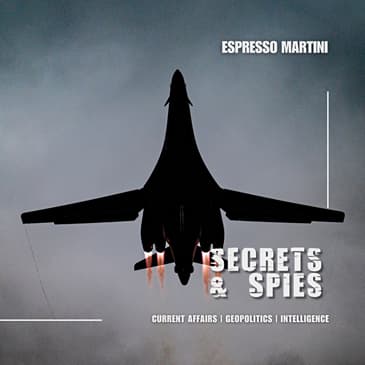
Chris and Matt start at RAF Fairford, where the arrest of five men outside the US bomber base, their swift release on bail, and a widening inquiry into possible Iranian involvement were followed by the abrupt return of all twelve American B-1Bs to the United States. They turn to flydubai Flight 1072, where the co-pilot attacked his captain with the cockpit crash axe en route to Tel Aviv, and to the reported red flags that didn’t follow him from one airline to the next. In Germany, former BND president August Hanning has been arrested on suspicion of espionage and treason, allegedly fed classified files by a serving insider. And ShinyHunters’ breach of the FBI’s jobs portal may have exposed the home addresses and assignments of Bureau personnel. They close with what the summer’s listener survey told them.
Subscribe and share to stay ahead in the world of intelligence, global issues, and current affairs.
Support Secrets and Spies
Become a “Friend of the Podcast” on Patreon for £3/$4: https://www.patreon.com/SecretsAndSpies
Buy merchandise from our Redbubble shop: https://www.redbubble.com/shop/ap/60934996
Buy us a coffee: https://buymeacoffee.com/secretsandspies
Subscribe to our YouTube page: https://www.youtube.com/channel/UCDVB23lrHr3KFeXq4VU36dg
For more information about the podcast, check out our website: https://secretsandspiespodcast.com
Articles discussed in today’s episode
"Amateurism and organisation’: Iran’s potential role in RAF Fairford incident" by Charles Clover | Financial Times: https://www.ft.com/content/7a91fa6b-e908-4a28-b04f-02d5a10a6bb1
"No 10 insists RAF Fairford is safe after US withdraws its bombers from base" by Dan Sabbagh & Aletha Adu | The Guardian: https://www.theguardian.com/us-news/2026/oct/05/no-10-says-raf-fairford-safe-us-withdraws-bombers-from-base
"B-1B Bombers Make Hasty Departure From England" by Howard Altman | The War Zone: https://www.twz.com/air/b-1b-bombers-make-hasty-departure-from-england
"RAF Fairford suspects were ‘just thieves syphoning fuel’, sources" by Daniel Jae Webb | Wiltshire999s: https://www.wiltshire999s.co.uk/raf-fairford-thieves-syphoning-fuel/
"UK-Iranian dual national arrested over RAF Fairford released on bail" by Olivia Ireland | BBC News: https://www.bbc.com/news/articles/c6d095ygggv1o
"What happened inside the Flydubai flight to Israel?" by Mitchell McCluskey & Tal Shalev | CNN: https://www.cnn.com/2026/09/30/middleeast/flydubai-israel-plane-pilot-hijacking-incident-latam-hnk-intl
"Flydubai co-pilot originally planned attack for July, investigators believe" by Jason Burke & Stephanie Kirchgaessner | The Guardian: https://www.theguardian.com/world/2026/oct/05/flydubai-co-pilot-originally-planned-attack-for-july-investigators-believe
"German court orders detention of former intelligence chief after spying arrest" by Kate Connolly | The Guardian: https://www.theguardian.com/world/2026/oct/07/germany-court-august-hanning-spying-arrest-detention-bnd
"What to Know About the Hacking Group ShinyHunters and Its F.B.I. Breach" by Chris Cameron | The New York Times: https://www.nytimes.com/2026/09/29/us/politics/shinyhunters-fbi-hacking-cybercriminal-group.html
"Embarrassing Breach at F.B.I. Fuels Fears of Harm to Its Employees" by Dustin Volz, Alan Feuer, Charlie Savage & Adam Goldman | The New York Times: https://www.nytimes.com/2026/09/28/us/politics/fbi-shinyhunters-damage.html
"What Should the U.S. Government Do in Response to the FBI Hack?" by Nikita Shah | CSIS: https://www.csis.org/analysis/what-should-us-government-do-response-fbi-hack
Connect with us on social media
Bluesky: https://bsky.app/profile/secretsandspies.bsky.social
X/Twitter: https://x.com/SecretsAndSpies
Instagram: https://instagram.com/secretsandspies
Facebook: https://facebook.com/secretsandspies
Spoutible: https://spoutible.com/SecretsAndSpies
Follow Chris and Matt on Bluesky:
https://bsky.app/profile/chriscarrfilm.bsky.social
https://bsky.app/profile/mattfulton.net
Secrets and Spies is produced by Films & Podcasts LTD: https://filmsandpodcasts.co.uk/
Music by Andrew R. Bird
Photos by USAF/Senior Airman Colin Hollowell
Secrets and Spies sits at the intersection of intelligence, covert action, real-world espionage, and broader geopolitics in a way that is digestible but serious. Hosted by filmmaker Chris Carr and writer Matt Fulton, each episode examines the very topics that real intelligence officers and analysts consider on a daily basis through the lens of global events and geopolitics, featuring expert insights from former spies, authors, and journalists.
Hosted by Simplecast, an AdsWizz company. See pcm.adswizz.com for information about our collection and use of personal data for advertising.
[00:00:04] Secrets and Spies presents Espresso Martini with Chris Carr and Matt Fulton.
[00:01:12] I've had a few near misses of colds. I've had these 48-hour colds lately where you get the coldy feeling and then they disappear after two days. I can't complain. I really don't get sick other than one of these a year. So I'm due. I think it's been a year since my last illness of any kind. Better to get out of the way now. True.
[00:01:38] Before Christmas, Halloween, or Thanksgiving and various other holidays and celebrations. Well, today's episode is full of a lot of interesting things. We have what I've classed as drama at RAF Fairford because that's an ongoing story. High strangeness. I had high strangeness in my outline is what I called it. High strangeness. I mean, that sounds about right.
[00:02:01] And as a constantly developing story at the moment, I've kept the BBC open just in case something happens while we're on air. Yeah, there is something that has happened just before we started. It touches you like 10 minutes ago. Wait, look. Yeah. About another RAF base, but we'll come to that in a bit. Then we've had an attempted hijacking of a Flydubai flight by the co-pilot, which is pretty worrying. Then we've got a retired BND head who's been arrested for espionage.
[00:02:30] And then we've got a huge leak of data at the FBI. And at the end, we're just going to reflect a little bit on the results of the survey. Just wants to say a little, you know, thank you for everybody who took part in that. So I'll kick us off with RAF Fairford. So I've broken this up into two incidents. So the first one is the suspected terror incident. And then we have the US bomber withdrawal a few days later.
[00:02:54] So I'll talk about the terrorist incident or suspected terrorist incident first and then move into the withdrawal of the planes. So the suspected terrorist incident began in the early hours of Sunday, the 27th of September, when three suspicious vans were reported near RAF Fairford.
[00:03:14] Police received a 999 call shortly after midnight, followed by another call at 0136 by a farmer reporting the vans and a group of hooded and masked men nearby. Five British men aged 23 to 25 were subsequently arrested near Welford, which is close to the base. Police initially feared a possible explosives attack, but no explosives were found.
[00:03:39] A major incident was declared and a 400 metre cordon was established and around 85 homes were evacuated whilst bomb disposal and forensics teams examined the vehicles. No explosives were recovered, although police did recover a quantity of petrol. The circumstances surrounding the suspects remains unusual.
[00:04:01] The three vans reportedly carried fake fuel to you company markings and the men had travelled around 80 miles from London, suggesting some degree of planning. However, one of the suspects made the first 999 call himself. Experts have described the combination of apparent organisation and amateur execution as unusual.
[00:04:26] The five men have subsequently been released on police bail and remain under investigation. Police say the decision followed extensive interviews and enquiries and that the men remain subject to restrictions. Officers are pursuing multiple lines of enquiry, including whether anyone involved was knowingly or unknowingly acting on behalf of a foreign state. At the moment, no one has been charged.
[00:04:52] Iranian involvement is now a major line of enquiry, although no public evidence has been provided and Tehran denies any role, as it probably would. The UK government says there are strong indications Iran played a part. A 25-year-old dual British Iranian national was arrested and then subsequently bailed as the investigation carried on. And yeah, then with RAF Fairford, it's an important base.
[00:05:20] It's used by American B-1 and B-52 bombers and they've been used on operations against Iran, which obviously makes it a significant or potentially significant target. And this is particularly important given that Iran has previously threatened bases used for attacks against it. And the US has subsequently now withdrawn its bombers from RAF Fairford, which I'll just go into a little bit now. So on the 4th of October, the US suddenly, and should we say a little bit dramatically,
[00:05:47] withdrew 12 B-1B bombers from RAF Fairford, sending them back to their bases in the US. The aircraft reportedly departed in several waves, and there's quite a few good videos of them, with the operation apparently so urgent that some crews left while the aerial refueling aircraft needed for the transatlantic journey was still being prepared. The Pentagon has confirmed the withdrawal, but says the US global strike capability remains unaffected.
[00:06:14] The precise threat remains classified, but US officials have acknowledged that it prompted a withdrawal. President Donald Trump said there had been some threats to the base and that the aircraft had not left by accident. Vice President Jay-Z Vance described the decision as an abundance of caution. US media reports have suggested intelligence about a possible Iranian drone strike, sabotage, or another attempt to strike the aircraft. But these reports have not been independently verified, and the Pentagon has not confirmed the nature of the threat.
[00:06:43] So the withdrawal is significant because Fairford has been a forward operating base for US operations against Iran, and Tehran has previously warned that it would attack any bases involved in attacks on them. So, a lot of drama at RAF Fairford, which probably could now even have its own TV series. So Matt, what are your thoughts on all of this? Yeah, this has been an interesting one to watch sort of unfold over the last week or two that this has been going on.
[00:07:13] It seems like we are coming around to a view... Well, initially, there was the thought that, okay, something major was disrupted here. And then there was, as you sort of said in your intro, oh wait, nothing to see here, fuel smugglers or fuel thieves, some sort of criminal gang that was doing this. And now since then, it's come out that there perhaps is something here. Look, I just... We talked about this a bit in prepping for the episode.
[00:07:42] I just find it very strange that there's this group of British Iranian nationals, all young men in their early 20s, who came from London in this fake fuel van. And it's just very, I don't know, if you're smuggling fuel, if you're siphoning off fuel to steal and sell, there are a lot softer targets and closer targets in and around London than a strategic bomber base used by the RAF and the U.S. Air Force.
[00:08:12] Maybe they're adrenaline junkies. Yeah, I don't know. It's like they wanted six stars off the grip, you know? I... As soon as I heard this story the first time around, I thought it was, you know, like the Operation Spiderweb, the Ukrainian attack on Russian strategic bombers. It was a couple of years ago now, wasn't it? Going on two years? I don't know how long ago it was that. I think it... That's a good question.
[00:08:38] I feel like it was last year, but you could be right. It could be two years, but... June 2025. It was last year, yeah. June 2025. Yeah, so a little over a year ago, this came out, or that went down. I had the suspicion that it was something along those lines or intelligence that was received along those lines. I think it's odd that they were released on bail. Okay, I'm not saying that they shouldn't have been released on bail. I'm saying I just find it odd, given the circumstances.
[00:09:07] And clearly there's things that happened in the questioning or whatever of these men that led to that. I'm not... I'm not sure. Mm-hmm. Those... That initial group of men that were arrested, to me, that just... It just screams of pre-attack surveillance or a dry run, even if the entire group that was involved didn't know fully what they were doing. You know? I mean, there's reports that one of the men in that group called 999. Right? Yeah. And we still don't know exactly what he said or why.
[00:09:38] Uh-huh. And that in itself is very... That in itself is very weird that he did that. Um, so... Yeah. I just... It's just... It's just... There's a lot here that's... I'm... I can't just say, like, oh, yeah, no, it was just fuel thieves and that was it. Nothing to see here. You know? And then the dispersing, the B-1s, a squadron of B-1s, 12 of them, flew back to South Dakota, I believe it is, Ellsworth Air Force Base, where they're based.
[00:10:05] Um, I mean, that could just be an abundance of caution. That could be paranoia on the part of the Pentagon. Understandable to an extent. I mean, having strategic bombers taken out on the ground in the UK, as we said, you know, in prepping this would be a serious, holy crap moment. Um, I've also sort of picked up in a lot of the... A lot of the... The UK discussion, the UK press coverage here. There seems to be a hesitance to accept that... Mm-hmm. And this isn't... This isn't a criticism.
[00:10:35] Mm-hmm. But it's a hesitance to accept that a drone attack could be a plausible scenario just because it's like, well, Gloucestershire is thousands of miles away from Iran. Could they... Could they... Could they pull this off? And I think... Yeah, I... I think they could. That's not to say that they would launch the drones from Iran. You know, you could launch it from a merchant ship in the Channel or the Irish Sea, or you could do it from the ground inside UK territory itself.
[00:11:00] Mm-hmm. And that's not... I don't point this out saying that there's some unique vulnerability about the UK that makes this possible. I think you could do this here in the US a lot... Much more easily than we would like to... To... To suspect. Mm-hmm. You know?
[00:11:14] Yeah. On that point, and I'll come back to fuel siphoning. So, um, one would hope that there are some drone defenses at RAF bases. And certainly, number 10 stated that there was... They stated that the RAF base was safe. Um, and they said that officially. Um, so it kind of makes you wonder, did they... Why would they say that if this intelligence-led thing was going on?
[00:11:40] Were they saying that to reassure the people who live locally? Were they saying that to save face? Were they saying that to say that the US action was kind of, um, unexpected? Premature, maybe? Maybe. Yeah. Um, and so, I'm going to come back to fuel siphoning and we can go a bit more into it. So, the whole fuel siphoning thing, I mean, it came about... Partly came about because of some reporting by a man named... By a reporter named Daniel J. Webb from Wiltshire 999, which is a sort of local online paper.
[00:12:10] And he, he cited RAF sources that said the suspects were just thieves siphoning fuel. And then they further went on to say, um, in the article that two separate military sources told Wiltshire 999 that they were thieves siphoning fuel with barrels to store the stolen liquids and other equipment found in the three vans. And then he went on, these sources went on to say that both said it was unlikely to be confirmed officially with one describing the situation as embarrassing.
[00:12:41] Now, like, so this is the, this is, I think, where this sort of seed of doubt in the whole terrorism plot is. But this is not to say that there wasn't a terrorism plot because we don't know yet. Um, it's still kind of ongoing. But what was unusual in this terrorism investigation is that the suspects, the men who were arrested, were released on bail so quickly. Yeah.
[00:13:06] Because you, the police have, if memory serves, up to 14 days to hold someone without charge on a terrorism investigation. So why not just let them sweat it out? Yeah. Yeah. Now, if you're suspecting, like, all sorts of things we just talked about, like, you know, um, number one is just a straightforward sort of terrorism, you know, uh, then it's potentially an Iranian back plot. Potentially it's some sort of Russian thing. There's so many things it could be that why would the police release them on bail so quickly?
[00:13:35] Because the reason they have this 14 day period is to allow the police to do a proper thorough electronic investigation of all these people, plus to search all their properties, plus to interview people in their proximity. It just struck me as a bit odd that they released them so quickly, but obviously it's still under investigation. It's not like they've been released and, you know, go on your merry way. There are still, there are restrictions in place. There have been further arrests too.
[00:14:01] There was this British Iranian national, and then there was another man just described as a British man who was arrested and has only just been released on bail. It's been reported just before we started this today. So everybody- Those men were arrested in London, not as part of- That's correct. Yeah. The additional people arrested were arrested separately in London with an alleged connection to this, these five men. So there were five men arrested on site and then a further two have been arrested since then. Now, one interesting little tidbit that comes up.
[00:14:31] So the farmer who spotted the masked men, she went on to claim in an interview of the Daily Mail that she spotted other men of Middle Eastern appearance fleeing the scene before the police arrived and arrested the five that we know about. So that, saying that- Yeah, this shit stinks, man. Is very suspect.
[00:14:53] That is like, you know, and I know that this has been some, because again, in the UK we tend to be, sometimes get a bit cynical about these things. So for the beginning of the plot, like a day later, Four Lions was being played on Twitter, etc. And people like, make it out. They were just these haphazard idiots. And then some people made the claim that the lady was, the farmer was somehow racist because she's seeing Middle Eastern men by the base and calling the police, which I think is ridiculous.
[00:15:23] Come on, people. Yeah. Because, you know, unfortunately we do live in a world where there are individuals of Middle Eastern heritage or whatever who do get involved in acts of terrorism. And obviously Iran's involved with, the base is involved with their actions against Iran. So there is a very big possibility that people of Iranian descent might well want to do something about that. So I think that was unfair.
[00:15:48] But I do think that there is something in that, that she saw other men who fled the scene before the police arrived, that is a bit of a big question mark. So I don't know whether the subsequent men who've been arrested are those men or whether there's more out there. We don't know. There's so many weird things. But the one security official I spoke to privately, I just asked them what their opinion was on all of this.
[00:16:15] And they said, well, if it was fuel siphoning, why haven't the police sort of said that by now? Because it sort of feels like it really was that, then, you know, they would have said it. So the other reason that there might be an abundance of caution is maybe they are just worried about how this could look.
[00:16:37] And they're kind of playing it very carefully because maybe, you know, again, with racial tensions, things like that, maybe they are playing it extra carefully just so they don't sort of piss off, you know, anti-racist campaigners and stuff. Because certainly the Metropolitan Police have been involved in all sorts of things over the last few years that have upset people and led to all sorts of stuff. Yeah, I hope that's not the case. Yeah, we don't know.
[00:16:59] Or because the U.S. is involved and this air base is involved, they're just being extra cautious because of that and it's all very important. The other thing that I floated to you on the phone. So when this arrest happened, literally the next morning, President Donald Trump was asked about it as he was getting off Air Force One somewhere.
[00:17:21] And he claimed, he made it out, he implied that this was, he made a statement to suggest that the men who were arrested at Fairford had been followed for some time by the UK security services. And then Defence Secretary West Streeting the same day also made a statement in which he praised the farmer who gave the 99 call but added that they don't have the full picture. Which sort of hinted at, is there something else going on?
[00:17:51] But Whitehall have dismissed all claims of prior knowledge in this case. So the 999 calls are the reason why the police responded. So I wondered, was there another group of people in another operation that was somehow being followed? And the wires somewhere have been crossed. Yeah. And they maybe have spooked the real cell.
[00:18:17] He was briefed on another, Trump was briefed on another operation, surveillance operation that MI5 had going on and sort of, yeah, blacked. It's possible. Something else that he wasn't, that's entirely possible for him. It's just, I mean, the IRGC have literally threatened this specific base before because it hosts strategic bombers that have been used to attack Iran.
[00:18:39] Now, the IRGC runs their mouth on all kinds of things, you know, and there's also been scenarios bandied about, about how if they wanted to really expand the scope of the war, part of that would be really going, getting vicious, going after Gulf energy infrastructure.
[00:18:54] And I think that's one scenario I've heard floated is a potential ground invasion of Kuwait to capture U.S. bases in the country, namely Camp Arab Jan, which would be kind of a huge, huge thing if that were to happen, you know, or sort of a joint front that the Iraqi militias, the Shia militias in Iraq and the Houthis in Yemen would open up against Saudi Arabia coming from the north and the south, right?
[00:19:18] Stuff like that would drastically, from the Iranian standpoint, up the scale of their attacks on U.S. infrastructure and their allies, right? And I think a potential drone attack launched from inside the U.K. against Arya Fairford would fit the bill for that, right? Now, considering, okay, I'm putting myself inside the heads of the IRGC here, so kind of whacked to begin with.
[00:19:41] But if they did that, right, I think an Iranian concern here, a benefit that they've had over the run of this conflict is to keep U.S.-European allies outside of the conflict directly, right? Which is something that the Trump administration has tried to do unsuccessfully for all sorts of reasons that we're aware of and don't really need to go into here, right?
[00:20:04] I think if, however, if I am in the Iranian high command and I'm thinking about the possibility of attacking these bombers at Arya Fairford, there's a very good likelihood that doing so would bring not just the U.K., but potentially the rest of NATO into the conflict. Like, you would have grounds to invoke Article 5 over this. Totally. You know, and I think that doesn't mean to say that the Iranians won't overstep and make mistakes and bite off more than they can chew or whatever. They wouldn't try to do that or something.
[00:20:34] But that's something that I would have in mind here also, the consequences of doing this if what this is is an attempted or planned attack on Arya Fairford. Is there a possibility the Iranians are just trying to spook everybody and they have successfully done that? Maybe. I mean, there's ways to, I mean, I think you could potentially make the argument that they've done so because they've caused the U.S. to withdraw these bombers from Fairford back to South Dakota. Of course, it doesn't really change a whole lot.
[00:21:03] I mean, we can and have launched bombing runs from South Dakota or Missouri in the case of, was that Midnight Hammer with the B-2s, right? That strike Iran and then turn around and fly home and never land anywhere else. So, I mean, it doesn't necessarily change a whole lot tactically with what's on the board.
[00:21:24] You know, there's also there's reporting that either before or shortly after the midterms, the Trump administration could ramp up their attacks against Iran again. We'll see if that comes into play. And if so, they could always put the bombers back at Arya Fairford. I don't know. Because those bombers haven't actually been used since June, July. Right. And there's an RAF commander, former senior RAF commander, Greg Bagwell, who was on X commenting about this withdrawal.
[00:21:54] I'll just paraphrase a couple of his tweets that I've copied and pasted into my documents. The first tweet, he just says that we're yet to see concrete evidence that points to a specific threat at Fairford, which means we're also in doubt as the source of one, notwithstanding the nationalities of those already arrested. He then wants to look at the story from three perspectives, Iran, MAGA, Russia. Iran, he says, obviously, they've made clear threats to the base and any base that supports operations against it.
[00:22:24] And then he goes on to the MAGA bit. This is the bit that's interesting. He speculates, did MAGA need to manufacture reasons to withdraw from a forward posture without it looking like a reduction in pressure on Iran as talks falter? And then the midterms have created the need to put the Iran war in the rearview mirror. The problem is, is it tailgating? So is that politically possible, do you think? Is there a sort of weird sort of thing going on there?
[00:22:54] Some sort of like three-dimensional chess that they need to get out of here to save face? I mean, no. I mean, I don't agree with that. I think he's, I mean, Trump has been saying, and not even so much privately, that, you know, after the midterms, they're going to ramp up strikes against Iran again. You know, so that doesn't really gel with this assessment. I don't know. I think it's possible that there was something here. There's potentially multiple rings within the UK that were being tracked.
[00:23:22] And to your point, Trump commented on another MI5 operation that's different from this one. And I think out of an abundance of caution, even if there wasn't a specific threat, you know, like these drones were going to launch from this industrial estate, whatever, you know, at this time. That would have been abundance of caution. Hey, we don't need these squadron of B1s sitting around at Fairford. We can pull them home where they're safer.
[00:23:49] Let's just do it and sort of get that potential catastrophe off the board, you know. But I don't, I just, I have a really, I don't know. Occam's Razor tells me this was not just guys siphoning fuel. And it just seems way too elaborate and involved and just. People have done dumb shit in this country. People have, yes. Especially because of stealing stuff. People have done dumb shit. Exactly.
[00:24:18] It's the same thing I say that, you know, if the Iranians did this, yeah, it would potentially open up Article 5 for all of NATO to come into the war against them. And they don't want that. It doesn't mean they won't do dumb shit and do it anyway, you know. I don't know. It's just, I have a hard time thinking that this was just some guys siphoning fuel, nothing more to see here. Well, now it's gone on so long, I'm kind of in agreement with you.
[00:24:45] I was kind of on the fence at the beginning of the sort of period for a while thinking, you know, just especially on that, these RAF sources. But at the same time, who are the RAF sources? They're the security people. They're only just seeing a bit of the picture, not seeing the whole thing. Well, the MOD police at the base didn't even answer the phone when that farmer called. No. That's why she had to call 999, because they didn't pick up. So that doesn't actually inspire confidence. No. No, indeed. But then I think people should always dial 999 in an emergency. But anyway. Sure. As they say.
[00:25:16] Oh, Molesworth. Yeah, yeah. So, yeah, two Latvian men have just been arrested in the National Security Act in the UK right now for breaching RAF base in Cambridgeshire. Which is RAF RAF Molesworth. So, yeah. That's a different, a bit of a different facility from RAF Fairford.
[00:25:34] It's not a flying station, but it is its host for the Joint Intelligence Analytics Center Europe, which falls under U.S. European commands. J2, their intelligence directorate. A lot of people from across the defense intelligence enterprise and the rest of the intelligence community are stationed there. U.S. Africa Command has a fusion center there.
[00:26:03] NATO itself has a fusion center at that base as well. So, it's a major intelligence facility that works on targets not just in Europe, but also the Middle East and Africa as well. We have no indication right now of who potentially could have been behind that except the point that it's two Latvian men, which could be the Russians, could be the Iranians, could be, who knows. Could be activists.
[00:26:32] It could be just weirdos who decided because things, you know, maybe they're TikTokers who are trying to get famous off the back of RAF Fairford. So, there's many possibilities. Smash that like and subscribe, yeah. Yeah. So, the police are currently carrying out searches and addresses in the Peterborough area in connection with the investigation. So, there is more kind of being looked into at this time. But we shall see. By the time this airs, they may have been released on bail. They may have been let go.
[00:27:02] They may be still in a police cell. We don't know at this time. So, yeah. We shall see. We shall see where that one goes. Well, is there anything else you want to add, Matt? Were you happy, though? No. Cool. No. Weird story, though. It is a weird story. Right. Well, I think let's take our first break and we'll be back with more.
[00:27:36] If you're enjoying this episode, please consider buying us a coffee at buymeacoffee.com forward slash secrets and spies. Thank you. Welcome back, everybody. So, now we're going to be discussing the attempted hijacking of a fly Dubai flight. So, I'll let you tell us about that one, Matt. Yeah. So, last Wednesday, September 30th, fly Dubai flight 1073 left Dubai a little after six in the morning, bound for Tel Aviv with more than 180 people aboard, almost all of them Israeli.
[00:28:05] About two hours in, the plane dropped more than 17,000 feet in under two minutes, and the transponder began squawking 7500, the hijack code. What was happening in the cockpit, according to the UAE's attorney general, was a terrorist act. A co-pilot named by Saudi state media as Hamam al-Hamami, a 29-year-old Omani allegedly used the cockpit's crash axe on the captain, Smith Muchchur.
[00:28:31] However, badly wounded, Muchchur managed to unlock the cockpit door. Passengers poured in and pinned Hamami down, and a reserve fly Dubai pilot who happened to be in the cabin landed the plane into book in northwestern Saudi Arabia. So, as Netanyahu put it, good guys won this time, but the more uncomfortable story is the one that has come out since. Oman Air had reportedly removed Hamami to a desk job last year over concerns about extremist views.
[00:29:00] Fly Dubai, which is short of pilots, hired him anyway. Officials say it checked for a criminal record, but not for radicalization. Regional and Israeli officials also say he originally planned the attack for July and postponed it. And in Israel, within election weeks away, a very important election, the shin bet and the transport ministry are each pointing at the other over who was supposed to vet him.
[00:29:25] So, Chris, it seems like this sort of warning was there, didn't really get passed all the way through to the necessary people. How do you feel about this? Yeah, well, this particular story has sort of shaken me to the core, really, because I'm a bit of an aviation enthusiast, as long-term listeners will know. And just, yeah, it's a similar thing again, isn't it?
[00:29:49] This tends to happen is just something slips through the cracks where something obvious should have been found earlier that isn't for whatever reason. And this incident kind of brings back memories of watching 9-11 unfold on the news, because I remember that day, that sort of feeling kind of doubly sorry for the passengers on the planes, because once those hijackers got control of the aircraft, their fate was pretty much sealed. And I'm really happy, obviously, that the incident ended without loss of life in this case.
[00:30:17] And it's so lucky that there were sort of, yeah, two, I think it was two additional pilots who were traveling. So I think they were doing what they call deadheading, which is where they kind of transit using their airliners to transit to another plane somewhere else so they can use it later. I mean, my God. So it makes you wonder now, are we getting into a situation where we need to have a backup pilot on long flights? Long flights. It's unbelievable. And the fact that usually the cockpit would be locked to stop terrorism.
[00:30:48] In this situation, the cockpit had to be unlocked to stop terrorism. And it's very lucky that the pilot, who was badly wounded, managed to open that door and allow the passengers in. And called for help, yeah. And I cannot imagine how terrible it must have been, because the planes, as you were saying, was descending 17,000 feet in two minutes. I mean, I find it bad enough when a plane is descending quite casually. Your ears start popping and things like that. So imagine what that must have been like.
[00:31:15] You know, the plane, I'm assuming, is almost vertical, going down in a kind of nosedive. Horrendous. Absolutely horrendous. And I find it doubly disturbing that Dubai Air could have hired a pilot who was banned from flying in Amman. And he was, as you mentioned, given this desk job in Morocco by authorities due to his known Islamist leanings and a concern he may have had extremist leanings.
[00:31:41] Yeah, apparently he was hired by Fly Dubai because they needed pilots because the airline had expanded rapidly. And as you mentioned, the airline conducted checks for criminal records, but no evidence of radicalization. And I kind of found it doubly rich that an official from Dubai came to the bedside table of the pilot who was attacked and says something on the lines of that we look after our heroes. And I'm like, well, your airline did not do its due diligence.
[00:32:08] And it's not the airline alone that's at fault, because also there are other intelligence services that could have been involved in preventing this. Obviously, you know, Mossad and Shimbet and Israel. Israelis have egg on their faces too. Yeah, I'm surprised that they don't know much about the pilots flying planes in and out of Israel.
[00:32:29] And considering apparently this attack might well have been to, you know, aim the plane at the main terminal at the airport in Israel. I mean, honestly, it just beggars belief what could have happened. It would have been another 9-11-ish style attack. Yeah. And God knows what exactly the plane would have been used. The fallout from this would have been crazy. Yeah.
[00:32:52] And the Guardian have gone on to say that apparently the co-pilot, he basically had postponed a planned attack from July. Because possibly a friend was among the crew of the plane that he intended to use, which is pretty disturbing. So, yeah, a lot of things have gone wrong here. I mean, what are your thoughts on all of this? Well, it's like, it's sort of you have this duality here.
[00:33:21] It's like everything went right on the plane at the time to prevent this. Whether that's, as you said, the pilot opening the door and calling for help. And, you know, I mean, it's full of Israelis. A lot of them have their mandatory national service. A lot of them know what to do, how to handle wounds, you know, like that. There were two reserve pilots that happened to be aboard, right? All this stuff that didn't necessarily have to happen. It was just there to lined up well to prevent an absolute catastrophe.
[00:33:49] I mean, the fallout from this thing, as I said, would have been as, I mean, this is a very good thing that this was thwarted. At the same time, it seemed like everything else sort of failed on the ground, you know? So, from what we know, yeah, he was hired by Oman Air, put on a desk job because of concerns about potential extremist views.
[00:34:15] His ex-account, which this group, Accountability, recovered, hold a bunch of signs of radicalization, whether it's misogynistic, anti-women stuff, anti-gay stuff. There were also, I think, after his arrest, there was a post that came up on an account with his name that was quoting Ayman al-Zawahiri, the old Bin Laden's old deputy, folks will recall.
[00:34:43] It seems like this guy tried to get a job as a pilot at an airline to do something like this, right? So, Oman Air put him to a desk job because of concerns of radicalization. He was then hired by Fly Dubai. He also tried to get a job with Royal in Morocco, the Moroccan national carrier, and was not hired for reasons that I'm a little unclear on.
[00:35:05] But, I mean, it's sort of, there's the question here, okay, did Oman Air convey to Fly Dubai the reasons why this pilot was given a desk job? That's a big question. Did Fly Dubai ask, right? So, I think there's potentially a lot of issues here that Oman and the UAE have to work through.
[00:35:30] There's also the pissing match that Shin Bet, the Israeli Internal Security Services, and the Israeli Transportation Ministry are involved right now, pointing fingers at each other of who's responsible to scan the manifest of these flights coming into and from Israel. Like, you have to get explicit authorization for any pilot, anyone coming into or out of Israel.
[00:35:54] Like, they have the strictest aviation security measures anywhere in the world and have since, like, the 70s, right? The golden age of plane hijackings and stuff, right? So, I mean, it's just amazing to me now that, like, almost three years to the day after October 7th, like, Israeli officials are still pointing fingers and saying, oh, no, that's your job. You screwed up. Like, how are you still – and there's also, you know, we didn't get a chance to cover this while we were off air over the last month.
[00:36:22] And so, there's been reportings that's come out since then that Netanyahu got warnings about Hamas planning October 7th from Egyptian security officials and the UAE. You know, like, how are you still – how are we still screwing this up as poorly as we did?
[00:36:41] The only reason we did not have an utter catastrophe on our hands that would have echoed for years to come the same way October 7th has is because of that one pilot opened the door and called for help. And there were enough passengers on board who knew what the hell they were doing that they could have helped and prevented this whole thing. You know, it's not thanks to any officials on the ground in Oman or the UAE or Morocco or Israel. Still, that's the only reason this would prevent it. Incredible. Yeah. And it's outrageous it got that close. It's absolutely outrageous, you know. Yeah.
[00:37:11] As you're saying with officials pointing finger at each other over responsibility, this is how terrible things happen. This is how 9-11 happened, you know. Yeah. Those threats were. Right. But definitely, I don't – you know, he shouldn't still be in office for many reasons, to be honest. But it's just like – How much time you got?
[00:37:43] Yeah. Yeah. I mean, that's a whole special, isn't it? Oh, my goodness. Oh, my goodness. But it's – Yeah. Yeah. So, thank God everybody did the right thing on the plane that day because otherwise, you know, we'd be talking about a whole load of dead people right now. Yeah. Yeah. And again – and then there would be more draconian measures with regards to airline safety. A whole lot of Muslims would have been killed in response to this if this had succeeded.
[00:38:13] I mean, yeah, a whole lot of Israelis would have been killed on that plight and also in the airport in Dubai. Right. But, man, the consequences of what would have been done in response is just as bad as everything post-October 7th has been. Like, you're looking at that all over again. Yeah. Yeah. Because if the co-pilot can hijack the plane, I mean, God help us all. It kind of also reminded me a little bit of a totally separate incident. But many, many years ago, there was a German airliner where the pilot was suicidal and he just flew the plane with passengers into and around him.
[00:38:43] Oh, yeah. That was – Yeah. German wings. Yeah. Yeah. Yeah. Unbelievable. You know, it's – yeah, I have a lot of respect for pilots. I have a lot of respect for pilots and I just like, you know, airlines probably need to do a better job with checking mental health, vetting them and, you know, making sure that they are being looked after. Or just reporting across airlines. Yeah.
[00:39:08] You know, okay, so Amman Air had a reason to believe this guy had serious radicalization concerns that they put him on a desk job. But then he could get picked up by another – I mean, yeah, okay, this was in the UAE. But still, like, that's not – you can't – that's not an excuse. That's a serious – whether there is no reporting requirements or it was just totally dropped the ball, I don't know. But that doesn't work, man. That doesn't work. In this day and age, definitely not. Definitely not. So, yeah.
[00:39:39] Anything else you'd like to add or – No. Incredible story, again, that this was thwarted. Yeah. Yeah. Terrifying story. Well, let's take another break and then we'll be back with more.
[00:40:07] If you're enjoying this podcast, please consider becoming a Patreon subscriber. Go to patreon.com forward slash secrets and spies and you'll get access to the ad-free versions of this show. Thank you for your support. Welcome back, everybody. So, we're now moving over to Germany where there's been some serious treachery, allegedly. So, German's former intelligence chief has been arrested.
[00:40:32] So, August Hanning, who headed Germany's foreign intelligence services, the B&D, from 1998 to 2005, has been arrested on suspicion of espionage, treason, and attempted treason. I must admit, the attempted treason with treason is an interesting one there. So, we'll have to maybe look inside a bit. So, the 80-year-old was detained at his home alongside his former chief of staff, identified as Manfred D.
[00:40:59] Prosecutors alleged that Hanning used classified intelligence for the benefit of foreign intelligence services, potentially making one of Germany's most serious espionage cases since the Cold War. The central allegation concerns a long-running arrangement in which Manfred D. allegedly passed classified B&D material to Hanning in return for payment.
[00:41:20] Manfred D. continued working at the B&D under Hanning's successors until March 2026, giving him access to sensitive material. Prosecutors say he supplied Hanning of around 2,000 documents over several years, many of them classified and intended for internal intelligence briefings. Hanning allegedly intended to exploit the material through his private security consultancy. So, there's something interesting there.
[00:41:49] And some of the material is reported to have covered highly sensitive subjects, including Iran's nuclear program, the Russian military, and discussions involving Germany's security agencies. Some of the information reportedly originated with foreign partner intelligence services, meaning that the alleged breach could potentially damage Germany's relationships and intelligence-sharing arrangements with its allies.
[00:42:11] Prosecutors also alleged that Hanning prepared an analysis for an officer from a foreign intelligence services, although they do not know whether it was ever delivered. Investigators have not publicly identified the foreign intelligence services involved. German media have reported that Hanning had contact with Azerbaijani intelligence, while previous investigations have also raised questions about his links to Israeli intelligence.
[00:42:37] Prosecutors say Hanning maintained contact with one foreign service over several years and passed sensitive political information to a separate foreign intelligence contact. Hanning denies allegations. The investigation appears to have emerged from a completely separate case involving the alleged kidnapping of the children of German businesswoman Christina Block.
[00:42:58] During a search of Hanning's home and offices in 2025, investigators reportedly discovered a device containing highly classified BND documents. This led federal prosecutors to begin a covert investigation into Hanning and Manfred D. in May 2026. Hanning had previously been accused, which he also denies, of helping Block connect with a private Israeli intelligence company in relation to the children's abduction.
[00:43:23] The case is particularly significant because of Hanning's former position and potential damage to German's intelligence services. So he was not simply a former intelligence officer, but he was the head of Germany's foreign intelligence services and later a senior interior ministry official. German's current BND chief says the agency conducted internal investigation, which cooperated the suspicions. If the allegations are proven, Hanning could face life imprisonment.
[00:43:48] Well, the case has already prompted calls for greater scrutiny of former senior intelligence officials and their work as private consultants. So, Matt, what are your thoughts on all of this? It's a new story to us. We don't know. There's a whole lot we don't know about it yet. And I suspect given German privacy laws and everything around their criminal cases, we won't know a lot more about it until this is done and we have a verdict and all that. It seems essentially like a kind of a here it would be a far a case, right?
[00:44:17] A foreign agents registration act or a failure to register as a foreign agent, you know, using his access as a former chief of the BND to to basically, yeah, lobby and sell information to different intelligence services. Like, yeah, the Israelis and Azerbaijan were named here. Of course, elephant in the room, the Russians. We don't have any idea about the Russians or specifically what kind of intelligence he was giving, how sensitive.
[00:44:46] I believe his lawyer was quoted in one of these stories as saying it wasn't stuff that was entirely like detrimental to German national security and stuff. Not making an excuse for it, but, you know, calibrating the kind of intelligence he was sharing.
[00:44:59] I mean, it's a part of a pattern of a number of former officials in Germany and Europe who have gone on to sort of sell access and and and their insights in in ways that are not best for German or European national security. You know, Gerhard Schroeder, of course, one of them, former chancellor was chancellor up until 2005.
[00:45:25] The same the same period that August Hanning served since he's been chancellor. He had all kinds of positions in Gazprom, Nord Stream, you know, Russian energy concerns and everything. So that's that's there. I mean, it will. We'll see where it goes. You know, it's definitely. See how far the damage goes, you know, so far, it doesn't seem like one of those.
[00:45:54] I'll say Hanson ask espionage cases, you know, not yet. No, no. I mean, it with it sounds like that line between, you know, when you leave government service and end up in the private sector kind of working in a similar field. It sounds like he crossed the line and obviously did it for his own benefit.
[00:46:19] Because, again, it sounds like he had a wide range of potential clients from Israelis, Azerbaijan, private individuals like this kidnapping case that he was involved with. And he was probably using his, you know, he was using his contacts or allegedly using his contacts like Manfred D to kind of get him access to information that could give him the edge.
[00:46:41] And this is a ethical thing a little bit, because, like, if you're in government service of access to privileged information and leave that service as a private sector and then start betraying that privileged access, then, yeah, there's something not quite right there. And, you know, there was, I remember there was a scandal many years back in, I think it was Dubai or UAE, where, where was it now?
[00:47:08] It was somewhere in the Middle East where basically former American intelligence operatives were working for a private intelligence firm. Oh, I think it's the UAE you're talking about. It was the UAE, yeah, yeah. And they were basically a similar kind of thing came up about, like, that line between, you know, sort of knowledge that you got from government service and then using it in the private sector. It's a fine line that a lot of former intelligence people have to tread. And personal ethics play a big part in it.
[00:47:35] And obviously the Official Secrets Act in the UK and the US equivalent. But it just, yeah, on the surface, it kind of sounds like he crossed that line a bit too much. But what's concerning a little bit is the fact that it wasn't really a counterintelligence probe that revealed this. So Manfred D was a serving member of the BND. And it sounds like he'd been basically kind of stealing secrets for many years undetected and supplying, you know, supplying Hanning with this information.
[00:48:05] And the fact that it never came up until this kidnapping case is quite worrying. So that's not good. That's not good from a counterintelligence point of view. No, no. It seems almost like a gap in German law that enabled this. Yeah, yeah. So as this develops, we'll find out more, I guess. But I thought, as it's such a big story, I felt like it would be remiss not to mention it.
[00:48:34] Because this just came up. Because, yeah, this came up, I think, was it yesterday? And we were like, oh, wow. You know, it's a big, big deal. So, yeah. Yeah. Curious what Florin has to say about it. I bet Florin will know about this. And I'll be sure to try and get him on to give us his perspective on it. Because, you know, being a German case and all, he'd be the perfect person to talk about it. So a new episode will be coming your way soon. But not next week, because I'm away.
[00:49:03] Yeah, we got an ex-week handle. Oh, my goodness. So, yeah. But there we go. So I think we'll move on to our final story now, which is the FBI leak. So, Matt, what do we know about this? Yeah. So late last month, a criminal hacking crew called Shiny Hunters. The name's a nod to Pokemon players who chase rare variants of Pokemon. That was news to me. I know. Me too. Because I'm an old photo. I haven't really followed Pokemon since like the late 90s.
[00:49:32] So that was sort of a, you know. Yeah. Anyway. So Shiny Hunters announced it had broken into the FBI, specifically the Bureau's online jobs portal. And according to a New York Times review of a sample the hackers shared, what came out reads less like an HR database than a counterintelligence target list. Names, home addresses, social security numbers, spouses and children listed as emergency contacts.
[00:49:58] And in some cases, the unit and agent sits in pretty serious sensitive stuff, counterintelligence, narcotics, Russia, China, Iran. The Bureau's own internal memo says it's working on the assumption that every employee's data is compromised. Then there's the motive. Shiny Hunters normally extorts companies for millions. This time it wanted the FBI to retract a spring advisory about the group.
[00:50:23] And before its own deadline, it announced it had never intended to publish anything, calling the whole operation a marketing campaign for its business. That leaves the Bureau not knowing where its people's files end up. Kieran Martin, who used to run Britain's National Cybersecurity Center, told the Times that this could prove worse than China's theft of the OPM records a decade ago. Where like I think it was 20, 20 million people's personal information was exposed in that hack.
[00:50:51] His reasoning, whatever Beijing did with those files, was never going to sell them. So Chris, what did you think about this one? Another black eye for the FBI here? Yeah, big black eye for the FBI. You know, having your personal data shed in such a way is not only operationally problematic, but on a personal level, it must be deeply distressing. Especially medical data. One can change bank accounts, but you can't change any personal medical info.
[00:51:17] Also, there were concerns about threats of reprisals by criminals sent to prison as a result of FBI investigations and targeting agents responsible. Shiny Hunter, as far as we know, is not connected to any foreign intelligence service, but you can bet that any hostile intelligence service would be looking around to see where they may be storing the stolen data and trying to access it. Now, previous Shiny Hunter arrests, the suspects were in their 20s and they were arrested in France and Morocco.
[00:51:46] All young men who were described as highly isolated. So no stereotypes there. Yeah, I saw that too. It was like, we're hitting a pattern here, man. Yeah. The kids are not all right. Bored young men, basically, who have too much tech knowledge. Yeah. Now, I found out, I was sort of searching around the web about this story and I found some reporting in a magazine, an online magazine called Government Executive.
[00:52:09] And apparently, the FBI is blaming all this on a contractor who worked for Accenture for missing a security patch that led to the breach. So Accenture is responsible for software patch management and maintaining custom code at the FBI. And the person who spoke with Government Executive spoke on a condition of anonymity because of the situation is so sensitive. Apparently, Oracle, whose people soft platform was the initial access point that the Shiny Hunters claimed to have exploited.
[00:52:39] And they provided security patches, but they were not integrated by the person who's now been fired. So, yeah, so it's kind of an interesting one there. It kind of brings up, so with some of this, so obviously there was some like detailed information about like the actual operational positions of people in the FBI. Yes.
[00:53:00] And it's kind of concerning that a third party kind of private sector app, which obviously is a very good and, you know, respected app that's used by lots of big brands because, you know. But at the same time, the FBI is still putting up people's exact job title on that platform. You would have thought they should at least come up with some sort of alias for job titles.
[00:53:26] So then at least if a third party gets hold of that data, they still don't really know whether Jane from, you know, who's normally from accounts is actually in some fictional department called James Elroy or something. That's a good idea. Yeah, that's interesting. Or even like a numbered, numbered alias, you know, for a unit. Right. Yeah. So only internal people would know what it means. Yeah. There were some units that I saw named here in other reporting.
[00:53:53] It was stuff that was like the clandestine operations unit, which I believe is involved in like backstopping FBI undercover operations and everything, which, of course, very sensitive stuff. Right. That they're working with here. Other parts of the counterintelligence division and everything at headquarters and different field offices and stuff. Yeah. I mean, I found you can find a lot on job postings and and people's LinkedIn stuff that they have up there. Especially on my LinkedIn now.
[00:54:22] Yeah. People like me should not be able to piece together, but we do nonetheless. Yeah. I mean, I've I would say. The org chart for the FBI's counterintelligence division, their counterterrorism division, I wouldn't say it's that like if you if you can just piece together that from this, that's not that bad. I mean, I've essentially pieced together the internal organization of those two divisions just on my own over the past few years.
[00:54:49] As you do have a pretty good idea of how they're how they're organized down to like the unit level. You know, it changes a lot, though. But yeah, having the names of like specific officers and everything. Of course, you can piece that together with other data breaches and everything and get. With the aid of AI and everything, you can get dossiers on on FBI personnel that are involved in some pretty sensitive, sensitive areas. It's not good. No, it isn't. It isn't.
[00:55:16] And it kind of again in this day and age, this sort of stuff people should be thinking about. And you don't want to make it easy for people. It just strikes me as a very bad idea putting all the HR stuff on this third party software. You would have thought that the brains in the US government could come up with something more internal that doesn't require using private sector software to store this data.
[00:55:38] Yeah, or it would be so, I don't know, antiquated or hard to use or needlessly expensive and everything if they did that it's either. I don't know. Who knows? But it's yeah. But it just strikes me as a bit silly a little bit in places. But we shall see. It's yeah. It's interesting that they it's interesting that they threatened to publicize this data. Shiny hunters threatened to publicize this data and then backtrack and said they wouldn't. I wonder if there is something else.
[00:56:07] Maybe there. Yeah, certainly the journalists who covered this were surprised they even targeted the FBI because usually they target kind of business, you know, sort of private businesses and stuff. And they've got a long record of of brands and stuff that they targeted in a similar way. But targeting FBI seems like a very bad idea asking for trouble. I wonder if we'll see cyber. Well, we probably wouldn't hear about it.
[00:56:29] But if like Cyber Command would be sent after these guys to sort of a tightly scoped operation to recover the data and store copy and destroy copies of it, you know, or you launch a wider, more sustained operation against this group. I mean, there's been if you if you go back and look at the list of companies, entities, organizations that this group has has targeted. I mean, it's huge. It's all kinds of all kinds of big, big name companies that you would recognize.
[00:56:59] Like they hacked like Rockstar Games, you know, the company that makes it Grand Theft Auto series, got all kinds of internal data about them and everything like these have been. This group has been a a persistent problem in cyberspace for a long time, which, you know, naturally. Well, yeah, the FBI puts out this advisory about them last spring. And it seems like this hack was a response to that advisory going out.
[00:57:28] Yeah, I would I would I would I would go after these guys if I was in Cyber Command or the FBI. Yeah. Yeah, indeed. Indeed. Was there anything else to add or are you happy with that? No. So that's the FBI breach. So, Matt, we did this survey over the summer, didn't we? And I just want to take a little moment just to reflect on it, just to thank everybody, first of all, who took part in it and just talk a little bit about sort of what we found out from the survey.
[00:57:57] So biggest sort of top line stuff that we heard is people people want blood or from from from the Russians. Pretty much like the question of what do you want to hear more of? It's all like Russia, Russia, Russia, Russia, Russia, like by and large, biggest winner was Russia. And also China. So understood message received five by five. We will give you more Russia and China slander on this podcast. Yeah.
[00:58:24] One person in particular asked us to find to find out how to defeat Putin. So we will look into that. We'll get on that. We'll get on that. Yeah. Yeah. So we'll do that.
[00:58:36] And as always, we were sort of delighted to hear and humbled by the fact that a lot of people from the world of intelligence sort of retired mainly listen to this show, which is always sort of nice to hear because it kind of gives us an idea of in a sense of are we talking nonsense or are we talking sense? You know, and I like to think that we're talking sense. And it just reassures me that those those caliber of people listening to this, that we must be saying something that's worthwhile.
[00:59:06] So thank you to everybody who took part in that. And thank you to everybody who listens to this show. So and yeah, as you're saying, sort of Russia and China are big topics that have come up. There was some talk of a little bit more about the Arctic and naval matters. So I'll look into that as well. And there are there are. That sort of relates to Russia and China. It does. Yeah. Yeah. Especially the Arctic. I mean, that's going to be the new contested region.
[00:59:32] And for me personally, obviously, as we probably have gathered by now, I'm sort of thematically looking a bit at the technology sector this season. And I want to talk a little bit about climate change and national security. So there's a few episodes I've got in the works about that, especially as we've just had probably one of the hottest summers record in the UK.
[00:59:55] And I'm not alone in sort of thinking and worrying about sort of food security and things like that as we progress down this sort of road that we're on with climate change. So it's an area that definitely should be covered. And, you know, we definitely want to look into that. We did cover it once years ago, but there's more to be talked about. So I think actually our previous episode on it now and reflect on it was a bit too optimistic in its ending. I was optimistic.
[01:00:25] I know. Optimism out the window. How dare we be optimistic about anything these days? Can't do that. Optimism is like a rare flower that needs to be treated carefully, but you can't overuse it. Optimism is best kept to yourself until you see the optimistic thing comes to pass and you're like, I knew it all along. Yeah, so true. Isn't that sad? Uh-huh. An optimism-free zone. But, uh.
[01:00:55] Should be a logo for us. Yeah. A slogan. Oh, my goodness. So, yeah. Yeah. Imagine that like an Area 51 sign with that or something. But, yeah. So there we go. Cool. Well, yeah. So thank you, everybody, for listening today. We'll be back. We'll be back with more interviews over the month. And we've got another espresso martini planned for later this month. Um, so we will continue. We'll try and get back to our pattern of doing two a month. Apologies for not doing that last month. That was entirely my fault.
[01:01:25] Um, but, uh, we will slowly get back into that. Because, again, it came up in the survey that espresso martini is equally valued to the interviews. So that's, that's good to hear. Yeah. Well, everybody, thank you so much. If you enjoyed this episode, please consider buying us a coffee at buyusacoffee.com. Or feel free to join us on Patreon. You can get access to the ad-free version of this show. That's just patreon.com forward slash secrets and spies. The links are in the show notes. Also, if you really enjoy this podcast, please leave a review on your favorite podcast app.
[01:01:55] Reviews are really helpful to this show. Again, it chooses the algorithm and it just, it's nice to see the reviews once in a while. Yes, it is. Mainly the positive ones. But there we go. Well, thank you everybody for listening. Have a great weekend. Matt, have a great weekend. Thank you. And we'll catch you all next time. Bye for now.
[01:02:28] Thanks for listening. This is Secrets and Spies.