
Former U.S. Army counterintelligence special agent Pete Turner joins Chris for a conversation about what human intelligence actually looks like on the ground. Turner’s career ran from post–Cold War Germany and Bosnia through Egypt in the weeks after 9/11 to Iraq and Afghanistan, and he explains why the work turned less on stealing secrets than on access: winning over wary commanders, building rapport with sheikhs and district governors, and treating interpreters as partners rather than mouthpieces. Along the way he recounts a meeting he later learned the Taliban had called to look him over, and a colleague’s hunt for a district’s shadow governor that ended at the governor’s own door. Turner, host of the Break It Down Show, closes on what the job taught him about human nature.
Subscribe and share to stay ahead in the world of intelligence, global issues, and current affairs.
Find Pete on YouTube: https://www.youtube.com/@PeteATurner/streams
Listen to Pete’s podcast:
https://podcasts.apple.com/us/podcast/break-it-down-show/id941689175
https://open.spotify.com/show/1FcUXypxYsB2heFD3Q4gcm
Support Secrets and Spies
Become a “Friend of the Podcast” on Patreon for £3/$4: https://www.patreon.com/SecretsAndSpies
Buy us a coffee: https://buymeacoffee.com/secretsandspies
Subscribe to our YouTube page: https://www.youtube.com/channel/UCDVB23lrHr3KFeXq4VU36dg
For more information about the podcast, check out our website: https://secretsandspiespodcast.com
Connect with us on social media
Bluesky: https://bsky.app/profile/secretsandspies.bsky.social
X/Twitter: https://x.com/SecretsAndSpies
Instagram: https://instagram.com/secretsandspies
Follow Chris and Matt on Bluesky:
https://bsky.app/profile/chriscarrfilm.bsky.social
https://bsky.app/profile/mattfulton.net
Secrets and Spies is produced by Films & Podcasts LTD: https://filmsandpodcasts.co.uk/
Music by Andrew R. Bird
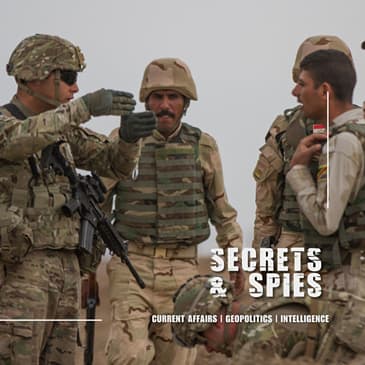
Photo by U.S. Army photo by Sgt. Cody Quinn
Secrets and Spies sits at the intersection of intelligence, covert action, real-world espionage, and broader geopolitics in a way that is digestible but serious. Hosted by filmmaker Chris Carr and writer Matt Fulton, each episode examines the very topics that real intelligence officers and analysts consider on a daily basis through the lens of global events and geopolitics, featuring expert insights from former spies, authors, and journalists.
Hosted by Simplecast, an AdsWizz company. See pcm.adswizz.com for information about our collection and use of personal data for advertising.
[00:00:00] Lock your doors, close the blinds, change your passwords. This is Secrets and Spies. Secrets and Spies is a podcast that dives into the world of espionage, terrorism, geopolitics, and intrigue. This podcast is produced and hosted by Chris Carr.
[00:00:29] On today's podcast, I'm joined by Pete Turner. Pete was in US Army Intelligence, and he talks to us today about the art of agent recruitment. Pete makes a fantastic guest because he's a podcast host himself. So pour yourself your favorite drink, sit back, and I hope you enjoy this episode. Thank you for watching. Thank you for listening. Take care. The opinions expressed by guests on Secrets and Spies do not necessarily represent those of the producers and sponsors of this podcast.
[00:01:05] Pete, welcome to Secrets and Spies. How are you? It's great, man. I love that we get to do these kinds of things. We both gather spies in our world. Yeah. And it's fun to be able to swap notes and swap shows. Exactly. Now we met at SpyQ and he very kindly had me on your show. So yeah, it's great to have you on mine now, finally.
[00:01:26] It takes a minute. We get busy with stuff and you're trying to, I know from my end, I'm always, I always want the best for the person and from the person. And so if you try to force scheduling, which of course, sometimes you can't, you end up with like less than a ideal outcome. But we've managed to stick the landing here now. And man, I'm super excited. I've watched a bunch of your guys, your show over there. And I don't know. I'm just super excited to be able to come do this.
[00:01:52] Well, thank you. Thank you. Well, for the benefit of the audience, please can you just tell us a little bit about your background in army counterintelligence and sort of what sort of work that career involved? Yeah. So army counterintelligence is a specific field within our federal government, you know, for counterintelligence. We have a lot of counterintelligence sub offices, right? So the army would be one of those. Department of Energy has one, you know, obviously the CIA, FBI. And all of a sudden you end up with the whole family of counterintelligence folks.
[00:02:21] And the job itself is broad. It's a lot of jobs. A buddy of mine, also an agent said, I counted as 126 subdisciplines, 126, right? So that means that I can do something that's 100% counterintelligence and have it be unique to my career, my timing, my, you know, just everything. You can be on a task force.
[00:02:46] So, so let's say that I got orders and they're like, you will report to Miami, Florida and liaise and work with the joint task force for drug interdiction. What? Okay. I gotta go do that. There's a job down in the South Pole, you know, where you're the counterintelligence person there. Doesn't always have someone working there. Every field office that we have in, in the military world and the army world has not enough agents at it.
[00:03:13] And so if you're a reservist, you can build your career bouncing field office to field office and just kind of backfilling and just showing up and being like, Hey, I'm an extra hand for the next couple of weeks or whatever. And do that your entire career and never really serve in any office long enough to know anybody, but have served longer than, and a more variety of missions than anybody.
[00:03:35] So it's a really incredible field in that you can do almost anything. What does a counterintelligence do, Pete? Well, we try to counter the intelligence efforts of, of, of another place, another entity, another nation. And so as they try to collect on us, we're trying to collect on them. We have an offensive and a defensive mission. We have a strategic and a tactical mission in between that line is a word called
[00:03:59] practical. So you're, you're strategic and tactical at the same time. And, and so we're sort of a, we, we say a Swiss army knife, sort of a Swiss army knife tool that the army uses, but can be also used across lines to, to like, Hey, you're an army asset, but you're going to go work in support of this Navy mission or work in support of this FBI mission or work in support of this DEA
[00:04:23] mission, the drug enforcement agency. So it's a, it's a job that is hard to pin down on what it is that we do. But ultimately what we do is we just, we try to counter the intelligence efforts pointed at us, whether that's internal, like who's been exploited internal to the army, or is it looking for and watching and surveilling the people that are actively trying to collect and trying to recruit people from our side. A lot of different things, man. It's, it's a hard job to
[00:04:51] describe. Yeah. How did you get into it? That's such a, it's such an interesting field. It's just a dumb army thing. I signed up. I couldn't find a job and I graduated from college and I got to do something. I don't have any experience. We can't get a job, but you can't get a job unless you have experience. And so I finally, with no plan to ever do it, I'm like, I'm going to join the army. I went from never considering it to in the army in a month because I had to make a change. And the guy's like, well, you tested
[00:05:18] great. You could have any job in this big old stack of army job book, you know, and I don't know, do intel, you know, maybe or medical. And I'm like, I don't want to do medical. He's like, all right, then, then do intel. And he's like, here, I have no idea what this job is. If I don't know, that means that it's really cool. And he said, the higher the number, the better the job. And he was right. It was a perfect job for me. It was something that I turned out to be excellent at, took a long time to get there. But yeah, I joined. It's just dumb luck, Chris. That's all it was.
[00:05:48] Yeah. So cool. So during your career, you've served in Germany, Bosnia, Egypt, Iraq, and Afghanistan, just to name a few. Yeah. I'm assuming there might be some more places, but can you talk us through some of those sort of deployments, explain how the conflict, you know, explain sort of both the conflicts and how your role sort of evolved over time? Yeah. I think Germany is the first place to start because it was the end of the Cold War. You know, this is 94, 95, right? And we didn't know what was going
[00:06:16] to be next. And it could be that there was no next, like Russia wasn't an ally. And actually later that, you know, later that deployment and deployment, I really, I wasn't deployed. I was just assigned to Germany, but you know, we didn't have that Cold War post-World War II mission anymore. It was changing. We were going to become more like law enforcement guys. They were going to give us all pistols and get rid of our rifles. They were phasing out completely interrogation as a technique,
[00:06:44] you know, and that's, that's two different jobs in the military, but we sit side by side with those guys quite a lot. And so they were going to phase those guys out. There was a thing called MDCI, multi-discipline counterintelligence that was being phased out because we didn't know what the mission was going to be. So the capacities were being drawn back into the big part of the army to go, okay, how are we going to reuse these people? So it was a, it was a time of unknowns and it seemed like, man, I may never get a chance to deploy. Like they're, they're shutting down shops, you know, and they
[00:07:12] were closing field offices. It was, it was really different. And then the Bosnia peace accords happened. And they said, nevermind all that shutting down stuff. You guys are going to forward deploy to the Bosnia, to Bosnia. So what I was doing was like background investigations and trying to determine people's status so that they could have a clearance and any other kind of mission. It was that stratical mission. So it might be in the field wearing a battle uniform,
[00:07:38] or I might be walking around different German concerns, wearing a suit and interviewing people. We went from that kind of unknown what's going to be happening next to grab your, grab your rifle, grab your Humvee and go drive around Bosnia and go figure out who the, who the bad guys are. And the thing that was incredible about that mission, there are a couple of things, but it was the dawn of the digital age. We, we, we have people that had fought the Russians in my discipline
[00:08:05] that were still there. And I'm saying fought, right? Like Cold War stuff. And then there was guys like me who just got in, who were comfortable on a word processor. A laptop was nothing. I was not fine. I like laptop, I know how to work this thing. And my peers who were older and not by that much, but like, let's say 10 years older, you know, towards the end of their career, they're looking at me like I'm a computer genius. And I'm like, I'm not, I just know how to type on this thing. This is, and this, I don't mind plugging things in. Digital camera, easy, right? It was new.
[00:08:35] You could put like maybe 15 pictures on it and it was enormous, but I wasn't afraid of that technology because I'd either touched it or been comfortable enough with it that I'm like, I can figure this out. These things are made to be used. And so it was the dawn of that digital age where we were getting rid of like, I, I, our laptops were brand new. It was a brand new system and it was called the trip light system. And you could remove the hard drive from it so that you could have it in your hand and say, where am I going to go with my hard drive? And when I would rip
[00:09:04] that hard drive out in front of the right person, they'd be like, Oh my God, what are you doing? You're going to break that multi-thousand dollar computer. I'm like, no, it's made, it's made to do this, you know? So it's a, I don't say that to belittle those people, but, but there was this dramatic shift in how fast information was going to go, how, how easily I could put a report in my pocket and drive it across town or whatever it was going to be. And then the other thing was, is it's the only time that I know of in history where there was a major deployment where the lead,
[00:09:32] the tip of the tip of the spear was counterintelligence agents going into town to try to determine is this piece of cord going to hold? Where are the bad guys? Where are the, where are the bombs? All of these kinds of things. And so as we were trying to figure all this out, you know, the Rangers, the special forces, because they weren't the lead effort. We were amazingly enough. And so we were busy always talking to folks and, and trying to understand what was going on. And what that gave
[00:09:58] me was this incredible opportunity to use my, my natural skills to talk to people and turn them into professional skills to interview and to assess and try to understand what was going on. And did you, did you sort of find, did you have a sort of language barrier of any of those deployments or did you work for interpreters? How did that still work? Yeah, that's a great question. I, they always try to coach you up on the, on the language and I can still say some things and what we call Serbo Croatian, I'm sure they just call it, you know,
[00:10:24] might just be Croatian or whatever, but yeah, never, it was, whenever there was a language barrier, it was always primarily for me and work with interpreters. But, but that also is a skill that I developed a professional capacity. And everybody thinks they know how to work with an interpreter, but the reality is, is like, there's actual skills that you can draw from, there's actual academic training and writing on this stuff. And so I became adept at that, at a level that, that very few people are able to, to reach because I just had constant access to,
[00:10:54] to interpreters and talking to people. I mean, well over a decade of doing that. And so I built a definable system. So I didn't need to spend years and years and years trying to master the basics of a language so that I could communicate in any environment, anywhere. What I needed was someone who already had that knowledge and how to work with that person. And so for me, the language barrier was, was actually an enhancement because I could, with my interpreter, work circles around the people
[00:11:23] around me because I had just had more experience with it. And I had a wonderfully crafted mistake, like on the back of mistakes, but I had built this system of working with interpreters so that I could get to things that nobody else could get to. Excellent. We'll come back to that in a bit. Tell us a little bit more about some of your deployments. So post 9-11, you ended up in Egypt, didn't you? Yeah, that was a short thing. We weren't sure what was going to happen. This is
[00:11:48] October. So September is 9-11 and October I'm in Egypt and it's an exercise called Bright Star. Now for most everybody, they're, they're sort of playing army with the, with the joint militaries that are there for that exercise. I'm actually doing my actual job. And so this is kind of a funny story. So I had been out of the army and kind of got the itch. My, my wife at the time and I were talking, we were both in and she's like, I might go back in. And I'm like, I'd been thinking
[00:12:17] about that too. And so I managed to sign up with the reserve and I was, I was in a transportation job and I was making my way over to Intel. Hadn't quite gotten there yet, but that ultimately is what happened was I worked my way back to the Intel side. So I was, I was deployed as a transportation guy, a guy who manages like truck drivers and loads and stuff. And when I got there, my, my peers, the guys from my unit, there were two guys that outranked me. So one took the morning
[00:12:45] shift, one took the night shift and they were giggling because they had screwed me because they had commiserated and said, ha ha, you don't have a real job, you know? And I'm like, oh, okay, well, that's fine. I'd never intended to do that job in the first place. And so they, they acted like I was going to be an underling. And I'm like, no, that's good. I got, I got everything covered. Thank you guys so much for this. I'll be back. And I walked over to the counterintelligence office because these guys have a real world mission. It's post nine 11. I don't need to
[00:13:15] be managing truck drivers. I need to be doing, you know, pretending. So I went over to the counterintelligence office and walk up and I'm like, Hey, I'm Pete. I'm a counterintelligence agent. I just got out of that job. I'm in the reserves now. I happen to be here. I know you guys are always short staffed. Do you want some help? And this Lieutenant, who's a younger guy, kind of cocky, looks at me and he's like, no. He was like spitting in a cup. And I'm like,
[00:13:40] oh, why would you say that? And he's like, well, I don't believe you. And I said, oh, look, I got a book about Alan Dulles in my head. It's a big fat book about Alan Dulles' life. Why would I read an Alan Dulles book if I wasn't who I said I was? But let's just play along. I'm going to poke my head in and see if anybody in there knows me. And if they do, then we'll know everything's good. He's like, he didn't like the idea. He's like, all right, fine. I poked my head in and I see a guy I
[00:14:07] know. And this is just luck because I don't know anybody. And the guy looks at me and before I can say his name, his name was Rich. He goes, Pete. And I look back at that Lieutenant and I walked in and I pitched the, because he was a warrant officer. I pitched Rich, he was a warrant officer. I pitched him and I said, hey, listen, I'm not gainfully employed. And if you want me, I will work for you. He's like, I got the perfect job for you and I work for the boss. So all I have to do is write a memo and you belong to me. And I said, great, that's exactly what I wanted.
[00:14:35] And so I had this incredible job where he's like, I don't want you to do the work, but I want you to oversee my junior agents to make sure that everything's okay. You know, he's like, don't write the reports, don't collect the information, just make sure that everything is going smooth. And I'm like, I'm glad to do that. So I used to, I used to train counterintelligence operations. So they called it CIFSO, counterintelligence force protection source operations. So, and that's where I knew him as he knew I was a qualified collector.
[00:15:04] And so my job was to go to, they have these things called MWR, morale, welfare, and recreation tours, because we were here in Egypt. And so they would, we were on the Sinai Peninsula. And so during the day, everybody would be doing their military mission and they would, as much as they could get people out on buses to go to Saqqara, the pyramids, the, you know, the Egyptian Museum of Antiquities, right? That was the mission I was supporting. And so we would drive
[00:15:31] along in this car with this Egyptian interpreter guy and we'd go to these amazing sites. And then I get there. And again, my job is just kind of check things out, see, maybe direct something towards one of these other agents. And we get out there and I see Dr. Zawas, who was the guy at that time in Egypt for all of their ancient activities. He is the guy. He's the guy you see on TV talking about
[00:15:59] everything about Egypt, ancient past. And so I introduced myself to him. Okay, I'm here. I'm making sure that the troops are all good and everything. And all of a sudden he became my liaison. So I'm talking to the Minister of Antiquities and, or his head educational guy. I don't exactly know what his title was at the time. A guy I'd seen on TV is now my partner. And so he's like, let me show you everything. Let me show you all of the stuff that these kids won't get to
[00:16:25] go see. Let me take you here. Let me show you there, give you private tours. And also more importantly, let me show you where all the security is so you can understand what we've done to make sure that you guys are secure when you're here. It was the perfect thing. And it turned out he had done this about a year before for a friend of mine who also was an agent back when we were in Germany. And so he and I were like, we had the best time. So we had done this mission across over a year,
[00:16:51] and now I'm the one doing it. And so when I was in Egypt, it was a fairly short amount of time, but it was intense, a lot of work. I'm making it sound like it was all fun and games. I also am working. I'm talking to people. I'm trying to understand where things are at, how, because back then, again, it's October, right? We don't know. We don't know who's against us. I don't know, you know, on that plateau, the Giza plateau, who there might want to break out a weapon and kill the
[00:17:19] people that I'm there to protect. And so it's a real serious mission, but also a wonderful fund and mind-blowing time. So that's the Egypt experience was to get out and go protect these folks on these little mini vacations. And I got to meet Dr. Zawas because of it. That's so cool. You touched on an interesting thing that I was going to bring up a little bit later, but you brought it up, operational sort of security. And because when we think about the
[00:17:45] sort of war on terror, obviously you guys are going up against sort of terrorists like Al-Qaeda and Egypt was, you know, had a lot of senior Al-Qaeda members came from Egypt as well as Saudi Arabia. So what was it sort of, what was the atmosphere sort of like both in Egypt and then going on to deploying in Iraq and Afghanistan? In Egypt, you know, for sure, the brotherhood is there and they're active, right? And so they were
[00:18:12] collecting up young men and weaponizing them. So that for sure was a thing. And I was sort of aware of that. I don't want to act like I was omnipotent and knew that was the head of the game. I was like, cause I wasn't, but I was aware that they, you know, the Muslim brotherhood was, was a thing and had been a thing for a long time. But the people I encountered were wonderful. They were all, oh my gosh, that's not what we do here. We love America. We want you guys to come.
[00:18:38] Can we show you the best of Egypt? And so I would get on these little mini tours in and around Cairo. And like I would encounter some vendor or some street urchin, you know, some kid. And I would say, hey, where do I go get some, you know, bread and some food or whatever it was. And everybody was wonderful. They, they were desperate to show us that, that they, you know, were empathetic towards
[00:19:04] what had happened to us and that they weren't part of the problem. And, and it was a real time of unity. Now, again, this is, you know, just over a month after 9-11 that I'm there. And so maybe that would change, you know, later on and there'd be a little more contempt. Who knows? But I didn't find that contempt at all. I found wonderful people who were desperate to express their, their concern about this
[00:19:28] entire thing and, and to wave off any kind of backing of, of the 9-11 attack. They, they were always just, they were wonderful. And, and the Egyptians in general, just all of them were, yeah, they were great, man. That's what they were. And what was it like? So operating in Afghanistan and Iraq, what kind of things were you up to? I look back on it, look, it was hard. It was dangerous, but it also, it was wonderful to get to do my job and to have the access that I had.
[00:19:58] When I talked to my peers about it and I described how much access, they're like, oh my God, oh my God. Cause I didn't have to do the desk work. I didn't have to do the leadership stuff. I didn't have to do the staff work. I got to go out every day and go and be a counterintelligence agent. And it's, it's funny, the, the job is kind of meandered towards the, it kind of does this progression over years in the, in the army sense towards the law enforcement side. You know, it's like,
[00:20:25] Hey, we need badges. We need separate commands. We need these other things so that we can be these basically more like cops than, than the collector like me. And so when I describe it, they're like, oh, you were doing human. And I'm like, yeah, because all human is counterintelligence. I'm looking for the enemy. I'm trying to find people. I'm setting up sources for other people. I'm doing all of the things that counterintelligence agent does when you're deployed tactically. So for me,
[00:20:54] it was great. I had a lab. I can go out and I could practice in real time in a real dangerous place. And I just got, Chris, I got better and better and better and better. I mean, that's, that's where I learned how to work with an interpreter at the highest level. And so it was an incredible experience, but also there's tenderness everywhere. I'm talking to all of these people, the Iraqis, the Afghans, they're real people that have real lives that are really living in this environment. And they don't know what's next. They don't know how much of a danger I
[00:21:24] am or my unit is. They know they have to abide by the Taliban or Al-Qaeda or whoever the group was in that area that would put them in peril. And so these are real people that had hard lives and had experienced a lot of death and a lot of destruction. And my job was to sort of tease out the threat out of all that. And so as much as I'm like, I rode around on my horse and I had a great time and it was
[00:21:50] so much fun. Also, it was, it was heartbreaking every day. I have this thing I called my book of woe because I would hear these incredibly painful, hard stories or people's lives had been shattered or husbands had been lost or disappeared or, or, or over and over again. And so it is, it is a wonderful experience and a tragic one at the same time. And that's what it was like. But, but by and large, the Afghans and the Iraqis I met, they were always wonderful,
[00:22:18] but I tried to also be a wonderful guest for them so that they could shine. And so that was sort of my, my goal that I discovered was if you let them be a wonderful host, then I can be a wonderful guest and we'll get to places faster than if I was more contentious or, or soft threat around every corner. And you had to work with lots of different sort of military teams. How were you kind of treated by those teams? Were people suspicious of you because you were an outsider? What was that sort of
[00:22:46] like? And how's the kind of win people over if you had to? It's a great, it's a great question. And it's like the heart of the thing with counterintelligence is so one of the jobs that we do is we investigate us. You know, I can't, I'm a federal agent. I have a badge. I have a credential that says, Hey, you must assist Pete, you know? And so in this sense, I am an FBI agent, right? But I work for a different agency. And so I've got a different credential, but it's still
[00:23:13] the same thing. I'm a badge and a credential. I can carry a gun, right? But the, no one knows what we do. Heck, we don't know what we do sometimes. And so when you show up at a command, everybody's like, who are you? Why are you here? What's going on? You're counterintelligence. Well, you're trying to get us. I'm like, I'm not trying to get you. I'm working for you guys. I want to help you. And so I would have to figure out how to explain to that unit the best way to put me in charge. And the commanders
[00:23:40] that I worked with were wonderful because I would outwork most of the suspicion. They would put me in roles that gave me more and more access to the, to the big commander in the area. And so what that taught me was, what these guys, you know, counseled me on was, is we don't know what you do. We don't know how to use you as a machine. It makes us nervous. You're dangerous. Don't be dangerous. And I'm like, okay, all right. And so I would have to balance the us side of the equation
[00:24:06] so that I would be allowed access to the battlefield so I could do my job. Once I cracked that nut where I knew how to say no to things, more importantly, I knew how to say yes to things and things that would allow them to see what I did. Then they would go, oh, I see what to do with you. And what ultimately happened was, is so in the army, there was a officer called an O5. He's a battalion commander. He's got about a thousand people underneath him. And if that guy
[00:24:35] says, get out of here, you have to get out. And if he's like, you're my right-hand man, you're his right-hand man. And so what would happen is, is I would write these reports. I'd go out and I'd find things out. I'd be in the same patrol as everybody else, but I would get information that they couldn't get and give them the ability to see things. And then once they got that, they're like, I need you next to me all the time so that wherever you want to go, you can go. And so that
[00:25:01] when I go places, you can see things that I can't see because I'm busy doing my job. And so I started to become kind of this quasi advisor, but also I had a lot of autonomy to say, I need to go to village 15 today because I need to go talk to a man. And then he would be like, we're going to go to village 15 today. So I could drive the battalion's intention in some regards that day. And the more of that access I had, the more tightly that commander
[00:25:27] could say, I want to go here. I want to go somewhere new. I want to, you know, we have to go here today, whatever it was. But I began to become very influential and which opened the new problem. Chris, here's what happened. The staff would hate me because I had all this influence and they're like, Pete's got the ear of the commander. Let's kill him. And that killed me like for real, but like in the staff room be like, oh, we had a meeting, Pete decided you have to leave. And I'm like, what? And so they would conspire against me. And then there was also a guy called
[00:25:55] the Sergeant Major who is sort of like, if the commander is the dad, the Sergeant Major is the mom. And I mean this in the best way. And so like, what do we need to do this mission? We have our men, are they trained? Do they have the equipment? Like this guy's kind of managing that piece of it. And those guys, I didn't know how to work with them until one day I realized I could do the same thing in this regard. I was collecting against us for his benefit. And I would say, I don't want to, be exposed by doing this, but I go on a lot of patrols. I know what right looks like. I know
[00:26:23] what your mission is. And so when I see these guys walking around on, you know, a lot of times like they're standing up on equipment, like vehicles and you're 20 feet off the ground. And so they're like, you have to wear a helmet. If you're on this machine, you have to wear a helmet, right? Just a simple thing. Or if you're inside this big ponderous vehicle, everything has to be strapped down because if it rolls, everything in there is going to become a projectile inside that thing. And it's going to harm us. Right. And so units were bad at that. And Sergeant Majors couldn't
[00:26:51] get enough eyes on the mission to understand what was going on. And so I would pitch those guys and say, most of what I'm going to tell you is that these guys are squared away because most of them are. But when they're not, I'm going to let you know, but you can't say that I told you. And they'd be like, oh my gosh, would you do that for me? That's wonderful. I'm like, the goal here, Sergeant Major, and they knew this, right, is to make sure we reward great soldiers for being great soldiers. And I want to do that because these guys would do things that would harm themselves,
[00:27:17] harm their mission, partly because you can't be everywhere at one time if you're a Sergeant Major. So once I solved that three-part problem of how do I gain access, how do I satisfy the staff that I'm not trying to do anything, and how do I get the Sergeant Major on my side, man, it unlocked me to be able to do new things. There were new barriers, but it gave me so much freedom of movement and allowed to really tighten up how I could support that unit. Because I knew how to
[00:27:45] collect what they needed, even if they didn't know what that was. I knew how to do that, but I just needed the access to the battleground. I needed to not get undermined back on the camp because our part of the equation was always harder than the enemy. The enemy was a whole different problem, but that was the big thing that I was able to learn by going out over and over and over and over again. Let's take a break and be right back with more.
[00:28:25] Just before we get back into the interview, if you're enjoying this episode, please consider buying us a coffee at buymeacoffee.com forward slash secrets and spies. Thank you. Every one of these deployments involve working with people from different cultures, religious and political backgrounds. So how important was understanding local culture to the success for your work? In the army, at least in that era, we were wholly unprepared for the culture stuff. We treated it like it was nothing. We would talk about culture, but there was no sophisticated
[00:28:53] training. There was no professional grade like this is what you do. And so I had to sort of invent this on my own too. It turned out the things I invented, I discovered that there had already been a whole body of academic work that kind of mirrored what I had done. And so the cultural part is huge because if you aren't able to adeptly transition between cultural realities, and really what I just described with me joining a unit and having to figure out that three-part problem, that's me acculturating myself
[00:29:23] into that unit. Because culture is not just like us Pakistani, I'm an American. It's way bigger than that. Everything is different culture. You go town to town, different cultures, different norms. If we got Christmas coming up, right? So if you and I went to a hundred homes here in Orange County and we celebrated Christmas, a lot of them would look very similar, but they would all be unique. They would all have their own part of it. And what they would love to do is show you their version of
[00:29:48] Christmas. And that's sort of how I look at all of this stuff. So when I go in, I don't, you don't ever want to out Iraq and Iraqi. You don't want to ape something that doesn't belong to you, right? So I would say, I'm desperate to learn about your guys' culture, your history. Tell me everything so I can understand. Show me your version of whatever town I'm in, you know, I'll fill in the blank town. And they loved it. They'd say, wow, this guy's really interested in our world. And I wouldn't,
[00:30:14] we have a tendency here in America, especially our military forces to just ride over the top of anything. So we dominate every conversation. We command everybody, even if they're locals. And I would, I wouldn't do that. And so I would do things like that. I know this will sound crazy to regular people, but in the military world, we just show up unannounced. That's what we do because we have to maintain operational security. And so I would go up to the guy, you know, the ministry of whoever I was talking to or the sub minister or, or the mayor, whoever it was.
[00:30:44] And I would say, I'd love to come back and get more of your time. When would that be? And how should we do that? I don't want to put you in any kind of danger. And they'd say, oh, I'm so glad you asked me. Yeah, thanks. I'm going to be busy in the next two weeks. I got a bunch. And they didn't just offer this up to me right away. I had already built the platform for them to go, Pete, I can trust. And so they would say, why don't you come back in two Mondays, 10 AM and meet me at my office? You know, but they might say, Ooh, don't come to my office.
[00:31:12] There's a lot of prying eyes here. All right. That's a bit of intel for me. And why don't you come to my house? As a matter of fact, I'll have one of my guys come pick you up. Now I've got to decide, do I take that risk on of going to his house protected by him and his guys? You know, if it's a shake, you know, does he want to kill me? Does he want to kidnap me? Is he tied to Al-Qaeda? All of these questions are there. But the whole thing about this is, if a shake extends his protection over you, well, then you're protected. Not a hundred percent,
[00:31:43] right? That's the risk because the job's dangerous. But I have to be able to say, yeah, okay. Yeah. Habakkuk can pick me up. I'll be ready. You know, what can I bring? What should I do? How do I show up and be a great guest? Ah, wave it up. You bring nothing. You just come. So I would, I would go and I would let them be incredible. And when you let people be incredible, they believe you that they're incredible. And they partner with me at a level that was much higher.
[00:32:13] And so Chris, like the key here is not the first person I meet, it's the right person who I can't, you know, just walk around the grocery store and meet the person you need to meet. You know, maybe you get lucky, but you can't live like that. You've got to, get introduced to the right person. And so when I'm acculturating, I'm becoming someone who you can introduce to your friend, who I need to know, and they need to know me. And so that's the cultural part. How do I use culture as a tool to my advantage? How do I allow
[00:32:41] them to guide me on their culture instead of like, I already know everything about Italy. No, I don't. And even if I did, why would I try to do it myself? If you think about culture as a path, if I create a new path, whether it was never one before, first off, I have to do that. Then I got to convince you, this is the right path. You already have one that works. And so I'm like, hey, take me on your path. And if we could solve this one mission on your path, well, then I'm getting something done
[00:33:08] with a lot less effort and a lot less impact on them. But I've still accomplished my mission. I don't get to be, I'm not allowed to be comfortable. I'm not allowed to be safe. I'm joined to some other place where it's not permissible, where there's war going on. There's a totally different culture. So I have to withstand the discomfort of that place because I don't know that comfort. But surely they're comfortable, at least as comfortable as they can be. So if I can walk on their path with them to my solution, that's the ideal way to do it. And that's how I treat culture.
[00:33:35] Yeah. Yeah. No, that's brilliant. That's brilliant. So when we hear people talk about human intelligence, they often imagine sort of recruiting spies, stealing secrets. But listening to you, it sounds more like the real skill is just in understanding people. Is that a sort of fair description? Yeah. That first part is what I'm trying to do. How do you do that? Like, this is the thing about that. And so here's how you don't do it. You don't walk through town going, where are the bombs? Where are the bombs? Where are the bombs? Right? Like that's the worst
[00:33:59] way to do that. Yeah. And so how do you get introduced to the guy? Hey, my brother is a bad guy. And as long as you promise me you're not going to arrest him, I'll introduce you to him. Yeah. I don't want to arrest anybody. Matter of fact, I don't arrest people and I would love to understand where he's at and maybe I can help him. Maybe, you know, and I don't promise anything. I don't offer anything, but yeah, I'd love to meet that guy. That's what I want. Right? And so to get
[00:34:24] the first task done, I have to have a network that gets me introduced to people. Chris, all the time, all, all, all the time, I would meet these guys that were very important that we never had a picture of. We'd only heard of him. We like, we know there was somebody important because they always put a chair out for him, but he never shows up. Yeah. He doesn't want to be around us. He didn't, not because he's bad, but because he's influential and him being there sends a message to his peers. And so if he didn't show up, he didn't show up. And so I would meet these guys all the time.
[00:34:53] And it wasn't like every day. It's hard to meet these guys. They don't want to be met, but I would slowly over time, if I stayed in the area long enough, become very connected to all these key guys. And they get this. I would graduate to a level where the local leaders, the generals, the shakes, whatever it was, would see me as their advisor. Hey Pete, how do I do this? Or what if we did that? Or could you send a message to my shake number two? Cause I'm shake number one.
[00:35:20] Could you, we don't get along very good. And all of a sudden I'm operating in their world on their terms because I've, at some level acculturated. Now maybe they're, maybe they're using me in exploiting me a little bit, but I need to be, I need to seem exploitable. So that I'm always asking myself who's running who. And then I need to be exploitable enough that I'm valuable to a person who wants to exploit someone like me. A thing that we struggle with in my discipline is, is we want to
[00:35:48] go out and find the spies, but we don't, we're rocks, we're resolute. We don't ever want to talk to them. I'm like, you got bad people, bring them on the camp, bring them on the camp so I can get to know them here and let them feast their eyes around here because I want them close to me so that I can influence them. It's so much harder to do it if you can't ever meet these guys. So I want to meet the nastiest, meanest people they got. That's the whole point of the job. So to do the first part, you've got to be accessible. You've got to be connected. You've got to be influential.
[00:36:18] And that, that is not how we normally approach this job. As you're describing, as we're kind of picturing a hybrid of Columbo and George Smiley as almost the kind of the two personalities you need to be to be successful at this. Yeah. I got, I got just one more question. Just one more question. But that's true, man. I would, I would ask questions in a way, not like Columbo necessarily, but not, not unlike him, but I would have a hunch or an intuition about something. And so, and I don't claim to be
[00:36:45] omnipotent because I'm not, but I'm like, I have a hunch. I'm going to ask a question of it. So I would hunch, test, hunch, test. Do I have trust? Test it. Do I have rapport? Test it. Hey, Chris, we seem to be getting along. Okay. Would you say that we have rapport? I'm fascinated by rapport. And then you would say something like, yeah, of course. When, when did we have rapport? Like, was it when we were at SpyQ or was it afterwards of the email? Like, when did we establish that?
[00:37:11] And, and when you start asking these kinds of questions, people are like, who is this guy? He's wonderful. I love him. They love me because I'm curious about them. I want them to be well. I'm not blustering. I'm not promising. I'm not doing any of these things. I'm just becoming, how do we become valuable in this world? And then how do I get invited to shit that nobody else gets invited to? And then when I find, I get invited, how do I show up? And I got invited to this.
[00:37:38] So I was working with this, this governor. He's a, imagine like a, not like a provincial governor, but like one level down, like a district, a County. And so he is really, I know that we have trust. I've tested all these things. And he says to me, Hey, I'm working on something. I want you to come around for a couple of days. You're going to cause me problems. So don't come around. I'm like, all right. So I went and went to a different place, went to other things. And I came back about, I don't know, a few days later. And he's like, okay, I'm ready for you now. And I'm like,
[00:38:08] and I didn't pry, right? Like it's not my business yet. And so I say, all right, what do you want me to do? He's like, well, I want you to come observe. Don't talk. Don't ask questions. And he could trust me to do this because he was putting me in front of all these farmers and elders and religious people. And he's like, I'm going to show you something pretty incredible. And so then he explained how there was this multi-decade, like maybe a thing called the Hatfield and McCoy's here in the U.S. It's like this long family feud and people are shooting each
[00:38:37] other and everything else. And it was just kind of this cold conflict with flashes of murder, right? And so same kind of thing where there was this family to family conflict that had gone on for 50 plus years. And he's like, I think I solved it. I think the Taliban couldn't do it. The last government couldn't do it. It's just been unsolvable. But I think on Tuesday, we're going to solve this thing. And I'm like, no kidding. And so we talked about the conflict and it was the standard
[00:39:04] thing. We'll skip all the details of that because you guys get the idea. But okay, I'll show up. So I'm going to shut up. My interpreter can be there with me. He'll listen. And at the end, my interpreter will tell me the story. And can I bring a cameraman? He's like, you mean cameraman? Yeah, that's fine. And so I brought a reporter from the army. We have our own internal reporters. And he got to watch it too. And so he wrote a story. Otherwise, no one would know this story. And we sat in there and they talked and they talked. And I'm like, I have no idea what's going
[00:39:32] on. Because however good my Arabic is, it's not good enough to understand what these guys are talking about. And so all of a sudden they're like, yep, yep. Okay. And then they started signing off with their thumbs on the document saying, yeah, this thing's squashed. And so my interpreter, his name's for me, he's like, oh, Pete, this is good news. This is good news. He's like so invested in it. Like they have solved it. And I'm like, what is it? He's like, this whole thing? He's like,
[00:39:57] yes, it's over. And so I got invited to this thing, Chris, right? But my job was just observe, to see the win and let it be a win. I didn't have to do anything. This is so anti-American. Like we want to like, I saved it. Nope. Had nothing to do with me. I was just lucky enough to be skilled enough to get into that room and see this thing so that then I could do my job and report it out. And it wasn't an intel report. It was the reporter who wrote the story. And so I got
[00:40:25] to give my commander this big win, get credentials boosted for the governor who solved this thing and tell that story. It's an incredible story, but that doesn't seem like, like, you know, it doesn't seem like the traditional kind of spy story, but look how incredible that story is. Indeed. Yeah. Yeah. And you've described yourself as sort of being folksy. So what does that mean? I feel like we're kind of in that zone as we're discussing now, but what does that mean to you?
[00:40:54] This is all part of this philosophy of letting folks be folks. You know, if you're from somewhere else, I'm going to let you be where you're from. And then I'm going to be who I am. And a great example is this. Like when we think about culture, we think about like, but you can't do, you can't do this. You can do anything you want. You have a culture, you be yourself. Now you have to account for that, but like I'm having a dinner in Iraq and I'm with guys that are kind of know me, right?
[00:41:22] It's know me as well as, as you can know someone, you know, in an area like where I show up every now and every couple of weeks or whatever. Right. So we're acquainted and Pete come to dinner with us. I'm like, Oh, okay. Yeah, great. We'll come back and come to dinner. And so we get invited to this dinner and it's, it's more informal. And we're sitting on the floor and there's food on this, like they put like a tablecloth on the floor and lay out all this wonderful food. And I'm like, I've got a million questions. Can I ask you guys questions? And I ask permission for that. And they're like, yeah, we'd love to tell you all about this stuff. And I'm like, so first thing is,
[00:41:50] is I'm left-handed. And so I eat with my left hand. This is true. And I know that you guys aren't into that. And so help me understand, like, what do I do? You know? And, and also there's a thing where you don't show the bottom of your feet to someone. And, and then one guy goes, and they always call me Mr. Mr. Beat, right? Cause they can't say Pete. Mr. Beat. And then he tells me the story. He's like, you're from America. You're from Florida. At the time I was from Florida. We know
[00:42:17] that you're different from us. We know you don't have our customs. So you eat however you want. You're our guest. We're desperate to ask you questions. And so we had this wonderful meeting and the goal of the meeting I realized was just swap culture to understand each other better. And so I didn't have to worry about the fact that I ate with the left hand. Is that going to cause me trouble? Potentially, right? Potentially. But if I'm aware that that's a different, then I can
[00:42:42] mitigate that, that problem. If I'm not aware, which is usually most of the cases with most cultural things, I can say something like, help me understand, you know, how you, when you guys see me do something weird, ask me about it. Cause I want you to understand how I, how I do things. And I understand how you guys do things. And so I'm always negotiating the relationship and the nature of it so that I can attune it to be what it needs to be genuinely, honestly. But I like understand like,
[00:43:08] Hey, that's how Americans go. One of the biggest things I did was I would explain to them, whoever the them was, the Afghan elders, the sheikhs, whoever it was, the local farmers. Why do you guys do this? It was the question I'm like, why? Why do you think this? What is going on? And they would ask me and be desperate for an answer. And I'd be like, and this is Intel. This is, it's the same reason it helps me attune the relationship. Now I can give that to the boss and be like, they're driven crazy by this.
[00:43:37] And now we can go and have a better conversation about it at a leader level and aware that this problem exists that we don't know about, or we could guess, but we don't know. And so a lot of what I did was, was in that realm where how do I improve the machine that I worked inside of so that the outcomes were more reliably good as opposed to like, we didn't even know when we would win. We would win things all the time and have these wonderful things happen and no one would say, Hey, we got this right.
[00:44:06] And so what we were thinking we were getting right wasn't right. And what we were getting right, we were ignorant of. And so, and the way we actioned, the way that we did things was so haphazard to our partners that we were a bad partner. And so as I, as I improved, I focused more and more there. The threat stuff, obviously you always want to know about that, but that stuff will walk in the door. Like you're looking, here's the way I always say it. Like think of the stuff I was just talking about as like, I'm always looking for a needle in a haystack. Well, I just put one field over where
[00:44:35] it's a field of needles and I just scoop them up and give them to the commander. Tell me when you get sick of all these needles, cause I got needles for days. Don't act like an asshole, ask questions, do this, do that. You know, these are the things. And now, cause these are smart people. These Americans are great at their job, but they're just making small, simple mistakes. That doesn't seem like Intel, but now I'm helping the commander win more and lose less. And that's half of the equation. Cause the other half is to help the enemy lose more and win less.
[00:45:03] And if I can mix all that together by making us less crappy at our job, making us more effective and effective. Well, now, now we're really going somewhere. And the commander loves that because they can, if they can attune their machine, they can more reliably get to the results that drive the mission. And of course the scary part of the Intel stuff is in there as well. But now that stuff walks up, Hey Pete, I want to let you know, blah, blah, blah is going to happen. Or they're
[00:45:31] saying this is going to happen. And so I'm like, okay, great. And I write it down. I'll make sure someone gets it. I'm not the guy that normally gets that stuff, but anytime you have something like that, please bring it to me. I want to make sure people stay alive and healthy. And that's sort of how all of that stuff mixes into this. I'm dealing with a threat, but I'm also dealing with us so that we're less of a problem in our world because it's hard for us to know that. So what sort of separates in genuine rapport from somebody being polite?
[00:45:58] Rapport is different. We're always a rush here in America. So if you type in, how do you build rapport on YouTube or something, you'll see like, here's how you do instant rapport. Fast, fast, fast. One question rapport. Hey, that's great. If you need to do that, that's certainly a way to do it. One way to get a girl's phone number is to simply ask her for her phone number. That is an approach, right? And it will work often enough that you'll believe that it's the right approach and you're probably right. But rapport, I think about rapport with the end in
[00:46:27] mind, right? To get invited to that negotiation settlement of that long-term conflict, that family conflict, I had to establish rapport with the governor so that he would trust, so I could build trust because rapport precedes trust. And so to get rapport, you have to think with the end in mind, how do I become someone that is introducible to somebody else? Influential person to influential
[00:46:53] person. How do I build that? And so I don't race in and grab rapport. And look, I'm working fast, right? So this will sound like I'm going slow. I'm not. I'm going fast. Every day, I meet a person one time, but that person I meet that one time is going to meet somebody else that met me. And so I need to be the same person everywhere I go so that they all know the same version of Pete. I don't lie. And I tell them, I'm not going to lie to you. And I'll even tell them, Chris, I'll go this far. And I think I probably said this to you. If they say, wait, are you a spy?
[00:47:23] And I'll say, yes. Yes, I am. And if I asked you a question you don't want to answer, don't, because I'm not here to harm anybody. I'm just here to understand things. And they'd be like, oh yeah, that's cool. Right? It's so much so, and all this sounds crazy. This all goes back to the report. That shortly after that meeting with that feud that was resolved, the Taliban called a meeting for me to go to. I didn't know this at the time. The same governor that I trusted and he
[00:47:49] trusted me was like, hey, I got a meeting I want you to come to. It's a bunch of farmers and stuff. Come out. And so we were just off our camp. And often I would go out in these things with no weapon because he didn't have a weapon. If he had a weapon, should I bring a weapon? He'd be like, no, don't bring a weapon. So I normally just kind of defaulted to, ah, don't bring a weapon. And so I'm out there unarmed and sitting in a room full of farmers, totally normal occurrence for me, but we're just about 150 yards further than we normally did this. And then that basic meeting.
[00:48:16] And I'm like, all right, cool. Thanks for inviting me. You know? And he's like, I got to tell you about that meeting that you were at yesterday. It was the Taliban that had called it. And they asked me to bring you. They wanted to meet you, me and my buddy. And I said, okay, that's cool. How did I do? And he's like, they love you. They think you guys are great. You have beards, you're smart, you're scholars, you're respectful. You guys are allowed to operate in this area. So that end right there is what I'm thinking about when I establish rapport. So I'm not trying
[00:48:44] to shuck, jive, trick. I'm just being genuine with myself. And I'm trying to do certain things. Like there are some mechanical things like eyebrow flash, head tilt, smile, like these kinds of things that you can work into your thing. I've also practiced building rapport over and over and over again. Like not just on the battlefield, but like meeting you, I'm going to do that. And I'm not doing things by design, but I've coached up the skills of myself so that when I'm interacting with you, I am a person that you want to interact with. And so that's like,
[00:49:13] when I think about rapport, I kind of went on my own little things about rapport with you. Sorry about that. But that's what I'm trying to do is how do I, we both know Jules, Jules Fisher, he's been on your show. Like, you know, he had a smile and wave campaign with Churchill's grandson, I think it was. And I'm like, yeah, I would do the exact same thing. I don't kind of know you, but if every time you see me, I'm like, hey, what's up? And then I walk on, hey, what's up? You know, I see you, right? That becomes your line because someone like Churchill's grandson,
[00:49:41] I'm assuming is really influential. He's in parliament, right? And so you don't just run up to that person. You need them to invite you into their world. And so you start to establish rapport with these earlier actions of, hey, I'm someone you can talk to. And that's how you build a reliable rapport that can more easily transition into trust. Now there's risk in all of this stuff. You're going to make mistakes. You have to practice it. You have to be comfortable being uncomfortable. All these things I've already talked about, but that's the trick with rapport is,
[00:50:10] yes, you can do it fast, but why? Why not just build a quality rapport that can be transitioned into risk, into trust? And trust has risk. And so you start trading higher and higher grades of dangerous trust to where I'm putting my life in the hands of a sheikh who's like, ah, ah, it's all good. Nom. And I'm like, yeah, nom. Yes, yes. Yeah, it's good. Sure. Come by and pick me up in your truck. Sure. I'll go to your family compound. And then by the way, that trust,
[00:50:38] I also have to go back to the army and go, hey, they want me to go on a secret meeting with nobody else there. And I trust that if I tell them in that way, they won't let me go. And so I have to work for that connection as well. And I have to have rapport with my own peers because they, I do dangerous things. I do dangerous things that seem like they could be illegal. Probably sometimes they are, depending on the era, the time, the place. And so I have to make sure that they trust me to make good decisions. And I can't let my ego get in the way of this. And I'll give you one example,
[00:51:08] then I'm going to shut up here. I was invited to a wedding and it was just across the river valley, probably about as far as that Taliban meeting was, same exact place. And they're like, please come to this wedding. And I was like, I will try, but I couldn't, I already knew I couldn't because that would mean me spinning up a bunch of soldiers because it was not appropriate for me to go across the river to this wedding and have that whole unit that I was working, small unit, be exposed
[00:51:34] because I wanted to go on a vacation to a wedding or something, right? Like this is not something I get to do. I don't get to put my peers in harm's way because something went sideways. And so it's one of the things I said, no to a lot of things because you can't, it's not a permissible area. So I can't just go on a lark off. I've been to weddings, but you can't always do it. And so all of that rapport stuff goes into what am I trying to accomplish? How quickly can I establish rapport with the commander?
[00:52:02] And that one is not quick about being fast, like one question, but I need to say things in a certain pattern so that they go, okay. Yeah. Cause I don't have a bona fides with them. I've got to provide a bona fides. So they say, oh, this person's legitimate. He's not just some who, you know, who's at my unit, who's on a lark and going to go to a bunch of weddings and get my guys killed, right? Like you've got to convince them of that. So I'm trying to establish bona fides and get
[00:52:26] invited to things rather than charm my way into everything. Let's take a break and be right back with more. If you're enjoying this podcast, please consider becoming a Patreon subscriber. Go to patreon.com
[00:52:54] forward slash secrets and spies, and you'll get access to the ad-free versions of this show. Now we'll get back to the interview. Thank you for your support. Now there might be some people listening to us thinking like, what, what, what do you do when the pressure's on you professionally? Like, I don't know, management is saying, you know, we need to know very specific something by this time. So how do you like ask those difficult questions without making somebody feel like they're being interrogated? Yeah. When you do a good job, like I did in collecting in a tactical environment,
[00:53:24] what the military want is, is more and faster and from new places. And so they'll say, hey, keep in mind, this stuff takes time. I know I can, I'll tell the commander, if I go see a battalion commander, I'll say, Hey, I'm new to you. Here's what I do. Here's how I do it. It's going to take you about three weeks to get what I'm doing. And then you'll kind of get it. And then three months from now, you'll say, okay, so I know the time. Right. And so when, when they're like, Hey, we want you to go to the next district and do the same thing. And I'm like, well, how long you got?
[00:53:54] Because I can't do this in two days. Like this is, I have to meet and get to know people. You know, I can, if you say, Hey, this is important to me. Can you work your way in outside of our influence? Yes. That also takes time because I can absolutely go to the governor and say, who do I meet? So I can go to district five and meet important people there. And he would say, well, why don't we do a meeting together and we'll go to the capital city? We'll meet those guys there. And
[00:54:22] then you, from there, you take it right. I can do it, but that is a lot of risk on me to take on. Like I'm exposed in different ways and everything else. So all of this stuff, when you're successful, they want more and they want it faster. And so I've got to figure out how to say yes. And so I'll say, yes, of course I'm going to do that for you. There's a couple of ways to do it. The timeline, I can't do this for you in a couple of days. I can give you what I can give you in two or three days,
[00:54:46] but these relationships were curated over months. And so for me to do that, I needed to have been in that place months ago. So I can deliver, I can deliver pretty fast, faster than it took me to build this pet, this, you know, lane over here, maybe, but I can't just turn that switch on. And so this exact scenario happened. My partner who I told you about was in that Taliban meeting. I had just redeployed. I'd finally gone home. And he's like, I went to this great meeting where the
[00:55:15] army was like, we want to figure out who the shadow governor is, right? Like, this is a big ask. Who's the shadow governor? And we want you to go over there and want you to do it in, you know, a week. And he's like, I mean, maybe that's possibly possible. Let me try, you know? And first off, are we invited? Who's inviting us? Cause you can order us to go there, but then we got to go there. And, and if we're in our own way and I can't just get to work, then no, I can't do it in a week. Am I invited? Do they know? Are they expecting me? And the commanders will be like, I
[00:55:42] just, I told you that go. And they will, I'm like, you think, but I still have to, I don't have to come back to you a hundred times going now I need permission to do this. Now it's like not going to my mom, mom, can you fix my problem at school? And so have that commander local talk to me, have him call me, have him send me an email. Hey, I'm coming. You know? And so you had to build that pipe. I was the first pipeline you have to build. So my buddy goes out there and he's looking for the shadow governor. And so he talks to the governor and they talk and a couple of days
[00:56:11] later, he finally figures it out and asked the governor. And so you're never going to believe this. The shadow governor was the governor because of course he was right. He's like, yeah, it's me. He's like, do you guys think that I rely on your system to get things done? You think I stay alive that way? No, of course I'm the shadow governor. Of course I have all these side deals. I don't have enough money. I don't have enough resources. Yeah. Sometimes I got to talk
[00:56:36] to bad people. Bad things happen. Do you know? And this is him talking to my buddy, do you know that the Taliban is from this area? You can't just, I can't just operate like I'm an American. And my buddy, he's like, writes down all that stuff and gives it to the commander. He's like, yeah, it's the governor. No, like what? They were amazed that we got this thing figured out. But, and I imagine Rich had a pretty good inkling going in that that was the case,
[00:57:03] but he had the savvy to take the relationships that I had built, that I transferred over to him, that he had built himself. The sensibility of how to do all these things had to happen in order to be able to go there and answer this question for them. And who knows what the army did with it after that point? Because hopefully they're like, oh, this is a big discovery. Now we can work with this guy in a different way. Who knows what they did? That would be a great story. Like I would love to have maintained that relationship, but my time, my time working at war was done,
[00:57:32] but that that's how these things go. I was really, I mean, really intrigued about how like you managed to sort of turn these conversations into intelligence. They're sort of useful. Did you ever get any feeling about like how that information was being used, et cetera? One of the things I would do internally, right? Cause it's, it's, how is it being used with the Afghans in this example, or how are the Americans using it? How are the Americans using it? Is I would write my report and I would go talk to the staff, right? This is part of the way I
[00:58:01] stayed alive in the staff room. And I would say, hey, did you read my latest report? No, I will get to it, right? Like whatever, like these kind of, these answers that aren't indicative of support. And so I'd say, well, just understand that the boss is getting them and I'm going to be sitting on his couch later on today. I don't want you caught unaware. And if you see things that you need from me, or if you're like, this is wrong, I need you to tell me. Cause I'm communicating based on what I see and experience. And I'm analyzing based on that. But
[00:58:30] if you can help me with these things, if I can help you with my reports. And so that, that line of communication across all these offices, all of these people that are desperate to do a better job, I slowly can become a resource for those guys. So they'd be like, hey Pete, let's grab lunch together at the dining facility today. Can you come by? Yes, I can. Yes, yes, yes. So I want to build that path so that I can be taskable for them. Now I couldn't take on every tasking and they understood
[00:58:56] that, but I had to be that person that they could call on so that they, my intel could help them. And then I would ask them like, you know, what is helping? What isn't helping? What do you need more of? What do you need less of? And they would say, just keep it coming. Cause remember, I'm grabbing needles. I already know what I'm grabbing is gold to the commander. So it should be gold to them. But if they're like, could you get a little more of this? Could you get this from over here? Could you find this? So the people that want the information the most, the staff, so they can make
[00:59:24] better decisions and work the machine better, aren't asking me where are the bombs? They had a lot of people focused on where are the bombs. I'm giving them stuff that's wholly new. I can go to the same meetings, everybody else. And because of what I do and how I do it, come back with information that no one else has. Everybody else has basically the same version of the same report. Meanwhile, I happen to talk to the driver or have my interpreter go out and talk to somebody else.
[00:59:47] And I come back with this whole different thing. And that is where the value was, was they have this, and it's not wrong with coming back with the same story. They're all in the same meeting, right? But I'm not allowed to do that. So yes, I'm in the meeting, but also I have to find a way to get to something that nobody else can get. And that's awfully hard to do in that room. And so that's sort of what I would do. And that would get me into more meetings. And you don't want to be in too many meetings. I'm like, hey, I can't come to all these meetings. I appreciate you guys having me
[01:00:14] here, but I need to go back out into the field. And so you're always balancing that part of the message system so that you can get access to the things you need to be. But I have to be relevant inside the staff room as well as on the battlefield. And when I'm trying to do all of that, I'm trying to find a way to balance that messaging so that when my intel does come, it's respected and used, and it's also closer to on target for what they have. And that's what I do
[01:00:40] with them. On the other side of the ledger, I'm definitely going to ask those leaders, you know, how is what I'm doing helping you so that I can understand the same kind of thing with them, but it's a lot more nebulous and it's a lot more squishy. You mentioned interpreters and they're obviously very important for your work. Can you talk to us a little bit about sort of why they were so important? They're an extension of me and they're also an extension of the partner that I'm talking to. So if that person is freed up, so how the Americans approach this, at least in the army,
[01:01:10] they'll say, I will tell you a question. You will ask it. You will not deviate from my questions. So if I say, where are the guns? You will say, where are the guns in your native language? Copy, Roger, Roger, copy. Okay. That's a terrible way to interpret things. So I would say, here's the mission. Here's what we're trying to do. We're going to work hard. It's going to be dangerous. It's going to be, and I'm upfront. If at all possible, the next thing I did was I said, where is the interpreter management office, the contract office? And they would say,
[01:01:38] it's over here, brother. Let's go. And so we'd walk over there and walk in. As long as they accepted my job, like, yes, I will work with you. Yes, it's going to be hard. Yes, it's going to be dangerous. Yes, I have to push myself and be uncomfortable. Okay, great. We go to the contractor office and I would say, I'd like to get Farid a raise. And then they go, oh, yeah, no one ever asks. Yeah, of course we're authorized to give raises. Here you go. Three just got paid and nobody did that ever, ever. So these guys would meet me,
[01:02:07] get pitched a terrible job. I mean, exciting, but terrible. Like you're going to work every damn day. And the only time you get to rest is when I'm writing and I'll write plenty. So you'll have plenty of time to rest, but you know, I'm going to work the shit out of you. I'm going to work myself the same way. And so that affinity that I built, I need you to, if you sense something, then go get it. Give me the hand, tell me to be quiet and go get something that nobody else can get. And all these guys knew it because I worked with a lot of interpreters. And so I can say,
[01:02:37] we all know that the way to ask for something is not to go in the front door. In your culture, you must, and Chris, in your culture, you must have a way of saying this where like, you don't just walk up to the front door and say, I'd like, I'd like you to have sex with me. Is that how you do it? Right. You go in through another way and you don't make it so obvious so that you can get to this thing that you want, you know? And they would say, yes, you go through the side door or the back door, or you go through this, or you do, there was always this other route. Like, well, then take that route
[01:03:03] to get to where the thing is. And by the way, it's not the only thing we're looking for. We're looking for this. We're looking for this. We're looking for this. We're looking for this. We're looking for this. So if you find any of these things, give me the hand, I'll shut up. And then you go get it because you already know what we need. You already know the questions. We've done a million of these things. And so I would work with, I would extend a lot of trust. Here I am, Tom, I'm building trust. I would have to trust my interpreter. Now, some of them are American citizens. Some of them are trying to become American citizens. I've been in the States for decades.
[01:03:33] Some of them are local nationals. It does not matter. I don't get to pick, but I do have to build affinity with those guys. I do have to say, hey, I'm looking out for you. So what are the things that Americans do when they're deployed is they see the person who they think is a local and they don't have a way of telling. So, okay, fine. They see the brown dude with the mustache. Who is that? Where's your credential? And I would tell them, always wear your credential, always have it ready,
[01:03:58] and then always do what they say. But also get their name in their unit because the American army would like if you say, what's your name? What unit are you in? And you write that down. The other guy's like, uh-oh, uh-oh, uh-oh. Because they would treat these guys terrible. You're not authorized to be in this chow hall. And if they ever deny you something that you know you're allowed to have, deal with it, come see me, and I will stop what I'm doing. And I'll march you over to that guy and be like, you got one chance. And I've done this. Chris, you got one
[01:04:27] chance to fix this. This guy's my interpreter. He's authorized to have chow. Get out of the way. And then they'll be like, oh, okay. One guy, nope, wasn't good enough for him. And I'm like, the next thing I'm going to do is I'm going to go to your boss right now. I'm telling you right now, like all we have to do is you're going to treat Mr. Fareed with respect. You're not going to harass him ever again. And if you do, I'm going to go to your boss. So do I go to your boss? And the guy's like, yeah, screw you. Go to my boss. I'm like, okay. So I walked right over his boss and I'm like,
[01:04:56] listen, man, this is what I did. And he's like, you can tell the radio, get me Collins or whatever. Collins shows up and his face, because he thought I was just some dumb civilian guy. And forget that victory. Forget the fact that I was right. Forget the fact that that guy got nuked right in front of my face. And it was awesome. Forget that. More importantly, Fareed was always treated with respect. And I'm saying Fareed. Yeah, that wasn't who it was,
[01:05:24] but he used his name really. So I used his name again. But he was always treated with respect on that camp after that point, because he became known and he didn't, and he wasn't allowed, like, do not act like you're a big shot. You're not. All we do is work. That's all we do. But now they're like, oh, there's Mr. Fareed. Mr. Fareed, hey, how you doing? And he became a little bit of like a local celebrity because he deserved it. He was doing incredible things and they don't ever get enough credit for it. But that's the difference between you will say what I
[01:05:52] say, when I say it, and then you will not talk. I will, you know, because that's a terrible way to create affinity. That's a terrible way to interact. If you and I had to talk like that through an interpreter to each other, you'd be like, who is this guy? Pete, oh my God, what a dick. He's just barking at his interpreter. No. And I would never call him, we would call them terps, right? Terp, no, that's an interpreter. Or more for my, that's my friend Fareed.
[01:06:18] And he helps me understand things. And I would give him a higher level of status because of that. And those guys all appreciated it. And so those guys would self-task. Mr. Pete, I knew you'd be in that meeting. And so I went with the interpreters and I played dominoes. I'm like, oh, that's great. What'd you find out? Everything. And so bam, my report is written. So I went to this dumb meeting where nothing happened. And Fareed, in this case, not really Fareed, played dominoes and came back with
[01:06:45] wonderful things. Also got fed real meal too, because those guys had their own food. He's like, oh, I haven't eaten that good in weeks because they don't want our food. But that's the whole thing with interpreters, man, is you have to find a way to humanize the experience so that you can have a human experience and get these things done in a way that the commander's like, how in the world did you get all that information? And I could tell you another version of that. I don't know if you have time for it, but it's so atypical of what the military wants me to do and what we think
[01:07:14] we're supposed to do. But it was so essential for success that I loved doing it. Not just because I wanted to rub the army's face in their own mess, but also because it was so powerful. It was like having a nuclear reactor for whatever I was going to do. Like I said, this boundless energy that would come rushing towards my influence. And I'm like, how do I get more influence? I do more of
[01:07:39] this. And it was amazing, but it took a long time, took years to figure this out. But if I was to go anywhere, I would start basically building that relationship, but that relationship in mind so I can get to the point where I could do what I wanted to do. And I would mimic that thing that I started doing back in the war days. It's so powerful when you learn how to navigate through relationships. Well, did you ever have, I'm assuming you had many situations like this of where you were dealing with
[01:08:06] genuine people who, well, people who genuinely could do you harm or wanted to do you harm, you know, sort of dangerous people. What was that sort of like? I didn't get to necessarily know who they were directly. I'm positive I sat in the room with them. I mean, I sat in the room with the Taliban, but the thing I realized was that they all talk to each other. They understand their network better than our network. And so if I represent my
[01:08:32] network to them, they're going to talk about me a lot more than I could ever realize. And they're going to assess me and decide what kind of a guy I was. And so I had to be, yeah, I said, I still had to be me, but if the person was a threat or a potential threat or could tamp down threat, you know, whatever, if they were a threat related at all, I needed them to meet the same guy that was influential to the other shakes so that they might think twice about it, or they might hear,
[01:08:58] oh shoot, that's not the guy I wanted. Cause we also don't want to, we might meet a guy who's cagey and has been Mujahideen, has been, you know, an elder and has been these, all these things. We might be like, yeah, that's the guy we want to kill. Or is it? Maybe we actually want to use this guy to our advantage. Right? So again, I want to seem like I'm exploitable. Hopefully I'm not, but you have to be able to be someone that, that they want to engage with so that if,
[01:09:23] if I do become a target and believe me, Chris, I want them to know who I am. I want all of the bad guys because I want a chance to interact with them. Again, like, like my peers don't like this, but bring them on the camp so I can meet them. Yeah. You got a bad guy. Great. Thanks for doing my job for me. Let's talk to him, right? That's my job. I have to know the nastiest people because they do the nastiest things. Murderers, rapists. Yes, please. And I've met them. I've met them. I've met warlords. I've sat and talked with them. They're brilliant people. They're leaders.
[01:09:52] You know, I had, I had this warlord that I was talking to and I'm asking him about like, how do you do these things? How do you, you know, how do you do all these things and all these things that the government's supposed to do for you? And he says, Pete, I am the state. And I'm like, you're just quoted King Louis from France. You are the state. Yeah. And he's like, yeah, I'm educated. I know what's going on. I am the state. If I don't do this, nobody else will.
[01:10:21] How do I stay alive? I make sure that when babies are born, people call me. When babies get sick, people call me. And so I'm like, oh my God, this guy is the government. Right? And so when you understand these pieces, the thugs, they all work for guys like that. And so if he's like pizza cool dude, he allowed me to be smart. Man, I'm a little bit safer. I believe that day. And here I am. Right. So I stayed alive somehow, but I also don't know that I wasn't specifically targeted
[01:10:49] for sure though. Right. When I first get to an area, I want, I want the Intel office to come running up to me going, Pete, they know who you are. They have a message. It says, we want to kill Pete. And they look at me and I'm like, yes, yes, yes, yes. I'm in the game. Otherwise it's like going to a soccer match with your uniform on and you're not allowed to play. Like I'm on the field. Don't pass me the ball. Well, what's going on? I need to be a guy with a number on his back so I can go find the guy that
[01:11:18] is talking about me or find his boss. You got to find his boss. I'll put him in front of his boss. His boss is going to tune him up just like he did for Farid and me when the one guy wouldn't let him go get chow. It's the same thing, man. It's all, it's all this, it's complicated. It's fraught with errors, but it's all the same big picture. How do I operate in the environment that I'm going to be in? Where am I trying to get to? How do I find the gold every day when I go out so that every day I'm
[01:11:45] giving the commander something he didn't have the day before? How do I meet the next person? How do I align myself with the other guys so that they see me as an asset so that when I do go out into town or they're like, Pete, don't go out in town. I don't. I don't go out in town. Tell me when it's safe and then they will. It's safe. You can go back out, go back to doing your stuff. Let's take a break and be right back with more.
[01:12:22] Looking back over your career, what do you think counterintelligence has taught you about human nature? Let folks be folks. If you meet folks where they're at, and that takes withstanding a lot of this discomfort thing I talk about, but that's the main thing is it's a competition. Everything's a competition. And so how I navigate myself through that competition,
[01:12:45] how I build influence is all part of this. All of that is risk. I don't get to be safe. I don't get to have a comfortable deployment where I don't want to sit behind a desk, but that means that I got to put my gear on every day, whether I want to or not go out and work and destroy parts of my soul, you know, destroy parts of my body. I mean, all of these things, all these, but that's what I have to do
[01:13:12] to do that. So counterintelligence taught me that nothing in life is easy. It's all hard. It all hurts you, but there's also victories inside of that. And if you can outwork, outthink your adversary, you can hopefully stay in front of them, you know, but, but, but just so like, it's not like you're right there with them. Otherwise they wouldn't be doing their job. I can't undermine
[01:13:38] their ability. The Taliban is very impactful with what they do and to underestimate their ability to turn my light out fast would be the first mistake. And you can't make that. You have to understand that these guys are the government, wherever they go. They are the, when they're there, they're more influential than us. They terrify people that cut fingers off or do all these things. And so when I show up, that influence is part of what I'm competing with.
[01:14:06] Yeah. And that influence can be traded for my demise. Counterintelligence taught me that like this stuff is, is a doable, but you have to let folks be folks so that you can work in their world to better understand it. So you can find the path towards the direction that gets you to the goal. You might set out for a different goal. Your goal might change. That happens all the time. So you have to get on that path. And counterintelligence taught me how to find those paths and navigate. Brilliant. And if you could leave the audience with sort of one lesson about having better
[01:14:36] conversations, especially people you disagree with, what would it be? Recognize when your emotions, I call this affect, right? We're using A-F-F-E-C-T, affect as a noun. That's response to stimuli, emotional response to stimuli. When you recognize that you're becoming emotional about something, you have to know that you're losing control of your outcome. Now it's possible to win with emotion for sure. But if you're getting affected by something,
[01:15:06] that should be a trigger to you to say, oh, I need to breathe a little bit more, slow down, maybe smile, reset, and try to get away from the emotional part. It's like having a contrary political conversation, right? It's going to get charged. Are you guys going to solve anything? Hmm. Probably not. So how do I get into that political conversation, wind up in there and go, you know what? Let's not talk politics anymore. Let's talk about, and then pick something totally
[01:15:33] different, you know, girls in tight sweaters, whatever it's going to be, because that conversation is going to be more fruitful and get you going and build more affinity than this contrary conversation. It's, it's, you have to, if you can understand that in your day-to-day life, if you go in, I try to teach this stuff. So I think a lot about it. If you go out in your day-to-day life and the people that are invisible to you, that you don't see, but you interact with them every day. And if
[01:16:02] you don't go out enough to have these people start going out of the house, but if you like these people at the gas station, the guy that runs the gas station, if he's your, he's your neighbor, he's a business in your neighborhood, you should know that person. So make them human to you first and see how you do. And if you do that, you'll discover wonderful people everywhere doing wonderful things. And they're all imperfect. All of us are, but, but that is, that's the essence of,
[01:16:29] of what I try to do. And if you do that all the time, when you take those skills into whatever job you have, teaching kids, selling insurance, whatever it is that you do, you'll already have the practice of the skills that you need to more accurately navigate, maybe just so, but more accurately navigate that pathway than, than your peer. And, and maybe you'll win a little more often
[01:16:55] than you would have otherwise. You know, these are, these are relationships and if you curate them and take care of them, they will always pay dividends and it's a marvelous thing. Now you're also a podcaster. So how have you used your counterintelligence training to do better interviews with people? Yeah. It's all, it's all a spy job. You must hear this. You must relate to what these guys are talking to you about, but yeah, all the time. Hi Pete, how do you get these great guests? I ask, I ask, I'm not afraid of asking. Asking is the easiest thing. And if they
[01:17:23] don't respond, great. My ask again, and they don't respond. Great. My ask again, or move on. And I ask somebody else. There's always asking involved. And so every day I've got to go out and I've got to do something for my show to make it grow, to, to make it more valuable. And there's always something, there's an email that needs responding to. There's a prospect that you had that you lost track of and you reach back out. Hey, I lost track of this. I'm sorry about it. I get busy. You know how that goes. Do you, are you interested in talking about that thing that we were talking about again? And then
[01:17:53] they say yes or no, but all that stuff is spy stuff. It's all spy stuff. How do I stay active every day trying to answer the big question of how does Pete get more money? How does Pete get more work? How does, you know, whatever, right? Whatever my command initiatives for myself are. That's, that's what I do with my show is how do I, and here's the thing I do, Chris, is I'm saying me, right? As the target. How do I take my show and turn it into a benefit for my friends? How do I help somebody else? Like,
[01:18:20] Hey, cause the thing I'll say is like, someone will say, I don't know. I want to have a podcast. I'm like, why don't you produce some shows with me? I'll do all the work. You just got to do the asking. And if you can't do the asking, then you probably don't need a show. But in my show, you have a show. You can come on and we can talk to whomever you want. And they're like, really? Yeah. Or who's a client you'd love to meet? I'll go pitch them. And more than once I've pitched a person that they wanted and they've said, yeah, of course I'll come on because they want to be asked
[01:18:47] to go on podcasts. And so now my friend who wanted to meet Chris is like, Oh my God, you said you introduced me to Chris and there it is. And so I use like that all the time. I introduce people all the time. I try to put people together, whether they want to be together or not. I'm like, Hey, you two should know each other. So I'm going to introduce you guys. If something happens, something happens, but that is all spy stuff. And I do it all the time because I know it pays the bills. I just know it. Fantastic. Now, where can listeners find out
[01:19:15] more about your podcast, your work? And I also want to ask, are you ever planning to write a book about some of your experiences and sort of wisdom through what you've learned through counterintelligence? I think it would make a good one if you're not, but yeah, I definitely am writing a book, probably plural. You know, I slowly peck away at it. It's, it's hard because the book thing, I have all the stories, I have all the words. I've probably written the book already,
[01:19:40] but it's not in one form, one chain of thought, but yeah, I'm doing that. And hopefully one day I'll release it. You know, these things are big endeavors and they take a lot of money and I'm a pretty simple man. So for me to just invest all that time and effort into one thing, it's hard, it's hard to do, but I am trying to, I'm trying to get pretty close to being done with a book. I've got several of them in my head. I'm trying to get one done by, well, I was going to get it done by the end of this year. It looks like it'll probably be next spring when I get it
[01:20:09] done. If, if I can stay on it and that's not a, that's not a for sure thing. I'm like over film scripts, so don't worry. Oh yeah. Yeah. Well, yeah. And I'm trying to make movies, right. And I'd rather make a movie than write a book. And so those are hard too. And so there's a lot of these things, but you can find me on LinkedIn and I'm glad to work with anybody who wants, it doesn't have to be anything big. Then nothing necessarily be for money. Like if I can help you by just talking to you and giving you some wisdom or some advice, I'm glad to do it. But, but LinkedIn is a good place to go to get ahold of
[01:20:37] me or just email me, Pete at breakitdownshow.com. That's the most direct way. And I want to hear from folks. I want to, I want to figure out how to take the things that I've learned, these, these things that I've talked about for the last hour or something and, uh, and, and teach people how to use them. But basically the biggest rule is let folks be folks, let them be who they are, where they are. You would do the same thing and then just practice by being nice and talking to people. And yeah, it's a lot of work, but that's what it takes to build a network, at least how I do it.
[01:21:04] Yeah. And where can people find your podcast? Break it down, Joe? Uh, you can go on really any YouTube, YouTube or any podcast channel. It'll be on there. YouTube is probably the best place. It's I'm on X. You can also find it there. There's thousands of episodes. So, cause again, you got to go out and you got to work every day. And I can't believe that I have been saying 2000, I'm probably not going to count again, but at some point I'll be at 2,500 if I'm not already there. And I've been doing this for
[01:21:30] almost 15 years. It's crazy. So there is something for everybody. Wow. Well, well, yeah. We just hit our 10th anniversary, but, but no, we've not done that many episodes. I know it's ridiculous. Yeah. Yeah. And it's, there's a bone of feedies there. Like if I say 2000 episodes, someone's like, what it's credentials, you know? And it's just proof that what I do works. And again, I'm just doing the same thing I did when
[01:21:57] I was a spy. I just stay busy. I talk to people. I share what I talk about. That's, that's what a podcast is. Yeah. Yeah. Excellent. Well, Pete, thank you so much for your time today. Is there anything else you'd like to add before we part ways today? Is there anything else that's important to you? No, I mean, I appreciate you, man. I know what it's like to do these things and how much work it is. And I'm thrilled that I got on your show. I've been excited for this for a long time and thanks for letting me ramble for about an hour and a half.
[01:22:23] Oh, thank you for joining me. I love a good ramble. I'm a rambler myself. All right. It's been really good. It's been really good. I'm glad we finally did this because we met, was it October last year? I think it was. So it was, yeah. And I remember you're at SpyQ, you gave a little talk. We gave two talks, gave a small one at the bar on the first night. And then the second one, you had a talk on the, you know, sort of on the stage where you're doing a magic
[01:22:47] trick and various other things. And it was, that was a good, good, good, good to see. I enjoyed your, yeah, your insight you provided there and here today. So thank you. Well, you're welcome. Thank you. Well, everybody, that's it for today's episode. Thank you again for listening. If you enjoyed this podcast, please consider becoming a Patreon subscriber. Go to patreon.com forward slash secrets and spies. You'll get access to the ad free versions of this show. Thank you for your support. Thank you for listening. Take care.
[01:23:43] Thanks for listening. This is Secrets and Spies.