
Chris and Matt dig into the fine print of the U.S.-Iran memorandum signed this week by President Trump in Versailles, separating what Tehran banks immediately — sanctions relief, frozen funds, an open Strait of Hormuz — from what's still contingent on a future nuclear settlement, and why claiming victory now looks premature. From there, a Foreign Affairs piece reframes the war's aftermath: rather than breaking the Islamic Republic, the campaign may have hardened it, elevating a younger, more nationalist generation around Mojtaba Khamenei whose pragmatism is tactical rather than moral — and inviting an uneasy comparison to Putin's Russia. They close on new reporting that the Pentagon has quietly raised Israel to a "critical" counterintelligence threat, working through allegations of bugged DIA offices and eavesdropped negotiations against the longer history of allies spying on allies.
Subscribe and share to stay ahead in the world of intelligence, global issues, and current affairs.
Support Secrets and Spies
Become a “Friend of the Podcast” on Patreon for £3/$4: https://www.patreon.com/SecretsAndSpies
Buy merchandise from our Redbubble shop: https://www.redbubble.com/shop/ap/60934996
Buy us a coffee: https://buymeacoffee.com/secretsandspies
Subscribe to our YouTube page: https://www.youtube.com/channel/UCDVB23lrHr3KFeXq4VU36dg
For more information about the podcast, check out our website: https://secretsandspiespodcast.com
Articles discussed in today’s episode
"Read the 14-point draft agreement between the US and Iran" by Alayna Treene, Kevin Liptak & Mostafa Salem | CNN: https://www.cnn.com/2026/06/17/middleeast/us-iran-war-mou-text-intl
"Experts react: The US and Iran just announced an interim peace deal. Here’s what we know so far." by Nate Swanson, Matthew Kroenig, Landon Derentz, Josh Lipsky, Victoria J. Taylor, Danny Citrinowicz, Daniel B. Shapiro | The Atlantic Council: https://www.atlanticcouncil.org/dispatches/experts-react-the-us-and-iran-just-announced-an-interim-peace-deal-heres-what-we-know-so-far/
"Donald Trump’s Iran deal met with anger, relief and incredulity" by Jonathan Yerushalmy | The Guardian: https://www.theguardian.com/world/2026/jun/18/donald-trump-iran-deal-reactions-anger-relief-incredulity
"Iran’s New Grand Strategy: How a Remade Islamic Republic Will Reshape the Middle East" by Narges Bajoghli & Vali Nasr | Foreign Affairs: https://www.foreignaffairs.com/guest-pass/redeem/mTPNp3YLFpg
"Pentagon Sees Growing Espionage Threat From Israel" by Julian E. Barnes & Eric Schmitt | The New York Times: https://www.nytimes.com/2026/06/06/us/politics/pentagon-sees-growing-espionage-threat-from-israel.html
Connect with us on social media
Bluesky: https://bsky.app/profile/secretsandspies.bsky.social
Instagram: https://instagram.com/secretsandspies
Facebook: https://facebook.com/secretsandspies
Spoutible: https://spoutible.com/SecretsAndSpies
Follow Chris and Matt on Bluesky:
https://bsky.app/profile/chriscarrfilm.bsky.social
https://bsky.app/profile/mattfulton.net
Secrets and Spies is produced by Films & Podcasts LTD: https://filmsandpodcasts.co.uk/
Music by Andrew R. Bird
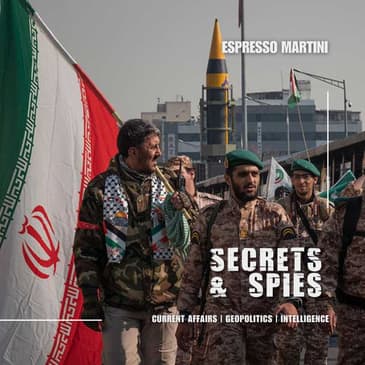
Photos by Morteza Nikoubazl/NurPhoto, Reuters
Secrets and Spies sits at the intersection of intelligence, covert action, real-world espionage, and broader geopolitics in a way that is digestible but serious. Hosted by filmmaker Chris Carr and writer Matt Fulton, each episode examines the very topics that real intelligence officers and analysts consider on a daily basis through the lens of global events and geopolitics, featuring expert insights from former spies, authors, and journalists.
Hosted by Simplecast, an AdsWizz company. See pcm.adswizz.com for information about our collection and use of personal data for advertising.
[00:00:05] Secrets and Spies presents Espresso Martini with Chris Carr and Matt Fulton. Hello everybody, welcome to Espresso Martini. Matt, how are you? I'm good, Chris, how are you? Yeah, not too bad, not too bad. A bit hot, a bit frazzled, but pretty good. How are you?
[00:00:32] Yes, that's time of year. Good, I thought I'm good. I thought I blew the speakers out in my car yesterday, but it turns out I didn't. Oh, that's good. What were you listening to?
[00:00:43] Deftones. Oh, okay. If you're, if you or anyone listening is familiar. No, I was like, I was like driving along, I was, I was doing my thing, you know, cruising along and then I'd hear like, whoomp, and the speakers like just cut off. And I'm like, whatever, like how, how much is that going to cost? And then I got in again this morning and the speakers just came on. It was fine. So I'm not asking questions. Loose wire?
[00:01:05] I don't, it wasn't like an aux thing. I don't know. I was thinking it was something like in like the wiring backup in there, which sounds more expensive than just my aux taking a crap. Ironically enough, it was, it was, there is, it was their track, be quiet and drive that I was listening to when the speakers cut out, which is what then I was then forced to do. Hopefully you'll get that sorted. Yeah. Um, well, at least it wasn't listening to, uh, our podcast speakers.
[00:01:35] Crank it all the way up. Yeah. Crank it all the way up. Yeah. Get that, uh, anti-bird music. No, it wasn't even that loud. It was like just normal, like volume. Like Siri will tell me to turn it down. She can mind her business, but you know, it wasn't that loud. Do you get warnings from Siri about your volume level? Yeah. Yeah. Yeah. Yeah. Yeah. Sometimes. Oh, do you? Wow. What's it say? And it's not, it's not, it's not even that loud. It's just like the decibels are like too high. You should turn it down and like go away. Siri is acting like your mother. I like it. Nanny state.
[00:02:03] Nanny state. Indeed. Indeed. Well, there we go. So yes, we've got a very interesting episode lined up. So going to be looking at this, you know, the memorandum around the peace deal for Iran. And, uh, yeah, we're going to be mainly focused on that today. And then there's a little interesting piece towards the end. We're going to talk about, about Israeli spying in America, um, and the encounter intelligence or threat that's sort of coming actually from Israel, who is an ally to the United States. So, uh, that makes a really interesting thing.
[00:02:30] So it's been an interesting week or so. Um, we're definitely not running out of talking points. No, there's so much, there's so much stuff. How my, my outline right now is 11 pages and there's a ton of stuff that I know like we should, we should talk about and could talk about, but there just isn't, there just isn't time. Oh yeah. There's so many stories we're not talking about this week. The CIA guy with the gold bars. That's crazy. Yeah. We should, we should do something else. Oh, we should, we should indeed. And then you've got the Belfast riots that were happening,
[00:03:00] um, and all the debate around that. We've got some interesting stuff going on in the UK with regards to terrorism laws being used against the, uh, prescribed terrorist group, Palestinian action. Some feel that's unfair. Some feel it is fair. Um, and yeah, so many things kind of going on right now that, and unfortunately there's only so much we can cover because we're not CNN. Uh, we don't have, um, you know, we don't have bureaus across the world or a team of
[00:03:27] people. Uh, we could do a four hour podcast, but then apparently from an algorithm point of view, that might not be a good idea. So the sun does set on the secrets and spies empire, unfortunately for now we're working on that. But maybe if you help, we can grow it, but if you got tea, call us up. Yeah, indeed. Indeed. So, well, let's go into this memorandum of understanding because, um, there seems to be a hallmark of the Trump administration because it kind of gave
[00:03:55] me vibes of when that, um, spat happened in the white house last year, president Zelensky. That was also to build up some memorandum of understanding about some future agreement that kind of didn't really pan out. It's, it's a weird tactic that kind of creates Charlie Brown football. Yeah. It just sort of creates a little press release. It looks like forward motion is happening. Uh, it feels very official, but it doesn't feel like it's really anything solid.
[00:04:20] I think this is more than that. Um, I mean, it's not like, it's not like a treaty, a Senate confirmed, you know, thing signed official. It's not that, but it's more than, it's not nothing. I'll say that in my Jersey way. Um, anyhow, I, I can get into it. Um, if you'd, if you'd like, go for it. Yeah. Yeah. Go for it. So here's our, here's our intro. So on February 28th, a joint U S Israeli airstrike destroyed the Beit Rabari compound in central Tehran,
[00:04:50] killing Iran Supreme leader, Ali Khamenei, his son, Mosheba survived to succeed him wounded and in hiding for the hundred days of war since. But the same strike took Mosheba's wife, his mother, and his young son. Um, that's how this war began. And on Sunday, it seems it may have begun to end. Uh, let the oil flow was how Trump announced a deal with Iran in a true social post. And by Wednesday,
[00:05:15] after much rumor and speculation over the details of this deal, official text was released for a 14 point memorandum of understanding brokered by Pakistan. On paper, the MOU calls for the U S to lift its naval blockade of Iran's ports and Iran to reopen the Strait of Hormuz, both within 30 days. Iran gets sanctions waivers on its oil, frozen funds released and $300 billion for reconstruction
[00:05:41] efforts. In return, Tehran reaffirms it won't build a nuclear weapon and commits to downblend its enriched uranium stockpile under IAEA supervision. You can talk a little bit more about the details there if you'd like. Yeah, we'll go into that in a minute. Yeah. Yeah. Then 60 days to reach a final comprehensive deal. Trump calls it a major win. Iran's chief negotiator calls it a record of American failure. And most of the expert reads, including those from some of Trump's traditional
[00:06:08] allies in Congress and in Israel land closer to Tehran's read. A regime that survived a decapitation campaign on its own Supreme leader and senior officer corps comes out battered, but alive and emboldened. It's oil flowing. The nuclear question pushed into a vague secondary phase of negotiations. As many have pointed out, the Strait was open before the war and Washington is now paying to reopen it. In France for the G7 summit this week, Trump signed the MOU last night as we're recording
[00:06:38] at Versailles over dinner with Emmanuel Macron. The same palace where the 1919 peace treaty was signed ending World War I, which of course held for barely 20 years before a far more catastrophic sequel. So I want this from your side. Chris, how do you feel about all this? Well, you shared a really great piece from the Atlantic Council that kind of collated a lot of
[00:07:04] quotes from different people. And there's one quote that stood out for me that kind of sums up where I'm at at the moment. So this is from Victoria Jade Taylor, who is the director of the Atlantic Council's Iraq Initiative. And she says that the Iran deal is likely the best possible outcome, but it is perhaps no better than what could have been achieved had the United States pursued diplomacy rather than war in the first place. And I kind of feel like that sums everything up. I think this, as many people have
[00:07:32] said now, this was a war of choice. And I think that, you know, there are the usual cheerleaders at the moment trying to praise Trump and make it out that his dealmaking ability is very impressive. And, you know, this is going to be the beginning of some significant thing. But what I'm reading, I think many people are reading is what this is doing. The closure of the Straits of Hormuz in America's and the international community's reliance on that shipping lane has basically exposed a massive
[00:08:01] weakness that Iran is now going to exploit and keep exploiting during these negotiations and possibly beyond it. I think Trump is more concerned about the economy. I think he's more concerned about saving his own ass right now. And I think that he is potentially, his administration at least, is particularly concerned about the midterms and perception. And I don't see this as going to be
[00:08:27] particularly great for the people of Iran. I don't think anything's actually changed in regards to the regime and what daily life is like for people in Iran. If anything, it's starting to look like the IRGC has got a very strong hold on the Iranian people. And we'll go into this a little bit more in a minute. It sounds like- Stronger than they did. Yeah. And now there's potentially a whole new generation of leaders who are a little bit more savvy and hardline because they kind of grew up with the
[00:08:54] ideology and didn't have to found the ideology. And I think there's a whole, it was reminding me of like, in communist theory, it apparently takes about a hundred years to change a population. And so the Iranian regime has been around since 1979. So it's over- 47 years. Yeah, 47 years. So that's about nearly the halfway point. And certainly the next generation of people who've grown up with the Iranian regime and this being normal and their regimes or stooges or
[00:09:24] employees or whatever you want to call them, this is normal to them. Whilst the people who founded Iran, this was not normal, they made it the normal, if you know what I mean. So they have a different perspective on things. So I'm very skeptical. And I think a lot of people in Europe are quite skeptical about what's going to happen next because this whole Straits of Hormuz closure, to me, just comes about because the Trump administration didn't read their previous war
[00:09:52] planning and didn't really think this through. And they're acting surprised. Like, oh my goodness, how could they do that when their own planning has said that this is a scenario and they took no measures. I think even Hillary Clinton was talking about this, how she was surprised that the Trump administration took no measures to counteract that. So yeah, so that's where I'm kind of coming from at the moment. And on top of that, from what we're seeing of this memorandum
[00:10:21] about this future deal, which is still, you know, to be negotiated, is still not looking any better than what Obama did. And it also looks like that the Iranian regime are going to get far more money than what the Obama administration gave them. And if you remember, in Obama's presidency, there was a lot of controversy about giving the Iranian regime any money. And there were talks of like pallets of cash
[00:10:48] or something, and it was all big scandal. And yet the people who pushed that narrative are now the ones who are kind of applauding Trump. And I find it very hypocritical. And yeah. So what are your thoughts on this? This, yeah, this, this, this MOU now is, is really, it's, it's a category difference from, from the JCPOA. That's the Obama deal that you were just describing. I mean, that was a Senate confirmed sort of internationally binding agreement with enforcement mechanisms and, you know, fallback
[00:11:17] triggers if parts of the deal weren't being met and everything. This is essentially the readers, we can get into more like the, the point by point sort of walkthrough. Um, if, if you'd like, this is essentially, we're going to open the Strait of Hormuz, we're going to stop shooting each other. And we agree that we're going to talk more on, on all of these issues that ail us. Um,
[00:11:43] it's sort of, it's, it's more phased than just Iran gets all this cash off the bat and they just walk away with it. They're going to comply with things. Yeah. Right. I'm not saying that as a, as a defense of it, it's just sort of the, the text and they get some stuff now. And then down the road, if they're negotiating a good faith on the nuclear agreement and we get to an actual deal on that, they get more money and everything. So there, there's carrots
[00:12:09] that go through that. So let's sort of walk through, uh, what Iran gets now. So like phase one on signing within the next 30 days. So between now and like the middle of, of July. Um, so oil revenue, they get that back immediately. Uh, the U S treasury issues waivers for crude and petroleum products, uh, oil derivatives and the services that sort of make that export work. So the banking
[00:12:36] insurance transport and stuff, that's in point 10 of the agreement. And that's a really big cash spigot that gets turned on for the Iranians just by, um, signing it. There's also then the sort of the frozen funds and assets that get, uh, released that would be upon implementation. Um, a lot of the procedures around that still need to be, um, negotiated, but that also sort of comes now within
[00:13:03] the next 30 days. Um, big points here, uh, U S naval blockade on Iranian ports are lifted in exchange. Iran opens up the Strait of Hormuz, um, ceasefire on all fronts, Lebanon included supposedly. That's what the text says, whether that holds in practice, um, stay tuned. You know, I, I really have no idea
[00:13:30] how that's going to go down. That could go either way. I don't know. Yeah. Although I will say that I think Trump's insistence on folding Hezbollah and Lebanon, um, into the ceasefire itself. I think you can read that as a, as a win for Tehran. I mean, that was a big pressure point that they had with him, you know? Um, I think that whole standstill though, that we're going to have for the next 30 days is sort of generally in Iran's favor. Also, you know, no new sanctions, no additional
[00:13:58] U S forces in the region while these talks go on. Um, so what Iran gives for all of that right now, like I said, it reopens the Strait and demines the Strait within 30 days, um, uh, free commercial passage for vessels guaranteed for 60 days only. That's under a 0.5. Um, again, they also sort of reaffirmed they won't build a bomb and they sort of freeze their nuclear program in place at the
[00:14:27] status quo, which is where it's essentially been for a while, you know, sort of walking right up to the line, but not making the decision to build a bomb. Um, here's what Iran gets only via negotiations on, on the nuclear program. And this would be like a final comprehensive deal looking at farther at that like 60 day, um, window. So in that there's also carrots that the U S is
[00:14:53] holding back for that specifically. So that would be a permanent termination of all sanctions. That's the UN IAEA unilateral U S primary and secondary sanctions. So all recent sanctions or just sanctions in general? I believe it's, it's just all sanctions. Wow. That's massive. Yeah. Um, there's a $300 billion reconstruction package, um, promised now, but also sort of the
[00:15:20] delivery mechanisms for that need to be finalized. And that's also gets looped in with the text. It's kind of vague. It says, you know, regional partners, which I would assume to mean the Gulf Arabs. Um, there's also the point for the deal, U S forces withdrawn from Iran's proximity. Um, and that's notably 30 days after the final deal. So that's sort of not within the window of the MOU.
[00:15:45] I mean, the blockade sort of lifted immediately, but I think what, what I'm unsure of is like, what meant by U S what's meant by U S forces in the vicinity of Iran. I think, I, I think that would be interpreted to mean, um, like the forces that were surged in for, for the war for, for Epic fury, not like, you know, the U S leaves the middle East entirely. Um, but again, the way it's phrased,
[00:16:13] um, you can have different determinations. You, you, you get a different definitions of what, what that, what that means. And I think that's where the next sort of phase here gets really kind of, um, hairy. And I think, I think the Iranians are operating with different definitions for a lot of this stuff. And this would all ultimately sort of end up in a binding UN, um, resolution. So what Iran would give up in return on the nuclear program, according to the text of the MOU,
[00:16:42] they would down blend its uranium, it's enriched uranium stockpile on site. So that's in Iran, probably Isfahan. I'm guessing. I remember there were four, like back during the JCPOA when that was negotiated. And then in the attempts to sort of replace that, there was talk that, you know, okay, Iran would, uh, export uranium to Russia and they would enrich it to a civilian level and send it
[00:17:07] back. The Iranians had issues with that. So that's not part of this. It would be, um, yeah, all done on site down blended, which means, so Iran's highly enriched uranium stockpile is stored in these metal canisters. It's in the form of, um, uranium hexafluoride gas. So it's not dust. Like a lot of people have just been throwing around. It's not, it's in a gas form. It's not a dust form. I don't know where that's coming from anyway. Yeah. Nuclear dust. Yeah. That's, that's not a thing.
[00:17:35] Down blending then is, is the process of mixing that highly enriched uranium, that uranium hexafluoride gas that is stored in right now with natural depleted or sort of lower enriched uranium to dilute the concentration of the isotopes of uranium 235, which is the highly enriched weaponized uranium. That's the kind you can use to go boom. Um, and that renders the material unusable for nuclear weapons.
[00:17:59] So that would be done on site, um, in Iran and, uh, under supervision of the IAEA. Um, and those, again, the negotiations to implement that stuff and work through the specifics and actually achieve it is still entirely aspirational at this point. It's like, oh yeah, we're going to stop shooting at each other. We're going to open the strait and then we're going to talk on that stuff. The likelihood
[00:18:24] of that following through all the way to the finish line. I mean, I can tell you right now, I don't think it's going to happen in 60 days. It's either going to fall apart or you're going to get extensions after extensions after extensions. The Iranians have every incentive in the book to drag this out as long as possible. It served as what they do anyway. Remember the JCPOA took two years to negotiate and that was not with this team and under these circumstances.
[00:18:51] Would this, it was with seasoned diplomats, um, which is something that the Trump administration seems to, for some reason or another, bypass. Um, you could put that down to incompetence, which is what I do. You could put it down to unorthodoxy because they want a fresh approach. Um, you could put it down to many things, but they do. So honestly, this could drag on for ages.
[00:19:15] It wouldn't surprise me if this moves into sort of more of a frozen kind of endless and rounds of negotiations that don't really go anywhere. A lot like Ukraine, uh, uh, negotiations around, around the Ukraine war. It looks like that. And like I, you could give me a crystal ball and show me that, you know, the next president in 2029 is picking up pieces of this still. And I would,
[00:19:41] I would not be surprised at all. Yeah. And, um, Daniel B. Shapiro from that same Atlantic Council piece, he mentioned that the deal is already quite similar to the JCPOA and it doesn't in ways, in some ways. And it, and it, what he was mentioning was that it doesn't talk about, this particular deal does not talk about Iranian ballistic missiles, right. Or Tehran's proxy forces, um, or weakening the regime and actually helping the people.
[00:20:07] So that's, yeah, that's still going to be a big sticking point as well. Um, the militias, uh, support for the Houthis in Yemen, um, various groups in Bahrain, uh, the militias in Iraq, Hezbollah, um, Palestinian groups like Hamas to the extent that they still exist. Um, you know, that's not even in the conversation right now. Um, well, no, and,
[00:20:34] and traditionally, you know, what's given Iran a lot of power in the region is their proxy forces in a sense. It's, yeah, that's been their kind of number one thing. And Israel have done quite a good job of degrading them in the last few years, but, you know, post this agreements, um, that could change again and they could rebuild those forces and they could be new and different. I would want to speak to some more experts about this and I, I, I can do that. Thankfully. Um, I,
[00:21:01] I, I mean, we were talking about this offline before we started recording. I think it would be a much more dangerous situation if Bashar al-Assad was still in control of Syria and they had that land bridge to, um, Hezbollah, then, you know, the resupply, the reconstituting gets a lot easier. Um, yeah. Yeah. Yeah. What's the situation with Iraq at the moment? Cause obviously, um, Iran because, um, had a lot of influence because of the majority sheer population in Iraq right now,
[00:21:29] will that become a bit of a stronghold again for proxy forces? Where are we at with that? Do you think? They took some, the, the militias, that's the PMF, the popular mobilization forces. It's a collection of Shia militias that are unofficially part of the Iraqi armed forces, but not really. Um, they, uh, took some hits from the U S over the course of the last hundred days, they got involved,
[00:21:53] um, in the fight, uh, as well. Um, they're still largely intact, you know, at least compared to like Hezbollah, um, and Hamas, they're still around. I'm not aware of any concerted effort right now to, to change that. I mean, they'll still presumably be a factor, um, in Iraqi politics and their security situation for sure. Yeah. So stepping out of your way from what's on your mind about all of this currently, I mean,
[00:22:21] what is worrying you or what is maybe pleasing you with regards to this? It's more phased than a lot of people suggest. Like it's not, do we just dump hundreds of billions of dollars on Iran and just go home for no reason they do to get, to get some of that stuff. They do have to have to play ball and come to an agreement on, on, on the nuclear program, whether,
[00:22:48] whether that's going to happen at all. I don't, I, I, I don't have a lot of confidence in that. Um, I think my like gut right now is, it's largely kind of goes away for a while or at least fades into the background. And unless the Israelis really want to shake up the snow globe with Lebanon and derail this whole thing, not to mix the metaphors there. Um, I think it sort of fades
[00:23:16] into the background and it, I think it looks a lot like the negotiations around the Ukraine war that just sort of just goes on round after round, after round, after round. It comes out of the news cycle for a while. Yeah. It would not surprise me at all if the next president was still picking up the pieces from this. I don't think, um, I mean, there's a lot of folks in the, like in the white house that would point to, you know, you'll like, you get the criticism. Okay. We got nothing from
[00:23:42] this. You know, it was a strategic failure. Um, none of the objectives that were set out to achieve at the start of this or achieved. And I'll point to, you know, the line in the MOU, oh, they committed to getting rid of their enriched uranium. And that's a, that's such a, like a rosy best case scenario hypothetical. That's still 60 plus days down the road. Like to point to that,
[00:24:09] you know, inshallah, they're going to get rid of their nuclear program in 60 days. Aha, we won. Like that's not, that's not a victory here and now, right now. Yeah. You know, you didn't win that yet. That's like me going, I just like a kid going into an arcade and say, I'm going to win that stuffed animal in the machine. I already won before you even walk over there. Like, no, you got to go in there and you got to get it first. You didn't win shit yet. Yeah. I mean, maybe, maybe they would, maybe they would, maybe, maybe they'll pull it out. Um, I think a team with the chops to pull off such
[00:24:38] a diplomatic feat would not have staged this production of the aristocrats to get to the, um, to get to the starting line at which we find ourselves today. Cause you didn't have to do it. The, the, the hand that we had to get a agreement on the nuclear program was a lot stronger on February 27th than it is today. You could have gotten a deal without doing all this. Exactly. Now there's
[00:25:05] a guy called Matthew Crowing, who's vice president of geo strategy and senior director of Atlantic Council's Scro Croft Center for Strategy and Security. And just paraphrasing his quote here. So the headline of it was he defanging the Iranian regime in exchange for higher energy prices was a good trade. So he says, obviously Iran's posed one of the greatest threats to us national security. The major downside cost has been Iran's sort of threats to the Straits of Hormuz. And, uh,
[00:25:34] but in the end he said, Trump may succeed in defanging one of the world's most dangerous terrorist states for, in exchange for several months of the higher energy prices. And he thinks that's a good trade off, but they haven't done that. That would be a great point about that trade off. If, if he did succeed in defanging the Iranians and that's just not, that's just la la land thing. It is. It's sort of Venezuela. Yeah. That would be a great victory if he defanged the Iranians, but he didn't do that. What are you talking about? It's nonsense. Um, and it's.
[00:26:02] Venezuela, this looks like a stroke of strategic, Venezuela looks like a stroke of strategic brilliance compared to this. It does. And, and, and too many people learned the wrong lessons from it. I mean, he's, he's about the only quote in that Atlantic council piece. It seems to be kind of spinning a, a positive, uh, on, on this campaign. Yeah. I read that on the couch last night and I was like, dude, what? Most people seem to be quite skeptical, but that one just stood out and I just, uh, I wasn't sure
[00:26:29] if I should laugh or not, but it just, you know, um, yeah. Do you find any regime in exchange for higher, higher energy prices, a good trade? Like it's pointing to, again, it's pointing to the happy ending that so many wish for that you're going to get this great deal of nuclear program and it's all going to be fine and settled. And then, yeah, that would be a victory, but you haven't done that yet. You're claiming victory for something that you haven't achieved yet. No, no, we haven't won the toy just yet.
[00:26:58] Put more quarters in the claw machine, dude. You know? Yeah. Yeah. Yeah. There's, there's more, there's more nuance to this story and that text than it's, um, gotten at least in what I see day to day on my phone. Maybe that's, maybe that says something about me. I don't know. Um, but it's not, it's, it's, it's not, I don't know, like some brilliant
[00:27:23] strategic win diplomatic achievement. It's, it's, it's not, it's, we're going to start, we're going to stop shooting at each other and we're going to open the state of Hormuz. So, um, moderate suburban women in the Philly suburbs and Ohio aren't paying $8 for gas in November. And we also don't cause a global famine by fucking up the world's fertilizer supply any more than we already
[00:27:49] have. So we're going to get that freight train stopped from coming at us. And then we're going to keep talking on these other tricky issues that more talented men and women have tried to address and failed. Yeah. So one other thing I just want to quickly add. So I had that interview with Ahmed Abdul last week, was it the week before about China and Iran, but, um, moving away from China and Iran for a second,
[00:28:14] there was one other thing he brought up about how there is, um, plans afoot to try and bypass the Straits of Hormuz. Um, and it involves Saudi Arabia and the UAE who are both sort of fast tracking. So Saudi Arabia already have a pipeline that takes 7 million barrels of oil per day. And the UAE are fast tracking a new sort of West East pipeline that's due to be completed next year. That's the port of Fujaira on their, on their, um, Arabian Gulf coast.
[00:28:41] That's it. And it's going to, um, transport like 1.8 million barrels per day. And I'm wondering whether there's something behind the scenes of the Trump administration that may or may not be taking this into account and whether or not, um, they feel that they might be able to bypass the Straits of Hormuz in a year's time, which I don't think they will because there's only one aspect of what goes through, but. Yeah. Um, yeah, yeah. Yeah. There's a lot more that goes through the Straits of Hormuz than
[00:29:10] crude oil or, or petroleum products. I mean, if I was in the white house or the state department right now, or in one of those Gulf capitals, I would not want the Iranians holding that gun to my head in perpetuity that they've just discovered that, you know, they have. Yeah. And they only discovered that because of this action really, which is great. So, uh, yeah. So,
[00:29:36] so I, yeah, so it just does not bode well. I mean, there's, there's so many ways this can kind of play out and there's a lot of politicking and there's a, there's a few cheerleaders here and there who are trying to really desperately paint this into something positive, because I think there's this, this is a weird growing attitude that if you're not, that you're somehow bipartisan, if you manage to find a way to compliment the Trump administration. And there's this desperate need to make the Trump
[00:30:03] administration and Trump himself look presidential, which we had this sort of last time. In the first term, it was always this, is this his presidential moment? That kind of phrase is slightly changed now. And it's just sort of become this subconscious thing where you just get these people on LinkedIn, et cetera, in these circles who always trying to find a way to spin a positive on this. But, um, and on top of that, you obviously got people who have quote unquote Trump derangement syndrome, um, like myself probably, who, who always see a negative on it, but it's just like,
[00:30:31] I, I just objectively speaking, I cannot see how this situation is any better than it was in February. Um, if they get a lasting, if they, in the next two years, whatever, pull out a lasting resolution to the nuclear program, that'll be a legitimate win, but they haven't done it yet. No, no. They're so far from that end zone from those goalposts.
[00:31:00] Yeah. And just don't look like they have a lot of leverage to achieve that other than the money, but yeah. So we shall see. We shall see. Well, I think let's take a break and then we're going to come back. We're not going to stop on this subject, but we're going to take a slightly different angle to it now. So, um, let's take a break. We'll be right back with more.
[00:31:32] Welcome back everybody. So Matt, there was a brilliant piece in foreign affairs that you brought up in your preparation for this thought provoking. Yeah, it was very thought provoking actually. So I'll let you sort of talk us through what was on your mind and then I'll chip in if I feel necessary. So this is going to take a look more at Iran itself and, and what the next iteration of the regime is going forward after this war. So, uh, the war that was supposed to end the Islamic
[00:31:59] Republic may have saved it. That's the argument, uh, Narges, Bajogli and, uh, Vali Nasser make in a peace for foreign affairs that the U S Israeli bombing didn't break Iran. It remade it into something more formidable than what went in. Uh, we just walked through the deal that Iran got. Um, this is about the Iran that's now claiming the spoils from that deal or trying to, uh, two key points stand out from the article. The first, uh, the regime learned, they learned lessons.
[00:32:29] Between last summer's 12 day war and this latest round beginning in February, the authors write, Iran's military and security services executed more institutional change and preparation to simultaneously fight two adversaries with far greater technological superiority in just eight months than it's seen in decades. And on the battlefield, it showed missile launchers were dispersed widely across the country. Engineers were embedded in the underground missile cities to
[00:32:56] repair their collapsed entrances in a real time. Shah had drone swarms were sent to thin out American interceptors and probe seams in radar coverage. This, uh, in this word, Iran fought on his own terms. The second point is who's in charge now. The strikes that killed the 86 year old Supreme leader and many of his senior lieutenants also cleared the way for a younger generation. Revolutionary guard men
[00:33:21] who came of age after 1979's Islamic revolution, not in the Shah's prison. And Bajogli and Nasser's read is that these aren't simply the single-minded apocalyptic zealots of their father's generation, but shrewder authoritarian nationalists who split the revolution off from the business of running a state. The old loyalty test was, are you Islamic enough? The new one is, are you Iranian enough?
[00:33:47] Here's a part worth chewing on, Chris. Uh, so in January, this regime was massacring thousands of protesters in the streets. By spring, ordinary Iranians were forming human chains to protect its power plants. You, of course, know why. Uh, the authors think the war fused the state to the very nation that had been ready to topple it. So I guess the question here is, did the campaign to break the Islamic Republic end up rescuing it? Or is this a wartime fever that breaks the moment the bombing stops?
[00:34:17] And all domestic grievances resurface. Yeah, it's a very, very interesting piece. There's a few things I want to sort of, uh, reflect on a little bit, but I just want to finish up on the point you were finishing on. So there's, we were talking off air about the way this piece, um, kind of paints how the
[00:34:37] Iranian population may or may not be, um, what's the words, uh, slightly more pro the regime because of the bombing. It's a rally around the flag. Yeah. And, and that description of, there was a description in there of the people around the protecting the power station, which makes it out sound like it was voluntary. And I don't believe it was voluntary. I could be wrong, but I thought that was enforced. I don't, I don't know. I don't think they held people and forced them. I mean,
[00:35:06] it could have just been like, I mean, you'll get, you get this in, um, parts of, of Lebanon where, um, Hezbollah has, has power and kind of runs the show as well. Same thing with Iran. It's, you know, uh, regime supporters and everything who they'll, you know, go through like text lists and say, go here and have this protest, you know, that could have been the case. I don't think they were like, you know, forced to stay there as human shields. I'm not sure. No, I hope not. Who
[00:35:34] those people were, why they did that, but I can't speak to that. Yeah. Cause we talked about this in a different way before. I remember about two or three years ago, there was this sort of so-called survey from people in Gaza about their views about things. And it came out with some very strange stuff that, and I questioned how on earth can you really do an objective survey in an active war zone? And the same kind of thing applies a little bit here is how can they interview people
[00:36:03] objectively in an active war zone and kind of conclude that there's this sort of support. I mean, there probably is some support. I think most of the support is still over a barrel of a gun or enforced by barrel of a gun, um, and other things too. Keep in mind also, the internet has been shut off there for most of this as sort of a counterintelligence move, um, against us and against the U S and Israel. So that, you know, isolates the country
[00:36:30] to, to a large extent also. And also this article goes into, and there's a, I left, this is on, it was a foreign affairs article that we're talking about here. Um, I left a gift link in the, in the show notes that folks don't have a subscription because I think it's, I think it's worth checking out. Yeah. It's a brilliant piece. Yeah. There's talking there about how, you know, because they, because Iranians, ordinary Iranians didn't have access to the wider world through the internet over the course of the past few months here, they saw more domestic news state run
[00:37:00] programs. Again, I'm not saying that that, I don't, I don't say that just suggested that rally around the flag effect to the extent that it has isn't real. It's more, I don't know. I think it's just, it's a by-product that it happened in Iraq too, a little bit. It's like either foreign invader or foreign country bombs your country. What is probably going to happen is it's going to unite people because suddenly have a common enemy. And this is, this is why you shouldn't
[00:37:24] invade or bomb other countries except for as a very, very, very, very last resort. I hope that's enough there is in there. I think that you should avoid it at all costs. I think once you become an occupier, it's a disaster. Um, and bombing countries is not particularly great either. Also how, how this was, how this is orchestrated, you know, a whole civilization is going to die tonight. Why, why the fuck would you expect a different reaction to that?
[00:37:52] Who would have a different reaction to that? Yeah. Well, there's an Iranian taxi driver, right? I have a friendship with, um, who transports me from time to time on a semi-regular basis to various jobs that I do, um, filming and stuff. And, um, so we've had chats about, you know, what his, he and his family think. Um, and he was at the beginning of all this, when the first initial strikes happened, he was quite hopeful that the Iranian regime would be
[00:38:21] toppled and then sort of reached this midpoint where he was a bit in denial, still hoping it would be toppled. But now he sort of lost all hope about all this. About the regime being toppled ever. Yeah. About the regime being toppled about all this happening. Um, and he's also now sort of become a bit anti-Trump, not that he was pro-Trump before, but he was largely supportive of Trump in regards to what he was doing with Iran. And so in a space of six weeks, he's sort of been through the
[00:38:50] four seasons over this. So imagine if you were in Tehran now. Yeah. And you're in your neighborhood's getting bombed every night, you know? Yeah. This is normal. This is a normal human, human reaction, you know? But it's sort of what the article goes into also is how this new generation of Iranian leaders that have sort of taken over, starting with the Supreme leader with, with his son who also, I mean, yeah, he was, his dad was 86 years old. He probably wasn't going to be around
[00:39:15] for much longer anyway. Um, would have, um, was sort of slated to take over. So it just sort of moved that up. Um, that they're, you know, that they, that they are, they were not there for the revolution, right? They don't know anything else but the Islamic Republic, right? So it's just a different sort of, it's a different sort of mindset, less dogmatic, but also more, more authoritarian
[00:39:43] and nationalistic than a, than a, than a theocracy. I mean, you mentioned offline that example of like Putin's Russia. And I think that's, that's a, a good way to compare it potentially that we're looking at now. Yeah, indeed. I think that's where Iran might be going is into that kind of, because they're going to obviously be anti-US. They were anti-US beforehand, but then now the leader's father was killed by US and Israeli action and recent bombing, et cetera, has given the
[00:40:08] whole population a new reason to be angry at America. I have some, it's not squabbles with, um, any points in this article, but it was just sort of a persistent thought in the back of my mind, right? Cause it talks about how in this sort of eight month window between, you know, almost a year ago now in July, when, uh, Israeli, when the Israelis first hit Iran, we did Operation Midnight
[00:40:34] Hammer against the nuclear programs. And then leading up to February, the last round of this, how, you know, the, the Iranians really got their shit together. The, the, the, the regime, I should say, really got their shit together and, and like prepared actively for it, you know, reorganize the military and reconstitute themselves and like got them ready to, to, to fight this war. And it, and it paid off. Right. And how the sort of the, the, the temperament of, of this new ruling class
[00:41:00] is just very different from, you know, the, the stuffy older clerics who came up with, um, homunai and are like true, like religious zealots, you know, that they're more, that they're more sort of like pragmatic. And I think I don't, they're not making this argument in, in, in the article, but I think it's, it's easy for this point to get muddied when you're throwing
[00:41:25] around a word like, like pragmatist and stuff, you know, I think in this case, pragmatic probably describes their statecraft, describes the regime's statecraft, not their character. And I think the proof of that is in that own eight month window, you know, while this, I say this in quotes, technocratic, non-ideological class of, of leaders reorganize the military, eased hijab
[00:41:52] enforcement, the same regime murdered, according to UN estimates between six and 20,000 of its own people in cold blood, you know, and I think both of those traits are true at once. I think a, a pragmatist, pragmatist does not mean more reasonable, more dealable with, or, or less brutal. I think a regime that learns to kill more efficiently is not a regime that decides to kill less.
[00:42:21] No. Well, this is where for me, um, looking at a country, you know, when we look at like communist Russia, communist China, and then there's the, for some people, there seems to be this sort of, um, ideological kind of, um, sort of view that kind of blocks them from seeing
[00:42:46] the brutality of those regimes. So like, you know, communist Russia, Soviet union murdered millions of their own people through purges. Millions. Same with communist China under Mao. And for me, this is where it becomes very clear. It's like if a regime is murdering his own people, whatever the ideology is bad. It, it, it fundamentally breaks the social contract.
[00:43:11] Exactly. And so this is why I always find it amazing sometimes when you get people still to this day who get rosy eyed about the Soviet union or about sort of China. And so then this argument, this sort of develop, potentially developing about this new Iranian regime that's come out, the new generation will be more pragmatic and maybe more nationalist. That's still not great. As you're saying, you know, it's still the regime that has blood in its hands and still potentially
[00:43:38] could have even more blood in its hands in the future. I worry a lot about, I thought about this a lot in the past couple of weeks, you know, given that fresh influx of cash, they're likely to get that new frown, that new found sort of swagger and confidence of having survived going toe to toe with us
[00:44:01] for a couple months, you know, does that then, I mean, like I've said before in, in, in, you know, looking at, at, at us or the Trump administration, okay, you had a great, you had a great military victory in Venezuela and then you got high on your own supply and you did stupid shit with Greenland and you did stupid shit with Iran because of that, right? Does that, does that also extend
[00:44:29] to the Iranians, to, to, to, to, to, to the Iranian regime now to an extent, you know? Okay. So with that sort of newfound confidence and swagger that they got, that influx of cash does the regime as the dust settles here, you know, and, and Iranian dissidents and stuff and, and, and folks within the country have sort of long said that as, as long as this has been going on, the story's been going on, that they're sort of, one of their greater concerns is what happens when it's done and the regime
[00:44:56] doesn't have to worry about us bombing them from off the coast. You know what I mean? And they can focus inward, you know, at their enemies at home, they would, they would say, you know, so like, does, does the regime then overreach domestically? Like, do they lurch back into those militarized authoritarian instincts and potentially squander that rally around the flag effect that our
[00:45:21] geopolitical fuck up? Hand, hand, hand them. I don't, I don't know. I'm not enough of a, an expert to sort of make a call on that, but it's something I'll be, I'll be looking for. I'm, I'm, I'm curious about it. Yeah. Well, I'm, I'm interested as well in like China's relationship with Iran. And obviously it's sort of quite. Oh, that'll, that'll ramp up a lot in the coming. Yeah. Well, my interview was with Ahmed Abdul, it was kind of interesting. And at the same time,
[00:45:48] I'm not sure a hundred percent agreed with everything he said. Like I still take a bit of issue with his claim that China doesn't have a long-term strategy with the Middle East. I kind of found that a bit, not sure about that, but that's just, you know, yeah, I'm not sure. Cause China famously have like very long plans. They got plans on plans on plans on plans. That's what they do. Yeah. So I, I'll, I'll take him as word, but I'm not sure if I totally agree, but there are, but that's the interesting thing about doing interviews with people. You don't always
[00:46:17] have to agree with everything they say. Um, but he does say that China sees Iran as a useful strategic partner, but not an ally is prepared to rescue. And what I also found interesting was how China and the U S have some shared interests too with Iran, cause they don't want a nuclear Iran. They don't want to have an arms race kicking off in the Middle East. And, um, so there's something
[00:46:44] interesting there as well, whether, whether or not if, you know, cause obviously Iran is growing closer to China. I mean, it's part of China's, um, well, part of Russia, China, Iran, North Korea's axis of whatever we call it these days. Um, and, um, yeah, axis of mischief. I don't know. What do we call it these days? Used to be, it was the axis of evil during George Bush, and it was the axis of something else. And now I've lost track of what it's the axis of,
[00:47:11] but mischief's good for now. Uh, yeah. Um, so whether or not China will kind of try and rein them in a bit, I don't know. Or, or again, like, cause China is suffering a little bit from the streets of Hormuz closures as well, isn't it? I mean, Chinese trade. Yeah. They got, they got their, they got their stuff out. They got, they got stuff going through, you know, but it was, yeah, they don't, yeah, it was not inherently in their, in their interests.
[00:47:39] I don't think the Chinese would be cool with stuff like October 7th. No. The Iranians sponsoring that, you know, to their credit. Yeah. But then they are quite happy to obviously see this continue on and America stay distracted and deplete weapons over this situation and so on. Um, which then may help, um, China with it sort of, uh, yeah, with potentially Taiwan and its specific strategy, et cetera. So it's, yeah,
[00:48:07] interesting sort of times going on right now of all this. Um, so yeah, we, we shall see, um, there's so many things in play, but I just don't think there's going to be any quick victories anytime soon, no matter how anybody spins it. Um, that's the ultimate thing. Yeah. This isn't going to be quick. The 60 day timetable that they're throwing around now, that's no, that's not, it's not going to be 60 days. Um, I'm pretty confident on that. One other thing I want to ask you. So just to quote this piece from Foreign Affairs,
[00:48:36] I found it really interesting. The previous, the previous Supreme Leader, Ayatollah, Ayatollah Ali Khamenei, who was killed on the first day of the February war was the product of an intellectual and political currents of pre-revolutionary Iran. His political education had been honed by debate with secular nationalists, leftists, and liberals who shared his goal of toppling the monarchy and standing up to Western imperialism. Once in power,
[00:49:03] the revolution's leaders imposed their ideology on Iran, but never overcame the insecurity inherent in asserting the right to rule over society that would not wholly submit. Whilst then obviously they claim the new generation who are mostly kids of this, um, this regime think differently. What are your thoughts on that sort of description about that doubt that existed in the previous leadership? The insecurity? Yeah, the insecurity. Yeah, yeah.
[00:49:31] I'm not sure. Um, I don't, I'm, I'm, I'm not, I'm not sure where that is. I think it, I don't know. Is it like, um, is it like this obsessive need to control your society, you know? So like you're always, like you never feel like you're secure because this nation of 90 million people, there aren't all doing exactly what you want them to do. In that case, China would be a good model for them.
[00:49:58] Or, or is it insecurity in the sense of deep down, they doubt that they're necessarily doing the kind of the right thing? I don't, I don't, I don't know what's in their head to that extent. Yeah. It's just an interesting bit that stood out for me because I find ideology always fascinating about what motivates people. I think that's one of my key draws to a lot of these things. And, you've got, they claim that the goodest generation who was all about sort of, um, having to deal with,
[00:50:27] you know, a debate and, um, and so on with other kind of groups. Um, and then supposedly they have doubts about imposing their will on others whilst in this new generation no longer have those doubts. And they kind of take, um, the institution, they grew up in the institution as it was, and now they, and they take the legitimacy of it as a given. And I find that really interesting. Yeah. So, um, most of, um, Hamani, the new Supreme leader, um, Ali Hamani's son is, is not an
[00:50:57] Ayatollah. He's, he's a, he's a cleric. He, he was, he was in the IRGC. He fought in the Iran-Iraq war. Um, he's a, he's a cleric. So he had that sort of formal religious training in the seminaries in, in common stuff, but he's not like, he's not a religious scholar. He's not an authority, you know, in that way, which I think also then speaks to the kind of, you know, more
[00:51:23] pragmatic statist worldview then. Yeah. Right. Yeah. Yeah. Doesn't mean he won't kill a whole bunch of people. Oh no, I still, and also the, um, kind of, as we call it, hybrid straight asymmetric methods. Like they were talking about how, as you spoke about earlier about how, um, they're quite adept at using drones and things to overwhelm like defensive measures and things. They seem to be a bit more 21st century of warfare thinking.
[00:51:48] Before, before this latest, uh, if you look at like the span of this regional conflict that's been ongoing since October 7th, right? That just like was dominoes, like, okay, Gaza, then Hamas. Then we did a couple of rounds in Iran up until, up until the last few months there, Iran's performance was just embarrassing. Piss poor, awful. Like, you know, just, just
[00:52:11] picked apart to like Swiss cheese by Mossad and CIA, you know? Yeah. And, uh, well, and yeah. And then the rescue operation for that helicopter, the presidential helicopter that went down in, in Turkey. Yeah. What a disaster. That was a joke. Yeah. Yeah. Well that, I think that was, that was more of, that was like a weather thing. But again, it was like, why is your president up in a helicopter riding through mountains in like fog? Yeah. Yeah. Or, and, and in an, a very old
[00:52:38] helicopter and, and also not have a rescue operation standby or, you know, and have methods in place to find a president, you know, just. Keystone cop stuff. Yeah. It just seemed like the paint was coming off at that point, didn't it? Um. It did. It did. I think, um, this regime will fall one day, someday. Uh, I think probably in our lifetime, but I'm almost certain that when it does,
[00:53:06] it will not be by our hand. We'll have nothing to do with it. Many respects that's the way it should be. Yes. And yes. And, uh, and I would also venture that whoever does replace the regime will not be the biggest fans of us. No, no, exactly. Yeah. Yeah. I think we'll, I don't know, bring up Putin again, but I think there might be a kind of Putin model for the future of Iran, maybe. We'll see. We shall see. We shall see. Maybe.
[00:53:34] Well, let's take one more break and then we'll come back with our last story. So Matt, our last piece today then is on the increasing kind of, uh, espionage threat from
[00:54:02] Israel and the United States or the counterintelligence, uh, counterintelligence threat. We put it that way. Um, is what are your, yeah. If you could talk to us a little bit about that, cause that's an interesting piece. Yes. A really interesting story, um, in, in the times it sort of brings this, uh, to light a bit, a new sort of alert that came out from DIA. So I'll break it down for us. So in 2021, Israeli military intelligence officers were caught planting listening devices inside the headquarters
[00:54:28] of the defense intelligence agency. Last year, Shin Bet officers, that's Israel's domestic security service, tried to slip one into a secret service vehicle and U S defense personnel working at a joint operation center in Israel have found spyware installed on their phones, but this isn't the work of a traditional adversary. It's one of the closest allies the United States has. That's the backdrop to a recent New York times report by Julian Barnes and Eric Schmidt that reveals that the Pentagon
[00:54:56] has quietly raised its counterintelligence threat assessment for Israel to critical the top of the scale. The more immediate trigger, the reporting says is Ron as a two countries, uh, fought this war side by side, uh, Israeli officers working alongside Americans at CENTCOM. Israel was U S officials say working just as hard to get inside the peace talks, listening in on Steve Witkoff and the other U S
[00:55:23] negotiators trying to read Trump strategy as it shifted. One senior officials word for the aggressiveness against top American officials is quote unhinged. Israel's embassy denies all of it says flatly that it does not spy on U S officials. That's not true. A white house official called the account false. Now, none of this should be a surprise. Uh, intelligence services do sometimes spy on their friends. I'm sure some folks listening are screaming at me right now into their speakers. Uh,
[00:55:51] the United States does it too. We do it too. Yeah. I'm sure most folks will also recall that unpleasantness over uncle Merkel's phone that the Snowden leaks revealed. Oh, the rosy days. Yeah. Uh, we were so young. Um, but this for this story lands in an uncomfortable spot. Uh, so on the U S is counterintelligence matrix, uh, the standing concerns are sort of the obvious big four, uh, China,
[00:56:17] Russia, Iran, Cuba, of course, you know, the adversaries. Israel has long sat just behind them. Uh, the ally that spot that worries the spy catchers most. This reassessment puts it's higher, puts it higher than any other ally. And the times reports higher than some of those adversaries outright. So, um, how do your closest allies end up near the top of the same list as your enemies?
[00:56:43] And what do you do about it in the middle of a war you're, uh, fighting together? Kind of an awkward situation to be in. What do you think, Chris? Yeah, it's very complex. I think being caught planting listing devices at the DIA headquarters is definitely not a good look. And I feel like it is crossing a line, especially from an ally. Um, Israel eavesdropping on U S Iran negotiations isn't a great surprise to me. I mean, if they hadn't, it possibly could be considered negligence on their
[00:57:11] part. Yeah. Yeah. Like I, I, I get why they would want to do that. Yeah, totally. And, and look, MI6 apparently bugged, um, Brexit negotiations, you know, and, um, MI6 have spied on negotiations and allies. I think, I mean, the, um, allies spying on allies, we talked about this before, generally speaking, it's sort of, it's in relative good faith to make sure things that are being said behind closed doors are not contradicting what's being said officially. It's kind of like a vibe
[00:57:38] check. Yeah. But there are lines that get crossed and lines that probably shouldn't get crossed. So like planting, if somebody planted bugs in the MI6 building, and then it turned out to be France, I think there'd be some stern words and the French would be off the Christmas card list for at least a year. Um, if you're on it already, but, um, you know what I mean? It, there are fine lines. And, and so what I would, what I was going to say was just like, I think for many in Israel,
[00:58:04] obviously the Iranian regime does for them pose an existential threat. And I doubt even Benjamin Netanyahu, who has made his bed with president Trump would want to turn a blind eye and rely on the Trump administration to have Israelis, Israel's interests at heart in any policy kind of going forward. So I can understand why wanting to keep track of what the Trump administration is doing is
[00:58:28] most likely a priority for them. Um, and it kind of, so I was thinking then like, you know, American spying for Israel has happened before and I'm sure it will happen again. So Jonathan Pollard's the famous one, U S Naval intelligence in the eighties. And he was convicted of spying for Israel. And I believe he, he gave away military secrets, which is a big, I think a big crossing of
[00:58:53] the line. What's unfortunate about this story, um, in many ways. So right now, antisemitism is on the rise in the world. Um, and some of that is connected to Israel's sort of military actions and people's sort of response to it, but it's sort of, and that doesn't justify antisemitism. That's not what I'm getting at, but it's sort of just why it's all ramped up right now. And when you get stories like this
[00:59:20] that come out that are based in sort of fact, um, the problem is people who do take that antisemitic track or thinking use stories like this as evidence to kind of, um, reinforce their antisemitic views and make it out that there's this sort of dual loyalty between, um, Jewish Americans, maybe even Jewish British people in the state of Israel. And somehow those people with their Jewish and live in
[00:59:46] America or Britain will always, um, be more likely to be on the side of Israel than Britain or America. And that's a very complicated kind of place. And, um, so I do worry a little bit that this story kind of could feed into that kind of thing too. Um, but it is based in fact, this sort of thing is happening, has happened. We've got spies, I'm sure spying on Israel. Um, I can't believe we don't.
[01:00:13] Um, so it's, yeah, it's a very interesting piece. It's I think in terms of just, in terms of just, you know, the concept of spying on allies, I mean, it's not, it's not something you want exposed. It's not, it's not a, you know, it's a, it's a, it's a touchy thing. I think if you're an ally and you're just like nosy, we'll say, and you want to get a better sense of what we're talking about amongst ourselves, like that's one thing. Um, we're going to try to stop you, but you know,
[01:00:42] try if you must. Um, but if you're pitching or recruiting Americans to violate U S law and hand over classified information to advantage yourselves at our expense, I think that's a problem. Yeah. That crosses a line massively. And, um, yeah, like don't break into DIA headquarters. That's not, no, it really isn't. It really isn't. And the other thing that kind of came up in this, this piece as well, obviously, um, we've talked about this a little bit before, like the Trump administration are very politely unorthodox in their approach to things. So they end up
[01:01:12] flying on private jets. They end up using non-diplomatic staff who don't have training about, you know, national, you know, about sort of, um, counterintelligence concerns, national security. These individuals also use their own private phones over secure phones. And so it makes them easier targets. And the thing is a lot of the reasoning behind why you have diplomatic planes, diplomats who are trained in these things is because it comes from years of experience
[01:01:41] of these things. And the Trump administration just sort of ignores that experience and bypass it because it thinks it's somehow above these things. And that really grates me. Here's a quote from the article. So the tendency of some senior Trump administration officials to fly on private aircraft, to conduct national security business on their personal phones, and to reject staffing from us embassies abroad made them especially vulnerable, uh, targets for the
[01:02:08] spy services of allies and adversaries alike, said a former senior U.S. official who has dealt extensively with Israel. Yeah. Even apart from this, I mean, there were those stories, was that last year? I think, um, Whitcoff was basically like strolling around the Kremlin using signal on his personal phone. Like how, how hard a target can he be? You know, like advanced, advanced spyware is basically a core Israeli industry. Like nobody's better at, at, at developing that stuff. You know, it's, it's not, it's not, it's not hard. It's not hard at all.
[01:02:38] No, indeed. So it's, uh, yeah. So, um, not a great look. Um, I'm sure many people would have preferred this to stay behind closed doors, but it is what it is. I do think it's interesting that it's coming out. Well, yeah, I, yeah. I don't know what the motivation behind it is. It's interesting, isn't it? Yeah. Well, you can draw conclusions from it. I think, you know, there was that story about, um, I think it was in 2019. There was that story that came out about, uh, stingrays being planted near
[01:03:07] the, near, near the white house. You know, there's like basically those, uh, the FBI used them or did use them. Basically they're like the, like the fake cell phone towers. Right. Um, they, uh, uncovered those that were like pointed at like West executive drive, West, West exec, which is, um, folks don't know, like if you're standing in front of the white house, like on Pennsylvania Avenue, there's a gate to the right there where like the West wing is. And like that driveway between there
[01:03:35] and the Eisenhower building, that's West executive drive. It's like where everyone pulls up with their cars and stuff and they're going to meetings or something. There were, um, yeah, there was like, there was, um, stingrays that had coverage of that. They were planted in, and buildings that were over looking it. And it was, um, it was, there were, I believe at the time Politico had the story. There were FBI forensic analysis that left officials. They said confident that Israel placed
[01:04:02] those. Um, but like no one, no one wanted to, no one wanted to touch it. It was a total taboo to, to acknowledge it. Um, yeah. Yeah. So I mean, if I were Benjamin Netanyahu, I think I would want to be keeping an eye on Trump. There's, there was a thing about, um, he was trying to gain insight into Trump's strategy that did make me laugh when I read this. Cause I do wonder if Trump actually has a
[01:04:27] strategy, maybe a crystal ball might be better than spies, but, um, I don't know. Chop off a chicken's head and let it run around squirting blood all over the place and where it drops. Yeah. Yeah. That's divine something from that. That's right. Well, there we go. Is there, is there anything else you'd like to add there? Are you happy? No, no good show. Yeah. Thank you very much. Well, yeah. Thank you for all that, Matt. That's been really great. And, um, thank you everybody for listening.
[01:04:57] And, um, if you enjoyed this podcast, please don't forget to, uh, leave a review on Apple podcasts, Spotify, and Amazon music. Also, you can directly support us and get access to ad free content. We go to patreon.com forward slash secrets and spies. And if Patreon is not your thing, that's absolutely fine. We also have something called buy me a coffee where you can just leave a one-off donation and buy us a coffee. And, uh, I certainly live off coffee,
[01:05:23] so I'd be very appreciative of that. So, uh, thank you everybody out there for listening and thank you, Matt. And, uh, yeah, I think that is us done for today. So, uh, thank you everybody for listening. Take care. Bye. Bye. Thanks for listening. This is secrets and spies.