
Every week, the Security Council of the Russian Federation publishes a digest of world events as Moscow sees them. Investigative journalist Dave Troy has been reading them closely, and he argues they matter not because they’re accurate, but because they show the story the Kremlin tell itself and its allies. Dave returns to the show to talk with Chris about his piece "What Russia Believes." His central claim is that the Kremlin sees the war in Ukraine less as a fight over territory than as a contest over the shape of the world order itself — and its real campaign is the slow export of that worldview into the West through proxies and information warfare, a war the West has been slow to recognize as one. They also get into why Washington keeps misreading Moscow, the spiritual and conspiratorial currents Putin curates rather than invents, and how "sovereignty," disinformation, and even UFO culture serve the same end.
Subscribe and share to stay ahead in the world of intelligence, global issues, and current affairs.Read Dave’s article, "What Russia Believes: Weekly Reports Reveal the Kremlin's Distorted Worldview": https://america2.news/what-russia-believes-weekly-reports-reveal-the-kremlins-distorted-worldview/
More about Dave on his website: https://about.davetroy.com/
Follow Dave on Bluesky and X:
https://bsky.app/profile/davetroy.com
Support Secrets and Spies
Become a “Friend of the Podcast” on Patreon for £3/$4: https://www.patreon.com/SecretsAndSpies
Buy merchandise from our shop: https://www.redbubble.com/shop/ap/60934996
Buy us a coffee: https://buymeacoffee.com/secretsandspies
Subscribe to our YouTube page: https://www.youtube.com/channel/UCDVB23lrHr3KFeXq4VU36dg
For more information about the podcast, check out our website: https://secretsandspiespodcast.com
Connect with us on social media
Bluesky: https://bsky.app/profile/secretsandspies.bsky.social
X/Twitter: https://x.com/SecretsAndSpies
Instagram: https://instagram.com/secretsandspies
Facebook: https://facebook.com/secretsandspies
Spoutible: https://spoutible.com/SecretsAndSpies
Follow Chris and Matt on Bluesky:
https://bsky.app/profile/chriscarrfilm.bsky.social
https://bsky.app/profile/mattfulton.net
Secrets and Spies is produced by Films & Podcasts LTD: https://filmsandpodcasts.co.uk/
Music by Andrew R. Bird
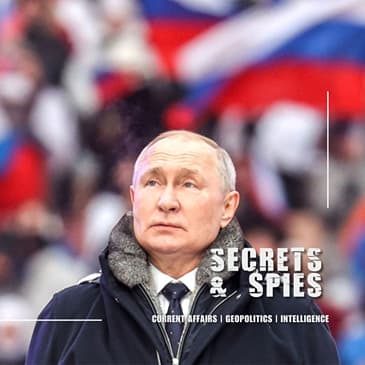
Photo by Sergei Bobylev / TASS
Secrets and Spies sits at the intersection of intelligence, covert action, real-world espionage, and broader geopolitics in a way that is digestible but serious. Hosted by filmmaker Chris Carr and writer Matt Fulton, each episode examines the very topics that real intelligence officers and analysts consider on a daily basis through the lens of global events and geopolitics, featuring expert insights from former spies, authors, and journalists.
Hosted by Simplecast, an AdsWizz company. See pcm.adswizz.com for information about our collection and use of personal data for advertising.
[00:00:00] Lock your doors, close the blinds, change your passwords. This is Secrets and Spies. Secrets and Spies is a podcast that dives into the world of espionage, terrorism, geopolitics, and intrigue. This podcast is produced and hosted by Chris Carr.
[00:00:29] On today's podcast, I'm joined by technology reporter Dave Troy, and we discuss his reporting on the Kremlin's worldview based on their weekly information bulletin reports created by the Russian Security Council and his analysis of those reports. So I hope you find this episode interesting. Thank you for watching. Thank you for listening. Take care. The opinions expressed by guests on Secrets and Spies do not necessarily represent those of the producers and sponsors of this podcast.
[00:01:06] Dave, welcome back to the podcast. How are you? I am doing all right. Good to be here, Chris. Yeah, it's good to have you back on. Now for the benefit of the listeners who may not have heard our previous episode about Elon Musk, which was a good few years ago now, I think it was 2023. It was when Musk bought Twitter when we last spoke, which was feels like a lifetime ago now. But yeah, I'm just wondering if you could just tell us a little bit about yourself.
[00:01:28] Yeah, sure. So my background is as a tech entrepreneur. I've been an entrepreneur for, I guess, about 42 years now, something like that, which is a good long time. But in the last 15 years or so, I've gotten into doing a lot of analytical and journalistic work, looking at social media data and influence operations. And, you know, combining that with my love of history, which has taken me into the world of spycraft and espionage.
[00:01:57] You know, 20th century spy networks. And I did some work on that in college, that sort of thing. So that has all proved very helpful in the current environment because, you know, quite honestly, if you don't understand the history of influence and espionage networks over the last hundred years, it would be a bit daunting to try to make sense of this current moment. Yes. So I found that bringing all those skills together has been quite a natural endeavor for me.
[00:02:23] Yeah, fantastic. Well, thank you very much for that. So you've just written an article recently called What Russia Believes, Reading the Kremlin's Weekly Reports. And it's based on the Russian Security Council's sort of weekly information bulletins. I was wondering if you could tell us about what those documents are, who they're written for, and what made you decide that they're worth analyzing.
[00:02:42] Well, so somebody brought these to my attention. They were doing some searching in Russian language for information around like Candace Owens, things like that. And they found these documents sort of tucked away on a government website, you know, in Russian language. And, you know, they're basically weekly reports that started earlier this year talking about what Russia's view of the world is. And this is coming from the Security Council of the Russian Federation, which is headed by Sergey Shoigu.
[00:03:12] And, you know, this is a fairly tight little group that very much toes the Kremlin policy and tries to push it out through, you know, its channels of influence within the country and really tries to get the sort of a literal, you know, party line of like, this is what we what we're saying is happening right now.
[00:03:29] Which when you're dealing with an adversary like Russia, that has a very peculiar worldview and a very peculiar history, it's really, really helpful to get some kind of primary source document that is, you know, in their own words, talking amongst themselves about what, you know, they want their own people to think. Now, that's different than what they might actually internally believe, you know, behind closed doors. But this is as close as you're going to get to that without having an inside source.
[00:03:59] And, you know, what I think that a lot of Western analysts really get wrong is that they sort of apply, you know, their own Western historical lens to Russian thinking. And they use metaphors that, you know, Putin is a rational chess player or something like that. And then they think that he's going to do things that make sense based on, you know, Western history and ideas about statecraft and, you know, the Treaty of Westphalia and the whole history of nation states. When in fact, you know, Russia is very strange.
[00:04:29] It is, you know, a big country that is a conglomeration of a bunch of different ethnic groups. It has a lot of different historical traditions. It has a lot of different ideas and self-images about what, you know, the country is about. And I think most Westerners really get that wrong and they just don't take the time to even acknowledge that Russia thinks differently than the West does.
[00:04:54] And I think, you know, from my perspective, I, you know, like to put my hand up and very first thing say, I am not, you know, a Russiologist. I did not study Russian culture in school. I did not, you know, read tons of Russian literature in order to arrive at some great cosmic understanding of Russia.
[00:05:12] However, what I have done is, you know, taken the time and importantly admitted to myself that I don't know what I don't know and have taken great pains to pay very close attention to the signals that they're putting out, the logic that that, you know, brings with it.
[00:05:29] And also to understand, you know, other writers who are talking about how Russian nationalism works, what it's built on and to really get into the headspace of what they're doing and why they're doing it. And, you know, that's a minimal effort. That's a minimal effort, but it's about 100 times more than most other Western analysts have taken to try to get into that headspace.
[00:05:54] So as a result, you know, I have a pretty good idea of kind of what their logic is and what they think they're trying to do and why, you know, a lot of times the things that they do don't seem to make sense to Western analysts. And these documents help to inform that view on a regular basis. Why do you think Western analysts don't take the time to get into the Russian headspace? What do you think is that they're not understanding? Are they trying to make Russia to be more rational or is it something else? What do you think it is?
[00:06:24] I think there's a lot of factors. You know, part of it is, you know, think about the sort of people whose job it is to think about this stuff in the West, particularly in Washington. You know, you've got people who are competing for top positions in organizations like the National Security Council or the DOD or CIA or FBI or whatever. And these pathways represent careers.
[00:06:48] Effectively, you need to become a careerist, you know, person that is able to climb the ranks in order to become a serious, you know, public voice on these issues. So let's take, for example, Jake Sullivan, who I'm sure is a lovely person and all of that. But he's shaped very much by this sort of careerist Washington kind of pathway. You know, he's a Rhodes Scholar. So he went to Oxford and he studied, you know, with the best of the best and, you know, read and read the great books with all the right people.
[00:07:18] And, you know, as a result, he comes back with this worldview that is very shaped by this kind of careerist. You know, there's one sort of way to see any of this kind of way of thinking. And there's not a lot of room for heterodoxy or, you know, considering different points of view within that realm.
[00:07:37] And so what you end up with in Washington, and I've seen this just again and again and again, as you go to think tanks or, you know, symposia that are held by think tanks, and there's sort of the one worldview that people carry around about how things work. And they tend to push it towards each other because to stand out in that crowd is to be somehow or another outcast or, you know, risking being outcast or, you know, being apostate from the great church of the career, you know.
[00:08:08] And as somebody that didn't come up through that tradition and has no career ambitions in terms of, you know, official Washington or something like that, I can just sort of say, well, yeah, I don't really think that's what the documents point to. I think it's different than how you're conceiving it. So I think that there's a social pressure and sort of an internal influence network that keeps people thinking within the bounds of Washington groupthink in particular.
[00:08:36] So for listeners who have not read your article, what are the kind of the biggest themes that emerge from these reports and what do they tell us about how today's Kremlin sees the world? Well, you know, it's very much them putting their spin onto, you know, current events. So, you know, in a week where, you know, there's like a bunch of oil refineries being blown up and wild berries warehouses going up in smoke, they will focus on other things.
[00:09:01] You know, this is sort of like asking your, you know, your teenage son, you know, how things went at school. And he doesn't want to talk about his report card, but tells you about, you know, something else. So it's very much that kind of avoidant kind of shaping of the narrative. And so, you know, I just pulled down a new one of these. They put these out every Monday. And, you know, they pick on different themes. So, you know, like on this one, you know, they're talking about various things.
[00:09:30] The South Ossetia things Medvedev is thinking about. Let's see here. This is pretty obscure stuff. So, you know, basically they kind of retreat into like the sort of operational intrigues of like what's going on inside the government and Kremlin and, you know, different affairs, different, you know, branches of government and, you know, institutes and stuff.
[00:09:58] And they don't really get into like the nuts and bolts of like sort of how they feel about, you know, the war. In fact, they'll say that, you know, well, you know, we may be down for 4%, you know, refining capacity from a year ago. But it's no big deal because it's just like 4%. And, you know, we're just kind of gloss over that kind of stuff. So, you know, it's that kind of spin basically. And it's exactly what they want their people internally to be thinking about.
[00:10:24] And one of the things I find fascinating in your argument is these reports are valuable not because they're factually accurate, but they reveal how Russia understands itself and the world around it. So why do you think studying an adversary's worldview is so important? Well, I think that at its core, this is actually a war over worldviews. And, you know, we can pretend it's something else or map it onto other types of conflict.
[00:10:51] But fundamentally, what Russia has done is committed itself to this idea of multipolarity. And by that, I mean, you know, an end to what they perceive as unilateral U.S. hegemony and or U.S.-British Atlanticist hegemony, if you want to extend the metaphor a little bit. But basically, they want to, you know, sort of have like a tripartite world where like the U.S. and Britain are sort of doing their own thing.
[00:11:20] And this is straight out of Alexander Dugan. I mean, he kind of described this setup in his Foundations of Geopolitics book in 1997. And, you know, and then they want to have Moscow and Beijing be like these other two central world powers. And that's sort of it for multipolarity. Like there'll be sort of this three spheres of influence and everybody else sort of has to fall in line and get in with that model.
[00:11:45] And, you know, to some extent, they would probably prefer to see the U.S. and Britain just go away entirely because that would make things more, you know, fair in their perspective. But recognizing that that seems sort of unlikely, what they would like to do is to turn the U.S. and Britain into sort of an inward alliance with each other and then just sort of isolate them from everything else. And this is why you see a lot of this kind of isolationist stuff emerging in the U.S.
[00:12:12] where, you know, we're basically disengaging from most of the rest of the world, either via tariffs or by, you know, military drawdowns. Now, you know, what Trump is doing with Iran and whatnot is not aligned with that playbook. And he's being punished for it by Russia. And we can talk more about how that's working in practice. But they would prefer also, you know, that the U.S. not, you know, go on those kinds of military adventures.
[00:12:37] I think they're OK with the kind of Monroe Doctrine approach where, you know, we are doing things in Venezuela and potentially looking at Greenland or Canada or whatever. They seem to be fine with anything in the Western hemisphere. But they don't want U.S. influence in Europe and Asia. And, you know, they would like to see us pull out of Japan and that kind of stuff. So you have to understand that, you know, they have this worldview that this is the way the world should be.
[00:13:04] And then they're basically fighting everybody that doesn't think that that's true. Now, they're fighting some people, you know, at the pointy end of a drone or a stick or a gun or whatever. And in those places like Ukraine, you know, that conflict is is acutely kinetic. But in the United States, you know, the conflict comes in the form of social media warfare and information warfare and, you know, financial warfare and things like that.
[00:13:32] And quite frankly, you know, there's a lot of people in the U.S. that are willing to sign on to their worldview in some forms, not always, you know, sort of the the unmodified version, but like slight tweaks they're OK with. And so they're willing to kind of blur the lines a little bit and, you know, work on on behalf of that agenda. And so it ends up being, you know, very crudely described a global, you know, bimodal, bipolar war between two different worldviews.
[00:14:03] And, you know, fundamentally, if you don't understand their worldview, then you do not know what war you are engaged in and you do not know how to fight it. And, you know, you have to decide also, do you want to fight it? You know, like whose side are you on? Have you even considered that you've been drafted into this war? And, you know, if so, what side are you going to fight on? And, you know, it's like I guess it was a Trotsky quote. You know, you may not be interested in war, but war is interested in you.
[00:14:34] And that's what's going on right now is that we are in a world war and some people are aware of that and participating. And most people are just kind of complaining, going, man, this seems to suck. And I'm not quite sure why. Let's take a break and be right back with more.
[00:15:06] Just before we get back into the interview, if you're enjoying this episode, please consider buying us a coffee at buymeacoffee.com forward slash secrets and spies. Thank you. You mentioned Ukraine. And so one of your central arguments is that the Kremlin doesn't see the war in Ukraine primarily as a territorial conflict like many people in the West do. But as part of a much broader struggle over the future of the international order.
[00:15:31] So can you talk to us a little bit sort of about how that role of Ukraine and why it's so important to Russia? And also, I suppose, in a way, why I don't think Putin's going to back down from Ukraine. I think it's too important to his worldview, isn't it? Yeah, I think that's exactly right.
[00:15:46] And, you know, while on the one hand, sure, you know, the territorial gains would be nice and they want Crimea to get this port and, you know, they want natural resources and they want to, you know, have the bread growing capacity of the, you know, Dnieper Valley and all that stuff. Ultimately, they believe that Russia and Ukraine are essentially one.
[00:16:09] And if you recall back in early 2022 or maybe it was mid-2021, Putin wrote a long essay about the historical unity of the Ukrainian, you know, the Kiev and Rus and the Russian people. And, you know, it was sort of a nonsense rambling, you know, screed that didn't really necessarily make a ton of sense.
[00:16:31] But it expressed that this was the core of what it was they were trying to do, was to basically reunite what they saw as something that had been cleaved apart by external forces.
[00:16:42] So if you think about this from kind of like a, you know, a sort of a body fighting an external, you know, contaminant or a disease, what they see is that, you know, by rejoining Russia with Ukraine, they're sort of healing against this external assault that has made them sick, you know.
[00:17:04] And that's a very deep psychological kind of concept. And we see that kind of body imagery come into play with vaccines and a lot of the discussion that comes up around that. But at any rate, that's kind of what they see themselves doing is reuniting these things that have been separated by unjust forces.
[00:17:22] And so, you know, what they also seem to be willing to accept, I think they obviously would have been happy to have had this, you know, invasion be settled within four days or a week or two weeks or whatever it was people were sort of estimating at the time.
[00:17:39] But what they've also noticed is that by pursuing this long and drawn out conflict, they are effectively organizing the world into these worldview buckets and to sides that is serving them in ways that really address their long-term concerns. So, you know, to some extent, they've managed to undermine aspects of NATO while also strengthening aspects of NATO.
[00:18:09] You know, they ended up bringing, you know, their actions effectively brought in, I guess, Sweden and Finland and, you know. So, and, you know, while Ukraine is sort of off the table right now, it has hardened, you know, some aspects of NATO while also, you know, driving a push to undermine it from other quarters. They have, you know, they have managed to incite a lot of internal conflict in Europe and in the U.S.
[00:18:38] And to drive the growth of right-wing political parties that are affiliated with Alexander Dugan. So, you know, the AFD in Germany and the National Front in France are thriving right now. And that's a direct byproduct of all of this. It probably wouldn't be happening in the same way if it were not for the Ukraine war and its effects.
[00:19:02] And then furthermore, they're forcing Europe to allocate a lot more, you know, funding for weapons and things like that, which, again, may not serve their long-term interest. But for right now, they see it as weakening, you know, Europe because it's not able to spend money on other things. So, you know, they see this as kind of like an okay compromise and a necessary sacrifice as well.
[00:19:24] And while they're, you know, killing prodigious numbers of their own people, they're also drawing those people from prisons and other places that, you know, they may not be so sad about getting rid of these people. And, you know, they've got a lot more people to draw from, you know, a larger mobilization, which is being discussed for the next couple of weeks, is definitely going to be a strain on the country. But it's, you know, it's not like they can't do it.
[00:19:50] And the other number one thing that the West gets wrong in evaluating Russia is that they think that at some point the Russians are going to be like, you know what, this is just too much. It's enough. You know, we're done and we're just going to rise up and like replace Putin. The issue with Russia is that it has, the Kremlin has near total control of the information environment. And so if you go walk around in Russia and ask people, what do you think about all of this?
[00:20:16] The overwhelming majority of people are going to say, well, you know, it's a long conflict. It's a necessary conflict. And we're going to just have to keep fighting until we win. And, you know, you may get some variations on that. And there may be some people that behind closed doors will tell you sort of what they really think. But, you know, there's not a mass movement arising to like stop this war, even with the kinds of losses that they're facing. And yeah, you know, they are spending more on fuel and whatnot.
[00:20:45] And the little weekly reports talk about, well, yeah, fuel's kind of up and people are not necessarily thrilled about it. But they blamed the protests over the fuel costs on social media agitation. And of course, what they've done over the last several months is continue to crack down on Internet traffic and have shut off most of the social media channels. Certainly all the Western ones are more or less dead now. And they have like a new state run called Max that's like, you know, you know, Pravda for social media.
[00:21:15] So, yeah, you know, they control the environment and they're able to pursue this for sort of as long as it takes. And I think the West underestimates the degree to which they have committed towards this path. Now, the one thing I think that is true is that if they really continue to go down this path and being as committed as they are, it does make things more fragile and more potentially unstable. But that's not because people are going to like overthrow it.
[00:21:43] It's just because things become untenable. Like, you know, they don't they don't have enough resources. They don't have enough food. They don't have enough fuel, what have you. Then at some point things crack and then you end up with unpredictable outcomes. But even in that case, you know, people are like, well, you know, they're going to hang Putin because he didn't win the war. Well, what comes after Putin? Well, the way that that country is set up, you're going to end up with somebody else from sort of the same security apparatus.
[00:22:08] You're going to get a Petrushev or a Vaino or, you know, Shoigu or, you know, one of these people. So, you know, it's it's not clear sort of how this ends. And I think the West needs to be more, you know, serious minded that, you know, this isn't just going to be a question of sort of wearing Russia down eventually. You know, you really need to punch him in the nose.
[00:22:30] But before you do that, or maybe in parallel to doing that, figuring out some kind of a, you know, a pathway forward that is going to allow Russia to sort of come out of this in a different mode than it's than it's presently in. And I think in order to do that, you really need to sit down and study the worldviews that are driving this. And I just don't think anybody's done that work. Like really very few people have. I find it interesting as well.
[00:22:59] You were talking about sort of viewpoints on it in the in the West and also in the wider world. There's so many kind of different viewpoints that somehow end up supporting Russia's war on Ukraine. So on the far left, we recently had a politician in the UK who described Russia's war on Ukraine as a NATO campaign against Russia.
[00:23:21] Then you have people on the far right who are see Russia as kind of like the savior of the white Christian world and an affront to wokeism and support the anything that Russia sort of does until it encroaches on them. Because we've had that, interestingly, in like places like Poland, where now there is a real threat from Russia that a lot of far right members in Poland are becoming a lot less pro-Russian. But you sort of see all these different things. Then also the BRICS countries.
[00:23:50] And you see, you know, being in London, you meet people from all around the world and you get to hear lots of different viewpoints. And I've noticed a lot of people from the Middle East, certain parts of Asia and South America who seem to be a bit pro-Putin and pro-the war on Ukraine. And somehow see it as Russia standing up to NATO. So I don't know if you had any sort of thoughts on all that sort of stuff. A lot to unpack there.
[00:24:14] Yeah, I mean, I think, you know, the sort of what I would consider to be the sort of normative sane person view of the conflict is that, you know, Ukraine has a right to sovereignty. It's had its own sovereignty for 30 some years. And there's no clear reason why that should ever have been violated. Like, the simple answer to this is Putin shouldn't be meddling in Ukraine. Like, that's the easy answer. Why don't we start with that?
[00:24:44] So, you know, I think the obvious, you know, conclusion from that is that the easy way to draw this to a close is to, you know, have Russian troops go home and for Ukraine to be allowed to exist. And it can go to a normal election schedule and do its thing. And, you know, if it wants to join NATO someday, that's its decision. If it meets the requirements, then they can join NATO.
[00:25:09] This idea that, like, NATO has been, like, on an expansionist tear and trying to, like, add countries or whatever. You know, yeah, you can view it that way if you want. But the fact of the matter is that these are sovereign nations with their own governments, their own democratically elected parliaments and, you know, other representative bodies and presidents. And, you know, if they want to join NATO, then there's a checklist. And you can decide, I want to join NATO.
[00:25:38] And that's a decision that can be made democratically by their leaders. And if they meet the requirements and the governments want to join NATO, then NATO can consider their applications and then they can add them. Like, that's how it works. And the same basic idea with the EU, you know. And so the idea that, like, you know, there's been all these, you know, color revolutions and attempts to, you know, undermine Russia and whatever, it just doesn't really fundamentally pass the sniff test.
[00:26:06] Now, you know, if you can't accept that as reality, which some people just don't for a variety of reasons, then, you know, there's other issues you can get into about, you know, bricks and money. And, you know, Putin's got this idea that the central banks, particularly the Eurocentral Bank and the U.S. Fed and the Federal Reserve, operate a giant, you know, sort of money printing conspiracy that keeps the rest of the world down.
[00:26:33] He calls this conspiracy theory the golden billion conspiracy, that there's a billion people in the world between the U.S. and Europe that, you know, effectively call the shots for the other seven point whatever billion people. And he basically considers himself and China to be victims of this golden billion conspiracy theory.
[00:26:55] So to the extent that that golden billion conspiracy theory has natural constituents, let's say China allies or other, you know, smaller middle powers or, you know, emerging nations, what have you, then, you know, there's a constituency for sort of throwing your lot in with this sort of bricks or cranks, you know, China, Russia, Iran, North Korea kind of worldview.
[00:27:22] And, of course, you know, the other thing people aren't really talking about is that this war in Ukraine is now involving, you know, Iranian drones and North Korean troops. Like, so what is this exactly? Like, who are we fighting again? You know, but anyway, you know, I think that there are people that are willing to kind of, you know, advance those views. And so, you know, you have all of that operating in play at the same time.
[00:27:48] And I think, you know, there's the view that I expressed that, you know, you've got sovereign nations and they can join NATO when they want. Like, that's kind of the rules-based international order view, which I think is pretty sane and what we ought to try to stick to. But there's a lot of people that feel like that they haven't been treated fairly under that regime. And so they want to try different things. And, you know, when people have nothing to lose, they're willing to try all sorts of interesting things. So I think, you know, there's some of that going on as well.
[00:28:15] The idea of sovereignty appears throughout these reports, whether it's military sovereignty, technological or cultural. What does that concept mean in the Kremlin's worldview? Sure. So, you know, sovereignty basically is, you know, the right of a nation to determine its own future introductory and that sort of thing. And so, you know, what they see is that, you know, Russian sovereignty is – let's just say that I think that Russia feels like it has a chip on its shoulder.
[00:28:45] And has had that feeling for quite some time, even before the fall of the Soviet Union. But especially after the fall of the Soviet Union, they feel like that that was yet again an instance where, you know, they were victimized by outside forces, particularly bankers. Which is where some of this latent anti-Semitism comes from, is that they basically are still nursing the protocols of the elders of Zion from 100 years ago. And they basically, you know, make the argument that it's banks that are causing all of this. Yeah.
[00:29:14] And it was the Russian secret service who invented that document as well back in the time of the Tsar. Yeah. Exactly. You know, and you have to know that history. So, you know, they fundamentally think that their sovereignty has been under attack for a very long time. Probably you could take this back into the imperial times and, you know, I'm not enough of a Russian historian to be able to make that case well.
[00:29:39] But that's my impression is that they've got this sort of internal chip on their shoulder about their location and place in the world. You know, the other thing is, is that, you know, you look at, you know, Russia's biggest cities, you know, Moscow and St. Petersburg. They're fundamentally kind of European in that they're close enough to Europe, but they're also far enough from Europe that they never sort of fully integrated into like the European worldview. And they've had a, you know, sort of a bone to pick about that for hundreds of years.
[00:30:08] And, you know, the other thing that I think is overlooked is the fact that they use, you know, the Cyrillic alphabet and have a very different language. Fundamentally keeps Russia a little bit outside of the realm of, you know, the rest of the sort of Latin-y world. And, you know, the culture just has evolved differently. And, you know, in some ways, yeah, you could, you know, say it's good. There's certainly wonderful Russian writers and, you know, interesting things about Russia.
[00:30:38] But it has kept itself very separate and different from, you know, certainly the rest of the Eurasian continent. So, you know, they take this pretty seriously. And during the 1970s, 80s, 90s kind of time frame, I guess this started before the fall of the Soviet Union. They came up with this Primakov doctrine.
[00:31:04] This guy, I guess, Evgeny Primakov basically said, look, you know, Russia's sovereignty is guaranteed by ultimately our nuclear arsenal. Now, people argue over whether their nuclear arsenal is very good or well-maintained or whatever. And, you know, probably it kind of sucks. But my concern there is like, well, you know, all it takes is like one or two nuclear weapons to be functioning. And you've got a credible, you know, nuclear threat of some kind.
[00:31:34] So I don't discount their technical capability to at least keep a couple of missiles going. That said, you know, you'll notice that what they've been doing for the last five years is anytime they feel threatened by anything, they start talking about nuking London or Paris or Berlin or, you know, whatever. And, you know, it gets a little old. They also have done a lot to drive, you know, sort of the cultural export of this nuclear threat.
[00:32:03] But there was a paper, if you recall, there was a case called the Doppelganger case where Russia was, you know, registering all these fake domain names for like news organizations that didn't exist but resembled Western ones. Yeah. And the guy behind that was this guy, Sergei Karyenko, who is also the person that Elon Musk has been communicating with quite a bit.
[00:32:26] And Karyenko, at one point in one of these documents and in a court document, it says that, you know, his goal was to induce nuclear psychosis in the West. And this is exactly the Supreme McCuff Doctrine. They basically want to get the West so freaked out about the idea of nuclear, you know, annihilation and a threat from Russia that they will, you know, leave Russia alone and let Russia do whatever it wants.
[00:32:50] And their hope is that, you know, with enough, like, see, you know, in the United States or in Europe, you know, probably like 30 percent of the people believe that, you know, Russia should just be left alone and they're afraid of the nuclear threat. And, you know, they kind of agree with the Kremlin's point of view that like, what's so important about Ukraine? Like, just let them have it. It's fine.
[00:33:16] And so they're what they what in Moscow they perceive as the task then is, OK, well, if 30 percent of the people already sort of agree with us and maybe that's high, maybe it's 25 or whatever. But all you have to do is get that remaining 25 percent to agree with you and you've got a majority. Now, if a majority is not workable, then maybe all you need is a plurality, which is probably doable in a lot of cases. So, you know, like that's what they see as the goal.
[00:33:45] And that's why we end up with all these population focused active measures that are really directed at altering public opinion in ways that shape our, you know, representative decision making bodies like Congress or Parliament. So, you know, that's kind of what is going on and why Russia focuses so much on population centered active measures.
[00:34:06] China, on the other hand, you know, tends to take a different kind of an approach where they sort of pursue strategic espionage and like getting technology transfer and co-opting professors and installing grad students in certain programs. That's more their vibe. And they like to just kind of stay on the down low, operate quietly. But Russia likes to poke a stick in things and they like to make noise. They like to see results. They like to, you know, get people mad at each other, that sort of thing.
[00:34:33] So that's effectively what we're going through and, you know, the motivations behind it. And, you know, on the sovereignty piece, you know, I think they don't seem to care about Ukraine's sovereignty. They seem to care about their own. So I think you have to, anytime the Russians are talking about sovereignty, it's very much so that we can do whatever we want and drive our agenda. They don't really care about anybody else's sovereignty.
[00:34:55] One quick thing, you mentioned a moment ago about how Russia uses disinformation tactics that are sort of focused on particular populations. Do you have any insight you can share on how they go about doing that? Because I kind of feel like they're, because we've talked a lot about in the past, like bot factories and sort of like offices full of people who are spreading misinformation. How does that kind of work? Well, I think we've seen, you know, different glimpses of kind of like, you know, how they're actually doing it at different times.
[00:35:25] And of course, for those of us that are doing this, you know, longitudinally over the course of the last 15 years or so, you know, you sort of develop a, I call it, I can smell it. You know, like I can distinctly sense when there's some Russian propaganda, you know, channel that's pushing something out. And, you know, usually you spend five minutes digging into it. And yeah, it turns out that that's probably what it is. But, you know, they use a variety of different tactics.
[00:35:51] Obviously, you know, we've heard about, you know, the Internet Research Agency and the troll farms and stuff like that. And I think that's a distinct factor. But, you know, there's also just the people that straight up, you know, are affiliated with their state media. You know, you've got RT and previously Sputnik was active in the U.S. But there's a lot of people that rotate through there that then go out into the ecosystem to do stuff.
[00:36:14] So, you know, and then there's sort of proxy side things that seem to have alignment, like, you know, the Young Turks Network and Hassan Piker and Cenk Uygur and that kind of crowd reflects a lot of their messaging. But then you have explicit cases like the Tenet Media thing where, you know, we really got to see some anatomy in play. So, you know, you had your Tim Poole's and, you know, a whole variety of other Dave Rubin. I forget all the different people that were part of that umbrella.
[00:36:43] But, you know, they were they were allegedly getting paid. Like, I think Tim Poole, you know, was alleged in the documents to have been paid one hundred thousand dollars an episode, like four hundred grand a month or, you know, something like that. Would be nice, wouldn't it? Yeah, you know, and and I've been following Tim Poole since forever. And, you know, he's been this way the whole time. So the question is, like, you know, was he sponsored through different channels before or, you know, did the channels just change or, you know, whatever?
[00:37:11] And I don't believe for a second that he's not effectively still under their ages. You do have interesting, you know, characters like Laura Loomer, who seems to be sort of a, you know, a freelancer gun for hire type or at least more recently is behaving that way. And, you know, you wonder, is the Kremlin running out of money to sort of funnel towards people? And then they become free agents and, you know, open to the highest bidder.
[00:37:40] And, you know, frankly, that's a question that some of my peers and I are starting to, you know, dig into a little bit to try to understand better. Because that is a real concern. Like, at some point, you know, the gravy train runs out. And so some of these people that have just built their existence on, you know, sort of working for the highest bidder are going to switch valences. And perhaps that's a reason why. However, you know, you also have to be on the lookout for the fact that the Kremlin loves valence switching as a tactic.
[00:38:08] And one of the things that, you know, goes all the way back to, you know, Leninist times is controlled opposition and the idea that, like, you know, the best way to manage your opposition is to control it. And so you can't discount the possibility that somebody that flips valence or gathers an audience in one place and then applies it to something else isn't executing a strategy that was intentional from the beginning.
[00:38:31] And, you know, one of my favorite examples of that is Cassandra Fairbanks, who was a Sputnik employee that worked a lot in the U.S. She's still active. And Cassandra McDonald is her married name. But she was working for Sputnik and was a huge Bernie Sanders supporter going into the 2016 election. And she had been pushing all these kinds of lefty causes and cultivating a lefty audience on a variety of different topics.
[00:39:00] And then when Bernie Sanders lost the primary in 2016 and Hillary Clinton became the nominee, she went dark for like three weeks, you know, and like, I guess, went in to have for reprogramming and came out as a huge Donald Trump supporter. And then from that point forward was a massive Donald Trump supporter. So then a lot of people at that time thought it was kind of weird because like, hmm, you're a lefty. You are, you know, you're into Bernie Sanders. How are you now into Donald Trump?
[00:39:27] And people, I think now we understand that there was, in fact, a lot of overlap between those audiences. But at the time, it felt strange. So anyway, you know, there's people like that that, you know, are sort of the prototypical versions. But then there's more sophisticated versions of that now that, you know, are emerging. And you don't always necessarily know what you're looking at in real time. You sometimes have to get the benefit of hindsight. So, you know, it's an ongoing struggle to kind of manage all of this and see what's actually happening.
[00:39:56] But, you know, that's effectively what they're doing is trying to shape public opinion in order to alter public policy, which in turn can help them with their sovereignty goals. Let's take a break and be right back with more.
[00:40:27] If you're enjoying this podcast, please consider becoming a Patreon subscriber. Go to patreon.com forward slash secrets and spies and you'll get access to the ad-free versions of this show. Now we'll get back to the interview. Thank you for your support. In your reporting, you also mentioned that this is a Russian worldview that we've been talking about, that it's not really being created by Vladimir Putin. He's more the kind of curator of it or the custodian of it. So what sort of led you to that conclusion?
[00:40:55] Well, I think, you know, reading, there's a really good book called Russian Nationalism, like Imaginaries, Doctrines and Battlefields, I think it is, by Marlena LaRuel. And you can maybe put a link to that. It's free. And it's an excellent text that really just talks about sort of the history of Russian nationalistic ideas, where they come from, the influences.
[00:41:17] People, I think, underestimate the degree to which the Russian worldview is informed by kind of spiritual ideas. And I don't mean this in the Christian sense, although that's an element. But it's one of a few things. There's, you know, Russian cosmism, which is the idea that we're going to resurrect everybody that's ever died and do space exploration. And so we can put the resurrected dead bodies in space. That's the point of space exploration. And Elon Musk has cited Russian cosmism as a big influence on him.
[00:41:48] So that's in the mix. There's this idea of Altai mysticism, that the Altai mountains are, you know, a special place that, you know, you go to and meditate and achieve higher consciousness. There is something called the Divyevo Brotherhood, which is like a monastery, I think, near Moscow, that some of the top people in the Kremlin are connected to.
[00:42:15] And they believe that in the apocalypse, there's like kind of a peripheral ditch, like a moat around this monastery, and that that moat is going to protect them from the apocalypse. And there's other weird Christian ideas. There's the idea of the Third Rome. There was a prophecy in 1914 in Portugal that predicted World War I, World War II aspects of that.
[00:42:45] And then the third prediction, the third, you know, vision of Fatima was that Moscow would become, quote, the third Rome. And the idea was that Rome was the first Rome, Constantinople was the second Rome, and that Moscow would be the third and final Rome, and that Moscow would unite the Orthodox and Roman Christian churches.
[00:43:07] They actually built a cathedral in Moscow in order for it to become the seat of the third Rome. And, you know, they kind of sort of believed this stuff. So, you know, somebody like Dugin, somebody like Putin, what they are doing is effectively tapping into these traditions because they hold power with the population and with their upper-level people
[00:43:35] and sort of picking and choosing blends of these as stories to tell about Russia's current state, its future, its prospects, its fortune, its destiny, all of that. And, you know, it may sound kind of crazy, but that's kind of how the Russian worldview works. And it's also very pragmatic. Like, if it makes sense to, on Thursday, kind of like double down on all-time mysticism,
[00:44:05] cool, you know, then that's what they're going to do. And they're going to go on trips to the Altai. They do this. They go on retreats to the Altai and hang out and think about how great the Altai Mountains are. And then, you know, the other day it may make sense to cozy up to the Di Vievo Brotherhood people, and you do that. And, you know, all of this ultimately for Putin is about not getting hanged, right? You know, because at some point, if he screws up and leaves himself vulnerable, then he's going to get hanged.
[00:44:35] So you basically have to round robin between all the different power centers in order to kind of keep things in balance and not let anybody get sort of like ahead of you. And, you know, I think that it's—I don't see that entirely cynically either. I think that, you know, somebody like a Putin who was steeped in this culture and brought up in the KGB can actually kind of connect with these things in their authentic kind of spiritual way
[00:45:05] and try to sort of empathize with, like, all of these different constituencies. And if anything has marked his rather remarkable ability to stay in power, it's probably that skill set, you know? So, again, I know this sounds crazy to a lot of Western listeners, but, like, this is kind of what's in play here. And you have to kind of get in that headspace to really, you know, comprehend where they're coming from. And I'll add one last thing, which is that in the West,
[00:45:31] we have adopted, you know, materialistic science and we have adopted, you know, reason and rationalism as our core for our government and a lot of our worldview. The Russian worldview is a much more spiritualist worldview that essentially treats science as a pragmatic tool to be used in service of humanity. And it also fundamentally rejects materialism in the pursuit of science.
[00:45:59] So, instead of saying we're going to build up additively everything we know about the world from experiments and physical artifacts and knowledge that we can gather and point to, they basically say all the time, well, we don't know anything. You know, there's all this stuff that we don't know about the universe. And maybe the job of a scientist is to act more as a mystic or a magician
[00:46:23] who conjures through imagination things that somehow or another can be brought to use for humanity. And so, therefore, the role of the scientist becomes more of a mystic or spiritual pursuit rather than a, you know, sort of reductionist, materialist, you know, experimenting kind of pursuit. And, you know, obviously, in order to make the mystical reproducible, you might need to get some facts and sort that out.
[00:46:52] But they don't see the role of the scientist as being fundamentally an experimental role. They see it as a searcher and as a mystical pursuit. Yeah, yeah. Thank you for that. And how is sort of, we've maybe already touched upon this, but how is Russia kind of going about exporting those ideas? Because it, yeah, because it's not seeing itself just in this sort of military conflict, is it? It's sort of trying to export this sort of worldview that you've just described.
[00:47:21] Sure. Yeah. Well, you know, over your left shoulder, you've got a I Want to Believe poster. Oh, yeah. My X-Files poster. Yes. Yeah. And, you know, it's a great show. But if you look at the corpus of that kind of television from Chris Carter or, you know, a lot of the kind of Gaia TV or, you know, ancient aliens or all this kind of stuff,
[00:47:48] it's exactly what I was talking about, about this kind of mystical view of the world. And where, you know, fundamentally the X-Files, you've got, you know, Dana Scully and Fox Mulder. Dana Scully is the sort of materialist, you know, reductionist, scientific, you know, reason-minded person. And, you know, Mulder would fit in much better at the Kremlin. Yes, he's boring. Mulder's not sure. He's like, well, I don't know. You know, what if there are aliens and we could do something cool with them or, you know, whatever.
[00:48:14] So, you know, that's fundamentally the export mechanism is through those sorts of things. And if you've noticed over the last couple, five years, there's this huge uptick in UFO disclosure talk and, you know, all of that kind of stuff. And it's not by accident.
[00:48:28] And I mean, the fact of the matter is, is that one of the other Russian kind of tenets in this is that they believe that the West is sort of living in this very depleted condition where we've stripped away all of the wonder and the awe and the, you know, sort of expression of just, you know, total, you know, awe at the breadth and, you know, amazingness of the universe.
[00:48:57] And so they think that not only can they act as a kind of a spiritual restorer on the front of like traditionalism and, you know, quote unquote Christian values, which again is a small subset of this sort of Russian worldview. But they think they can actually re-enchant the world by getting people in touch with this idea that there is something more wondrous out there.
[00:49:23] And then, of course, the only way to do that is to let them have Ukraine, right? Like that appears to be connected in the deal is in order to re-enchant the world, they have to have Ukraine. So, you know, it sounds kind of crazy, but also like it speaks to something very human. Like why is a Fox Mulder such an appealing character, especially to Americans?
[00:49:45] You know, because we feel like we do live in this kind of depleted world that's run by bureaucrats and scientist experts who say what's really going on. But I know what I saw out on that field two years ago with my brother-in-law, you know, like so we're asking people to sort of buy into this rationalistic world. And we're not really giving them satisfaction on this kind of spiritual, wondering kind of mystical side. And Russia's like, well, we got you covered.
[00:50:15] Like we can we can do mysticism better than anybody, you know. So and that makes it an appealing pitch. And to the extent that they do package Ukraine up with the aliens, you know, that's that's actually a pretty good way of moving the needle in terms of shifting public opinion. You take somebody like Peter Thiel, which may seem like a non sequitur whose whole, you know, stick is built on. Contrarianism, you know, he seems to have he's actually funding a lot of this UFO programming.
[00:50:45] I don't know if people know that, but there's a guy named Jesse Michaels who has a podcast all about UFO stuff. And he's like an employee at like Thiel Capital. And Peter Thiel hosts an event called Hereticon that has like sessions on UFO stuff. So this is part of this agenda. And it's because, you know, if you're going to take the contrarian position, sure, UFOs exist. There's aliens. You know, let's figure it out, you know.
[00:51:11] And that draws people to that, you know, inquiry and that exploration. So and I think that they also have some idea that like, you know, if they get captured alien craft or whatever, and there's like, you know, special propulsion devices, then they have physics breakthroughs that they can then turn around and capitalize on and sell, you know, to defense contractors. Like, I think that's kind of what they're thinking is like, maybe that's true. So therefore, let's try it, you know.
[00:51:36] And but at the same time, it ends up driving this kind of very pseudoscientific mystical view of exploration, which, you know, is a human thing people like, you know. So anyway, it's all it all fits together. And I think people underestimate the degree to which all of that stuff, you know, ties in with itself. Well, yeah. I mean, I don't know if you know this. I was once a conspiracy theorist a long, long time ago.
[00:52:03] And I consider myself a reform conspiracy theorist and kind of got myself out of that mindset in about 2008. But from that background, I know people like David Icke talked a lot about this sort of mysticism and it kind of links him with aliens. And he has this idea that somehow like lizards are secretly, you know, they're ruling the world and they're shape-shifting lizards all kind of like leading figures in Western society as somehow actually aliens.
[00:52:29] And it feels like Russian propaganda kind of pushed in really well with that. And same with like 9-11, the 9-11 truth movement, which was the area I kind of fell into. That I noticed around about 2006 that suddenly Russia Today was hosting people who were part of that movement. And even certain members of the Russian military started coming out saying, oh, I saw in the control room it's all, you know, an all-inside job and all this sort of nonsense.
[00:52:57] And so how do you – what do you think of that as a relationship from what you talk about with sort of conspiracy culture in the Western Russia is? I mean, have they – do you think they've kind of – I don't know if they necessarily started it. I've always wondered if they had. But what do you think is their relationship with conspiracy culture in the Westerns kind of where we are now? I think that they've seen it as a convenient way to kind of advance their agenda at different times for different reasons.
[00:53:24] Like the things that I've studied in some detail that have weird Russia connections are Jonestown. In particular, the attorney there was a guy named Mark Lane, who was the first to write some of the JFK conspiracy books back in the mid-60s. And it's just shortly after, you know, the assassination. He wrote a book called Rush to Judgment.
[00:53:48] And it has come to light through, like, the Matrokin Archive, things like that, that he was coordinating with a guy named Genrik Borovic, who was a journalist with Ria Novosti. And he was getting paid by Ria Novosti to advance his work and also getting tips from Ria Novosti. Now, the thing is, you know, Genrik Borovic was with the KGB.
[00:54:12] So, effectively, that whole, you know, initial wave of Kennedy conspiracy theories was seeded by the KGB. Mark Lane then turns up as the attorney for Jim Jones in Jonestown on the day of the massacre on November 18th, 1978. And, you know, like, what was that, you know, about? Why was he involved with that group?
[00:54:37] And then you start to dig into their, you know, affiliations and what they were telling each other at the time. They were talking about moving to Russia and things like that. And I don't think it's necessarily important to be like, you know, oh, you know, the whole people's temple thing was, like, seeded and planted by Russia. But, you know, they had an interest in it. They were interested in it. And there's these kinds of characters that show up again and again.
[00:54:59] And Genrik Borovic goes on to become very involved with citizen diplomacy efforts in the late 80s, which in turn was loaded with all these people like Barbara Marks Hubbard, which in turn went on to drive a whole lot of conspiracy stuff in the 2012, you know, birth Mayan calendar thing.
[00:55:17] And so, you know, I study this stuff the way that a sociologist would or a folklorist and perhaps a little bit of ethnography, you know, going to try to understand why these groups of people coalesce and what they're trying to achieve. I will say that I think that the 9-11 conspiracy stuff has largely been driven by Russia. Yeah, I wondered. I wondered. If you look at even, like, there's, you know, the architects and engineers for 9-11truth.org.
[00:55:44] If you go to that website now, it's people you'll recognize, like Jimmy Dore and a bunch of other people that have been very associated with Russian television and propaganda. There's actually going to be a 25th anniversary 9-11 thing in New York on September 10th through 12th, which I'm going to attend as media to basically observe who's there, what they're saying. But my whole intent of going is to observe what the Russia crossover is and to document that, because I'm sure it'll be there.
[00:56:13] And there's some other related events happening this month as well. There's a Ron Paul thing. Ron Paul is very heavily Russia-connected. And then there's another thing in D.C. called the Independence National Convention, which has a lot of the same cast and characters from these different events. Over the last couple of years in D.C., there was an event called Rage Against the War Machine, which was Ron Paul and the LaRouche people.
[00:56:38] And then another one called Rally to Rescue the Republic, which is a little bit more heavily RFK people. But, again, a lot of overlap. It's really the same cast of characters. They just kind of—it's like a Venn diagram where, you know, each one gets a little slice, but it's a lot of overlap in the center. And I go to this stuff because it gives you the best firsthand, you know, perspective on what it is they're telling each other.
[00:57:01] And I've learned about new, you know, disinformation operations and agendas and initiatives, you know, months, years before people pick up on it in the mainstream press. So it's, you know, the easiest way to find out what's going on is go talk to them, you know. Let's take a break and be right back with more.
[00:57:36] So there's a kind of complicated relationship between Putin and President Trump. And I was wondering if you have any insights on that relationship because there's a lot of what we've talked about today with conspiracy culture links directly into the current Trump administration and some of the people within the administration. And I was just wondering what your thoughts were on Russia and Trump. Not necessarily that he's an agent of Russia.
[00:58:02] I don't personally believe that, but he's certainly the way America is sort of pulling back from the world seems to be benefiting Russia is my read of it. I don't know what your thoughts are on all of this. Yeah, I mean, I think that there's a lot of evidence to suggest that he's had a very long-term relationship with various Russian folks, most of whom are pretty darn close to the KGB.
[00:58:23] One thing that has been, I think, still underreported, although it has been reported, is that, you know, he was recruited to go to Moscow in late 86 and then went in like mid 87, something like that. And, you know, the people that coordinated that trip were the KGB.
[00:58:41] He was recruited and the trip was organized by this guy named Vitaly Churkin, who was the ambassador that Jeffrey Epstein felt compelled to introduce to Peter Thiel in 2016. Vitaly Churkin died a day short of his 65th birthday in like 2019, I want to say.
[00:59:05] And, you know, like there's just no doubt that, you know, the KGB, Russian intelligence services had a long-term interest in Donald Trump. That's just a fact. And when he came back from Russia, you know, he posted, you know, bought this full-page ad that was discreet against NATO in 1987. You know, and he hadn't thought about NATO much before that, you know. So, you know, it's clear they had hooks into him in various ways.
[00:59:33] You know, and the fact that, you know, his wife, Ivana, seems to have had ties to the Czech secret police, you know. And then he gets on their radar through those kinds of channels. Like, it's not hard to see kind of like how that went. Now, to your point about whether he's, you know, a full-blown, you know, sort of Russian asset or agent or whatever. The simple fact is there's just a ton we don't know and can't know because we don't have the records. And so speculating becomes, you know, a bit of a moot point.
[01:00:02] However, it's obvious that at various times he has behaved in ways that are extremely deferential to Putin and his proxies. And my overall feeling is that in Trump 1, Trump was kind of being run by a variety of different network forces that were sort of pushing and pulling on him. One was the Mercers. The other was the Kochs. So basically, Mike Pence was the Koch critter in the administration.
[01:00:31] And I've done network analysis of this to see kind of like how the networks overlapped. And basically, that was a compromise. Like, the Mercers were like, OK, we own Trump. The Kochs were like, we own Pence. And then we'll settle our differences between our networks and express them through these channels. And, you know, of course, Russia had their goals and had hooks into them at that time as well. Then there's Steve Bannon in the mix with the Mercers and whatnot.
[01:00:58] In Trump 2, a lot of the old coalition has shifted and changed. And, you know, the Mercers are not as present. The Kochs seem to have gotten kind of, you know, sidelined or at least put more of their effort into like Project 2025 and, you know, express themselves through heritage, that kind of thing. And, you know, Trump seems to be a little bit like kind of doing weird stuff.
[01:01:26] Like on the one hand, you know, he's been deferential to Putin at different times. But like this Iran thing, no, I don't think that that – I mean, you know, you can – Putin has figured out how to make lemonade out of that because it's driven gas prices higher, which helps him. And, you know, I don't think he really gives that much of a crap about Iran ultimately anyway. So it's like whatever. But – and it is weakening the U.S. in terms of us using up a lot of missiles and stuff there.
[01:01:52] But I don't think that this was like 4D chess where like Putin was like, you should invade Iran because that would help me out. Like that is not how the Russians think about this. So what I think that, you know, they would have preferred is for Trump to be the anti-war, non-interventionist guy that he sort of marketed himself as in 2024. And he hasn't done that.
[01:02:18] So what's happening now is you've got this new batch of Russian proxies that are sort of coalescing and really asking for his ouster. So you've got Tucker Carlson, Marjorie Taylor Greene, Thomas Massey, Joe Kent, who's a Tulsi Gabbard proxy. Tulsi Gabbard herself, although she's been busy with cancer treatments for her husband. And so that network of people, which is some of the people I'm going to actually see this Saturday at this Ron Paul thing,
[01:02:47] they are the anti-war, you know, non-interventionists that effectively I think are going to try to oust Trump. And if they can't oust Trump, they're going to sort of try to keep him in line by sort of whipping him saying like, you know, look, you said you were going to be anti-war and you're not. What's the problem? And I think ultimately, like there's some neocons and, you know, some sort of holdover, you know,
[01:03:12] let's attack Iran things type people that, you know, have gotten a hold of Trump and Hegseth and have been able to pursue this agenda. And I think, you know, I think Trump thought that, you know, we're invincible. We can just do whatever we want because Venezuela was so easy. And I think, frankly, Israel and particularly Netanyahu and Hegseth are going to end up being on the outside of this next round
[01:03:37] because ultimately there's no way this Iran thing is getting resolved in any kind of sensible way anytime soon. It just can't. And, you know, frankly, you know, Israel's public perception, Netanyahu's public perception is in the toilet globally because they feel like this was an unnecessary war and that's piled on top of, you know, what's been said about Gaza and whatnot, a lot of which has been driven by Russian propagandists as well.
[01:04:05] So, you know, the end result there is that the anti-war folks actually have a pretty solid case to make against Trump. And either Trump is going to end up getting like sort of sidelined and taken down by these forces or, you know, probably more likely he will kind of hobble into 2028 as kind of this putative kingmaker
[01:04:30] that every GOP presidential candidate, you know, is after to seek his endorsement so that they can be the heir apparent. And that could be J.D. Vance, but it could also be a Marco Rubio or, I mean, Hegseth has even been chattered about, you know, running. So I don't know, you know, how that's going to play out exactly. But I don't think it's going to be kind of like the predictable pathway. And I don't really see Trump trying to run again.
[01:04:56] I think it's just really difficult to do unless he does some kind of just totally, you know, extra constitutional move where he just, you know, totally just ignores the law. But I don't think that's really feasible. So anyway, yeah, you know, they have a weird relationship. But I think my overall read is for the last couple of three years, Russia's essentially done with Trump and looking for ways to jettison him and to move on to other people. Dave, where can listeners find out more about you and your work?
[01:05:25] Folks want to, you know, continue to keep in touch, you know, follow me on social media and check out my website, America2. That's America with the number 2.news. Yeah. Well, Dave, thank you so much for your time today on the podcast. It's been great having you on. Pleasure to do it. Well, everybody, that's it for today's episode. Thank you again for listening. If you enjoyed this podcast, please consider becoming a Patreon subscriber. Go to patreon.com forward slash secrets and spies. You'll get access to the ad free versions of this show. Thank you for your support. Thank you for listening. Take care.
[01:06:24] Thanks for listening. This is Secrets and Spies.